A graduate student tested a molecule and watched a tumor melt away
He was only testing a brake on immune cells, but the result showed doctors could tune the immune system to attack tumors.
 Andrew Huberman · How Your Immune System Works & How to Improve It | Dr. Max Krummel
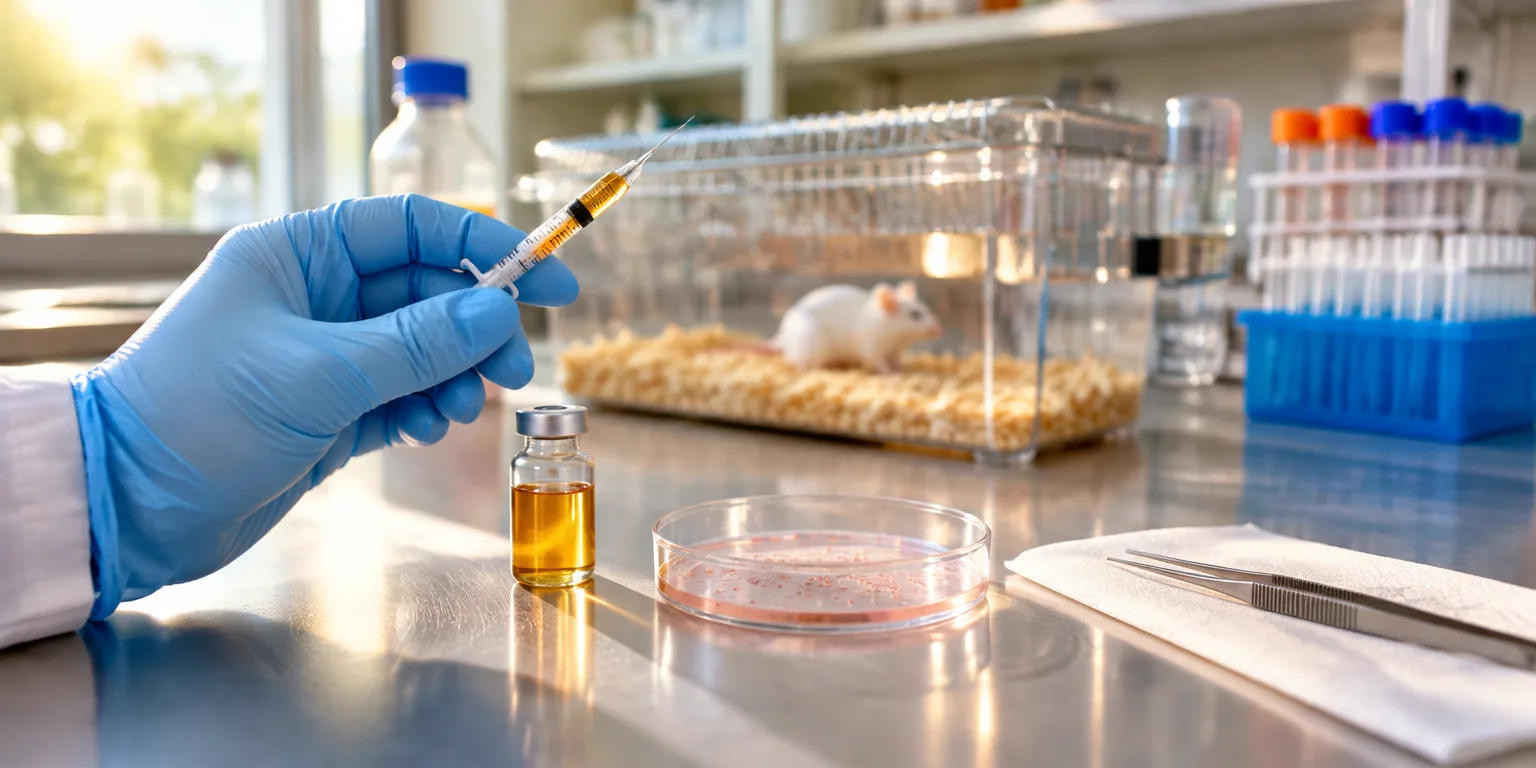
As a graduate student, Max Krummel, an immunologist who now studies how immune cells behave in tissue, picked up a syringe filled with an antibody he had made in the lab and injected it into a mouse that carried a tumor.
He was not trying to cure cancer. He was trying to answer a much smaller question about a molecule that sat on the surface of T cells, the white blood cells that patrol the body and decide what to attack. In lab dishes, blocking that molecule had made T cells more active, as if he had released a brake. He had some tumors stored in the lab, so he and his colleagues set up the animal test to see if the same thing would happen inside a living body.
What happened next, Krummel said, "was the start of cancer immunotherapy." The tumors melted. Krummel calls that mouse test the first immunotherapy experiment, and his graduate mentor at Berkeley, James Allison, later won the Nobel Prize for the research that led to it. Krummel jokes that he at least got to attend the ceremony and enjoy the after parties.
Krummel says the result came from pure curiosity. At the time, other scientists asked why anyone would go into immunology at all, and his thesis project began simply as, let us see what this molecule does. He knew from AIDS and other diseases that T cells were important, but no one in the lab was talking about shrinking tumors.
Once they saw the effect, new questions opened up. Krummel recalls the thinking as, if the immune system could be dialed up by blocking that brake, what would that mean for vaccination, what would it mean for a disease like multiple sclerosis, in which the immune system attacks the brain and nerves, and what might it mean for cancer. Vaccination might get better, multiple sclerosis might get worse, and cancer might be affected.
Over time, the wider work on cancer immunotherapy changed how scientists thought about the immune system, Krummel says. Instead of a simple guard that attacks foreign germs and leaves the self alone, it looked like a tunable dial. The treatment raised the point at which a T cell would fire, allowing cells that had been letting a tumor slip by to go after it and kill it.
That tuning mattered for tumors because, as Krummel put it, a tumor is "not exactly self" but "also not foreign," adding, "It was once you. It's a cell that's kind of evolved."
Krummel says his career has lasted as long as the field that mouse helped create, a field that, as he put it, is "curing people with cancer, which really wasn't done before."
Questions people ask
What do today's cancer immunotherapy drugs actually do?
Most are lab-made antibodies that block brakes on T cells, especially proteins called CTLA-4 and PD-1. By blocking the brake, they let T cells that already recognize a tumor stay active long enough to kill it. They do not work for every patient or every cancer, but when they work the response can last for years.
If releasing the brake helps fight cancer, why doesn't it make the immune system attack healthy organs?
Sometimes it does. Patients can develop rashes, inflamed intestines, or inflamed lungs and glands because activated T cells also hit normal tissue. Doctors manage those side effects with steroids and other drugs that calm the immune response. The balance between attacking the tumor and sparing the body is a central challenge of the treatment.
Who was Krummel's mentor who won the Nobel Prize?
That was James Allison, then at the University of California, Berkeley, where Krummel was a graduate student. Allison shared the 2018 Nobel Prize in Physiology or Medicine for discovering CTLA-4 checkpoint blockade. Krummel did early experiments showing that blocking that molecule could cause tumors to regress in mice.