A Grandfather Refused to Buy a Toy and Made One From Six Scraps of Wood
He snapped the pieces into a ball in a minute, then handed it to his 7-year-old grandson to pull apart.
 TEDx Talks · Innovate for the Future by Developing a Makers Mindset | Berton Yang | TEDxYouth@GrandviewHeights
It was a hot summer in Beijing, and Berton Yang, then 7 years old, was stuck inside his grandmother's home. He was bored with television and bored with reading, and he was asking his grandfather to take him out to buy what he called real toys.
Berton was used to toys that made noise, flashed, transformed, and came in bright colors from big companies. As Berton Yang later put it, those are toys "made by large companies trying to take our parents money." His grandfather would not give in and buy something new.
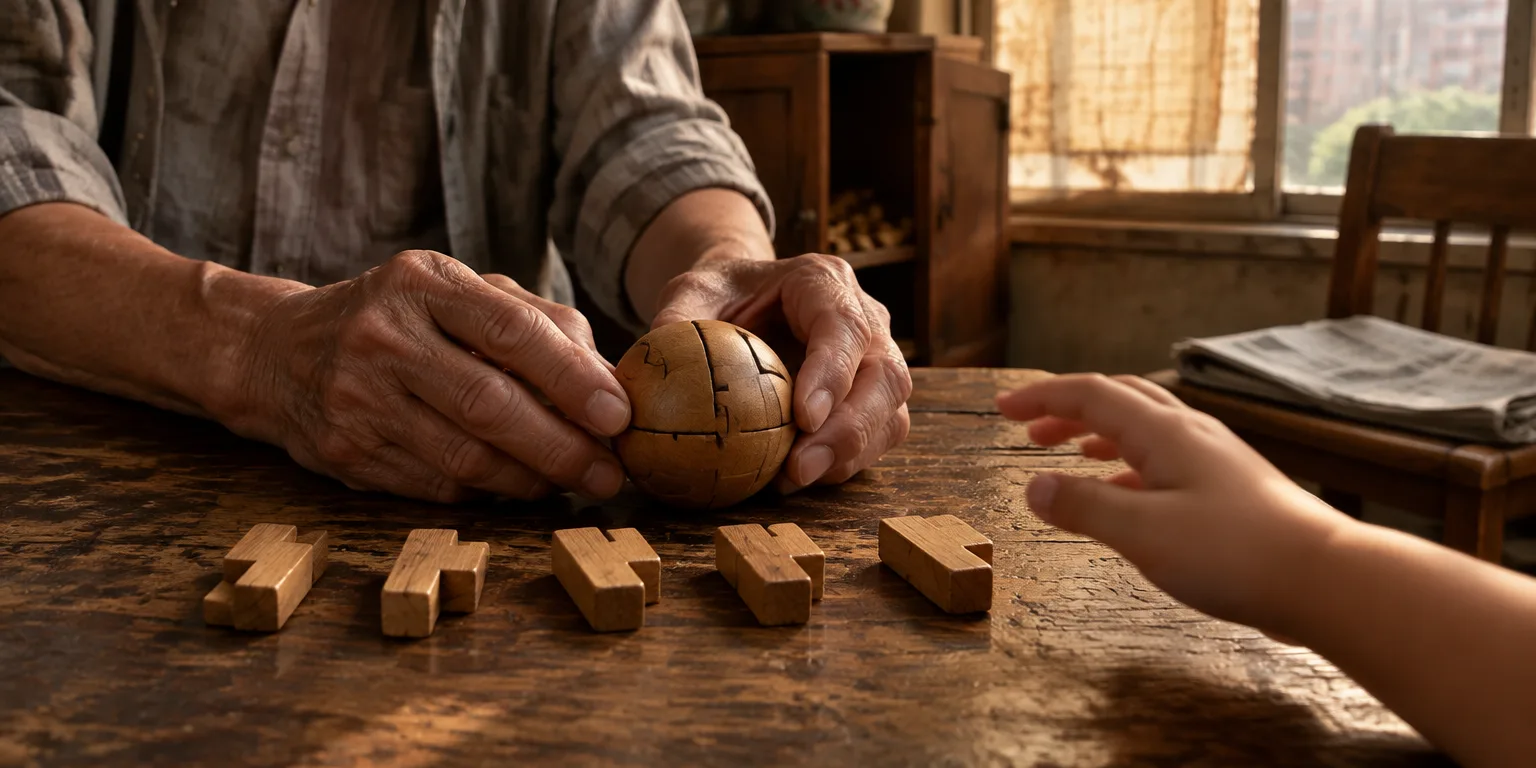
Instead, his grandfather told him, "You want a toy, I got one that's perfect for you." He began digging in his closet with the excitement of a treasure hunter. What he pulled out did not look promising at all.
It was six small pieces of wood. Berton admitted he was disappointed. It did not look like a toy. It looked like something broken.
What happened next is why Berton still calls it the best toy he has ever played with. Within one minute, his grandfather fitted those six plain pieces together into a smooth wooden ball. To a 7-year-old watching, it looked like magic.
Then came the harder part. His grandfather handed the ball back and asked Berton to take it apart. Berton did not know where to start, but he wanted to solve it. So he fiddled and tinkered until, at last, he worked it out.
Those six pieces became his new obsession. They gave him hours and hours of enjoyment, and the fact that his grandfather had made the toy himself made it better. That small challenge was the start of his engineering career, and it left him wanting to be like his grandfather, in Berton Yang's words, an engineer who "can think about and create cool things even toys."
Questions people ask
What kind of puzzle was the wooden ball?
It is a type of interlocking burr puzzle, sometimes called a six-piece burr or, in China, a Luban lock. The notched pieces slide together in a specific order to form a ball, cube, or other shape, and they only come apart if you find the key piece and reverse the steps.
How do you take a six-piece wooden ball apart?
No tools are needed, only patience and careful wiggling. You find the one piece that can slide first, often by gently pushing and twisting, and then the rest loosen in reverse order of assembly. Forcing it can damage the wood, so puzzlers learn to feel for the move that gives way.