A hard-to-read font cut mistakes on a logic quiz from 90% to 35%
When reading feels effortful, the brain stops trusting its gut and starts checking its work.
 Veritasium · The Illusion of Truth
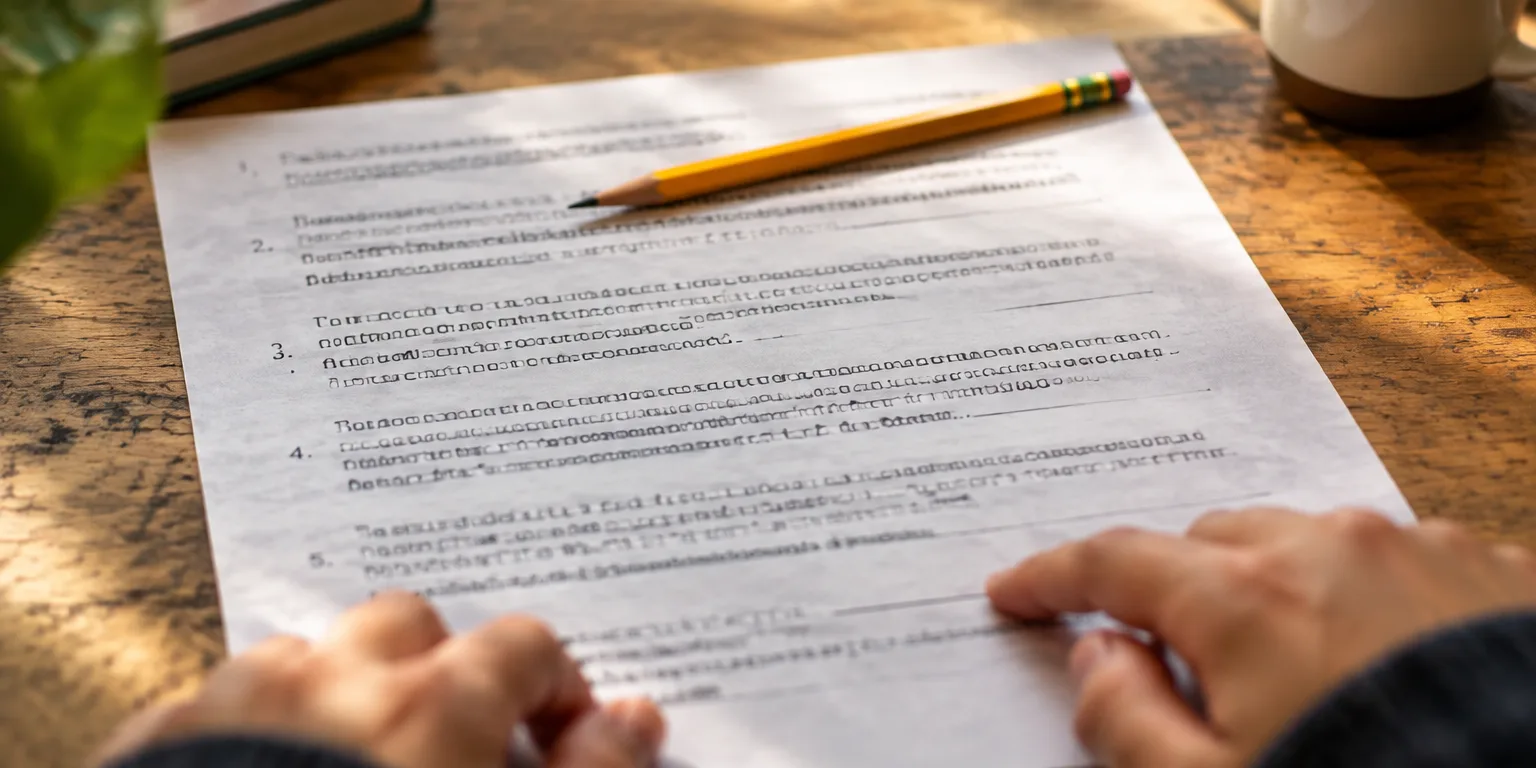
Give people a short logic quiz in clear, easy type and 90% will get at least one answer wrong. Print a similar set of questions in a hard-to-read, illegible font and the error rate falls to 35%.
The reason is what psychologists call cognitive ease, a gauge of how much mental effort you are using. Reading your social feed feels easy. Multiplying two two-digit numbers without a calculator feels hard. When thinking feels easy, familiar, and pleasant, people tend to trust it, and to trust what they are reading.
That trust can misfire. Consider this: "All roses are flowers, some flowers fade quickly, therefore some roses fade quickly." It sounds right at first. The correct answer is false, because the roses are not necessarily the same flowers that fade quickly.
Blurry type breaks that smooth feeling. The illegible print creates cognitive strain. Your brain has to work harder just to decode the words, and that extra effort carries over to the reasoning itself. Instead of leaping to the fast but incorrect conclusion, you slow down and check the logic.
That tradeoff is the point. Ease helps with creativity and gut instincts, but it also leaves you easier to fool. When accuracy matters more than speed, a little difficulty can force the careful thinking that ease would have skipped.
Questions people ask
Should textbooks and work documents be printed in ugly fonts?
No. Strain helps mainly on problems where your first impulse is likely to be wrong, like logic puzzles or tricky fine print. For learning new material or reading for pleasure, clear type is faster, less tiring, and easier to remember.
What else creates this feeling of ease besides clear type?
Repetition is another shortcut. Hearing a claim again and again makes processing feel smoother, and the brain can mistake that smoothness for truth. Familiarity feels good, which is why advertisers repeat names, slogans, and jingles.
Is easy thinking ever better?
Yes, for creative and intuitive tasks. A relaxed, happy state improves quick associations and fresh ideas, like finding the link between cottage, Swiss, and cake. The trick is to use gut thinking for inventing options, and strained thinking for checking them.