A Home Battery Is a Time Machine for Cheap Electricity
Base barely profits on the box itself, then profits by moving cheap nighttime power into pricey afternoons.
 Not Boring by Packy McCormick · Base Power Company: Chapter 3
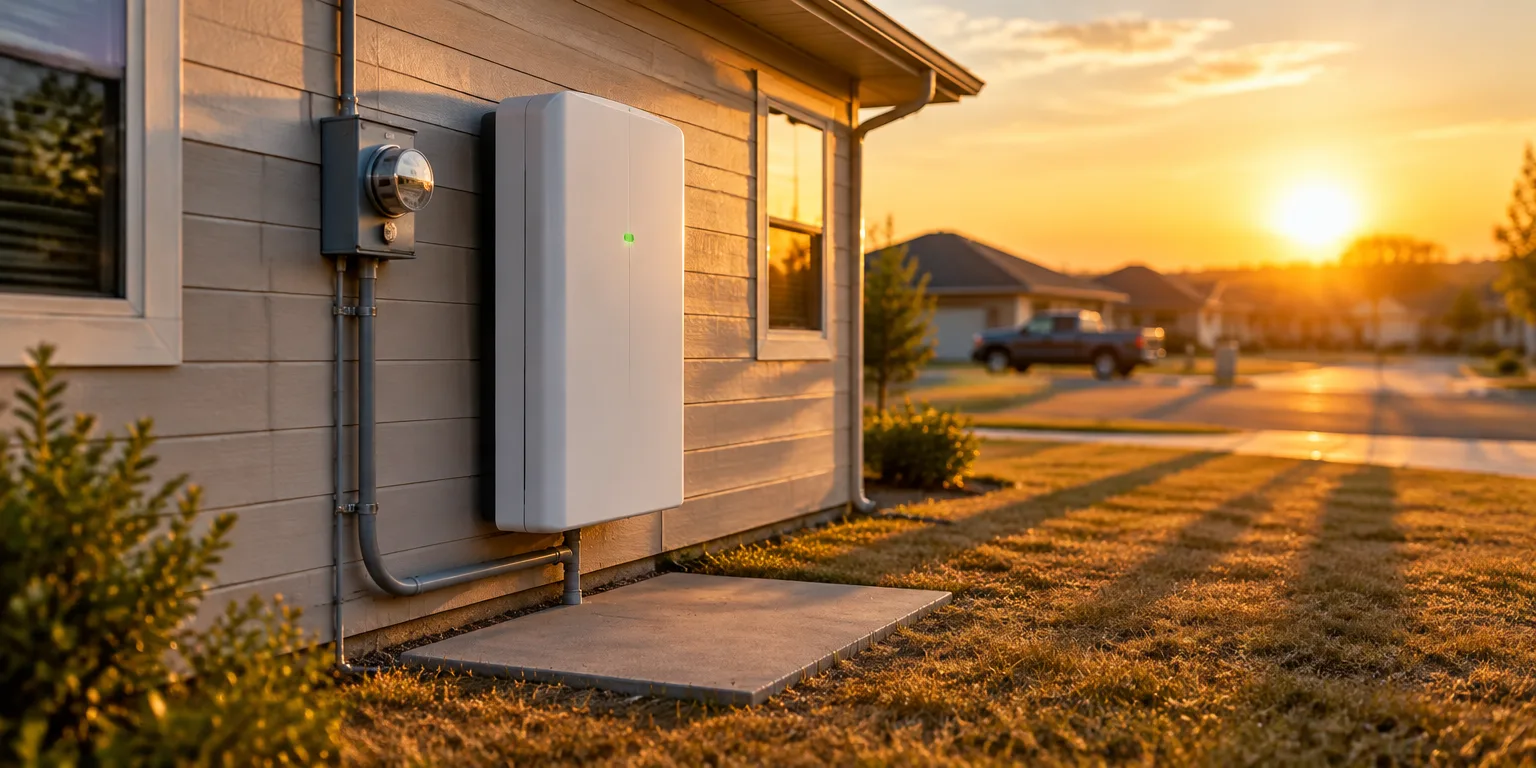
Electricity has a timing problem. It is cheap in the middle of the night when few people want it, and expensive on a hot afternoon when air conditioners blast. A home battery exploits that gap.
Think of each battery as a time machine. It charges overnight, holds the power, and discharges during the expensive hours. The household keeps backup for outages and a lower bill, while the company earns the gap between the low buying price and the high selling price.
That is how Base Power Company, a Texas startup that installs large batteries beside homes, earns the bulk of its current profit. It roughly breaks even on the box itself, asking customers for a modest initial payment for the installation work plus $19 a month in certain markets. The return comes from storing power when it is cheap and selling it when it is dear.
In much of Texas, power is sold by retail electric providers, companies that sell electricity to homes. They buy power in wholesale markets and resell it to households, and those wholesale prices can fluctuate wildly, which leaves the resellers exposed to sharp spikes.
Most providers buy financial protection against spikes and pay a premium for it. Jared Greene of Base put the alternative this way: "The hedge is a financial battery. The battery is a technical hedge." Because Base can hedge with stored electricity instead of financial contracts, it can share those avoided insurance costs with customers through lower rates, which can improve the economics of selling power.
One installation visit costs about the same whether the crew puts in a smaller or a larger system. Putting in one bigger battery therefore spreads that customer and labor cost over more capacity. Whether the system holds 20 kilowatt hours or 39.2 kilowatt hours, the visit costs roughly the same, so packing more storage into each home means better economics for each install.
Questions people ask
Why do electricity prices swing so much in one day?
Demand rises in the morning and late afternoon while solar output peaks at midday and falls at sunset. When supply is scarce relative to demand, wholesale prices spike, sometimes by ten times or more, and when supply is abundant they collapse. Batteries profit by bridging those hours.
What does it mean that Texas power is deregulated?
In much of Texas, the companies that sell electricity to homes do not own the power plants or wires. They buy power in wholesale markets and resell it to consumers, competing on price and plans. That competition creates low margins and big risk if wholesale prices jump.
Does the homeowner have to do anything to trade power?
No. Base's software decides when to charge and discharge automatically based on prices, grid needs, and keeping enough reserve for an outage. The Disco, its connection box between the grid, the house panel, and the battery, also lets technicians diagnose most problems remotely.