A home robot's hands have 25 joints, almost as many as yours
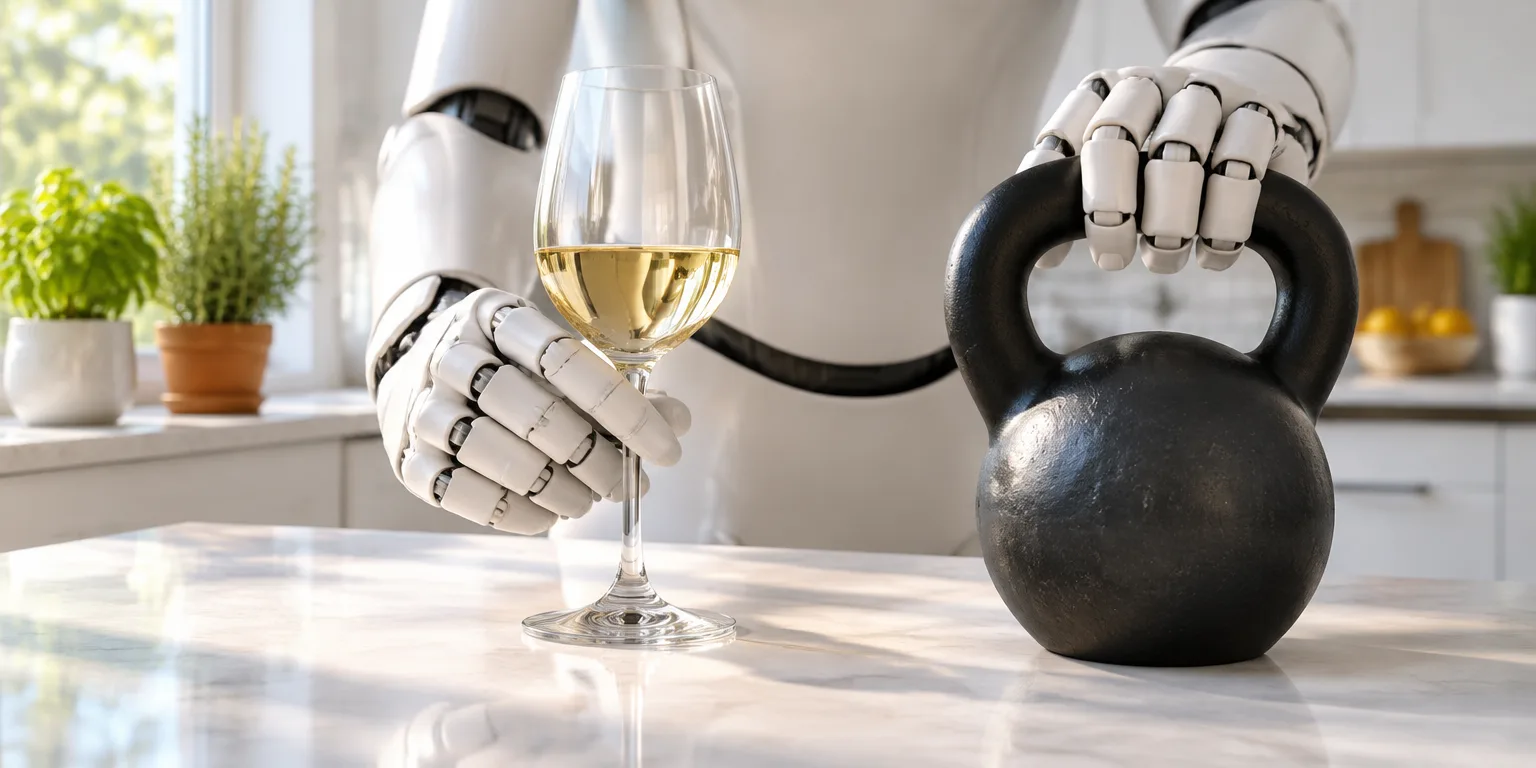
It can pinch a wine glass and lift a 20-pound kettlebell, and data from each use can help train the robot.
 Lightspeed Venture Partners · The $20,000 Robot, AI's Essay Wars & Loop Engineering Explained | Lightwork
A home robot from the company 1X has hands with 25 degrees of freedom, or ways of moving, compared with about 27 in human hands. It weighs about 66 pounds and costs $25,000.
Many traditional robots have only five to eight degrees of freedom in the hand. Hands are what robotics experts call the holy grail problem, and Elon Musk, Tesla's chief executive, has said so more than once.
The company's product head said work started a year ago, and the first versions were nicknamed Popeye for oversized hands. Fitting all the gears and motors into a hand this size was hard.
The design puts 22 degrees of freedom across the fingers and palm, with the other three moving the wrist, and it can place itself to within 0.2 millimeters. That allows a pinch to hold a wine glass and the strength to lift a 20-pound kettlebell.
That dexterity produces movement data the company can use to train its models.
Questions people ask
What does degrees of freedom mean in a robot hand?
Degrees of freedom means the number of independent ways something can move. In a hand, that includes bending each finger joint, spreading the fingers, and rotating the wrist. More degrees means more humanlike motion.
Why is it hard for one hand to do both tasks?
Delicacy and strength usually trade off against each other. A wine glass requires precise, light pressure to avoid dropping or crushing it, while a kettlebell requires powerful grip and wrist stability. Doing both with the same hand is what makes this notable.
Were robot hands always this small and precise?
Yes, early versions were much bulkier because motors and gears take up space. The advance was packing enough power and control into a hand close to human size while keeping accuracy to within 0.2 millimeters.