A Hopi Elder Warned The U.N. of Storms, Then New York Flooded
He spoke for 10 minutes to a nearly empty hall, and the next morning highways flooded and subways closed.
 The Why Files · The Last Sign: 3I/ATLAS and the Hopi Blue Star
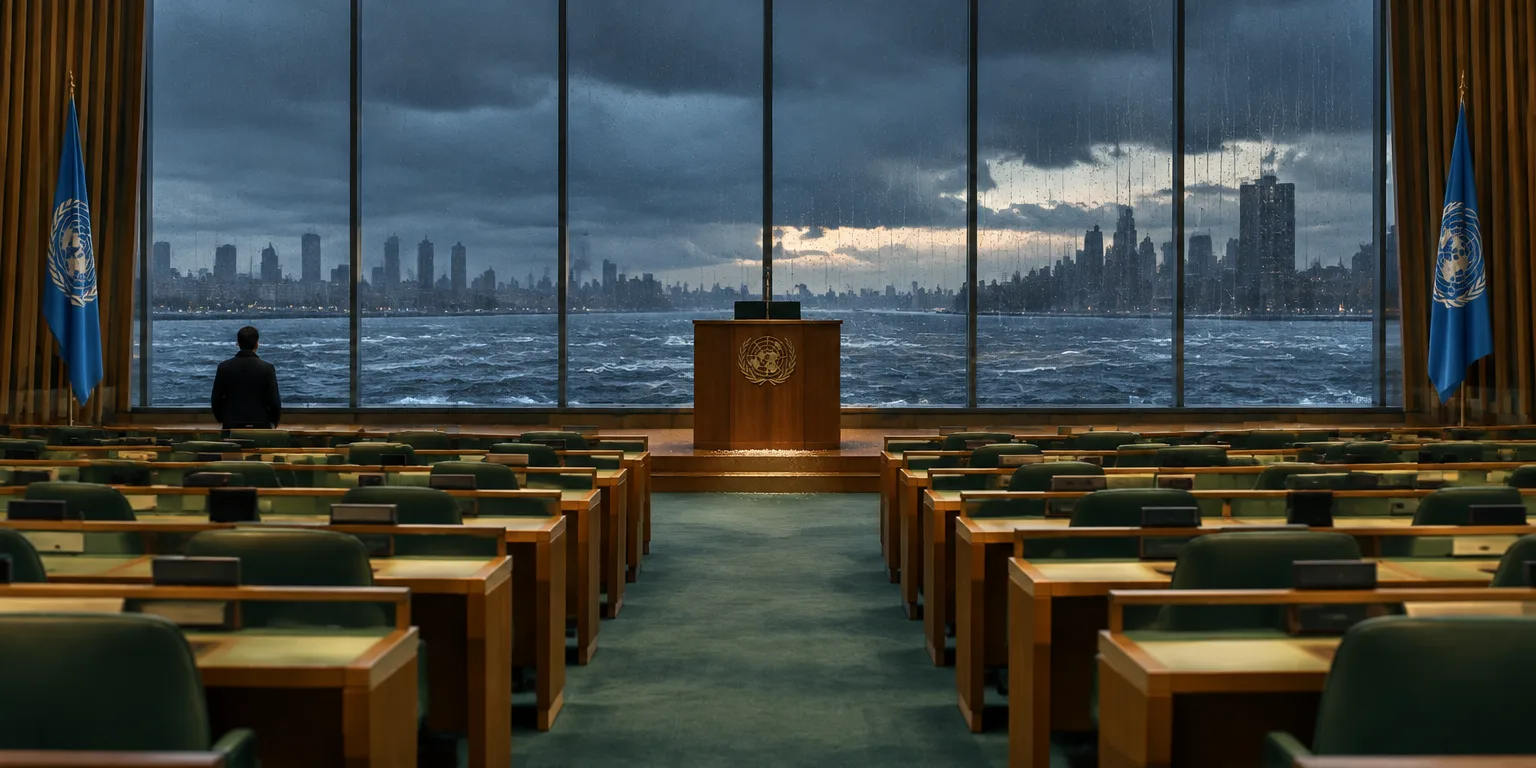
In December 1992, Thomas Banyacya, 83, stepped to the podium in the General Assembly Hall in New York and looked out at row after row of empty seats.
Banyacya was an interpreter for the Hopi, a Native people who live in villages in the deserts of northeastern Arizona. He had been selected to bring their message to what Hopi leaders called the House of Mica, their name for the great glass building on the East River, the United Nations headquarters.
For years, Hopi elders had gone to New York to try to share it and had been turned away. This time officials allotted him ten minutes as the final speaker of the day.
He scattered sacred meal made from corn near the podium microphone, then spoke in the Hopi language. Through interpretation, Banyacya told the handful of diplomats present, “Today, you see increasing floods, more damaging hurricanes, hailstorms, climate changes, and earthquakes as our prophecies said would come.”
He added another warning. “If we humans do not wake up to the warnings, the great purification will come to destroy this world,” Banyacya said. The delegates clapped politely and walked out.
By dawn the next day, a ferocious storm was pounding the city. High winds tore through the streets, highways flooded, and the subways shut down.
Cars were left underwater on the FDR Drive along Manhattan, and divers were called to help rescue drivers. For a time, copies of Banyacya's speech circulated with an even more dramatic detail, that the U.N. building itself had flooded.
There is no official record that it did. The building-flood line appeared only in a note added to copies of the speech years later, but the timing of the storm was real, and eerie.
Banyacya did not live to see how the story would grow, with lists of modern inventions later matched to old warnings. What stayed on the record was simpler, an old man in a nearly empty hall, asking powerful people to live in balance before nature forced the issue.
Questions people ask
Who are the Hopi?
The Hopi live in a dozen villages on mesas in northeastern Arizona, and many have lived there for more than a thousand years. Farming corn, beans, and squash in dry country shaped teachings about rain, cooperation, and living within limits.
Why was the hall nearly empty?
General Assembly speeches often play to a thin house, especially for speakers added at the end of a long day. Diplomats come and go, and many statements are delivered for the record rather than to a full chamber.
Did the U.N. building itself flood?
No. City records and news accounts describe severe flooding of highways, streets, and subway lines, but not of the U.N. headquarters itself. The building-flood claim appeared in a note added to printed copies of the speech.