A kindergartner wanted to blow up her school. Her class turned it into a rescue plan.
Inside a yearlong imaginary world built around a folktale witch, her disruptive idea became the rescue plan the whole class depended on.
 TED Talks Daily · How imaginary worlds help kids learn | Anna Rainio
When the kindergartners gathered to decide how to escape the witch, Viola had a plan. To save the magical creators trapped by Baba Yaga, a witch from a Slavic folktale, she wanted to demolish the entire school building.
Her teacher, Johanna, who taught the kindergarten class, did not send Viola out of the room. Viola was often inattentive and disruptive, the kind of child who struggles to join normal classroom activities. In most classrooms, her idea would have confirmed that problem.
This classroom was different. Finnish education researcher Anna Rainio, who studies how children learn through play, calls the method a Play World. Adults and children build a shared imaginary world around an existing story, make the props together, take roles in it, and let children steer what happens next. Rainio says the stories she tells are composite examples, with details changed to protect privacy, drawn from many classrooms she and her colleagues have studied.
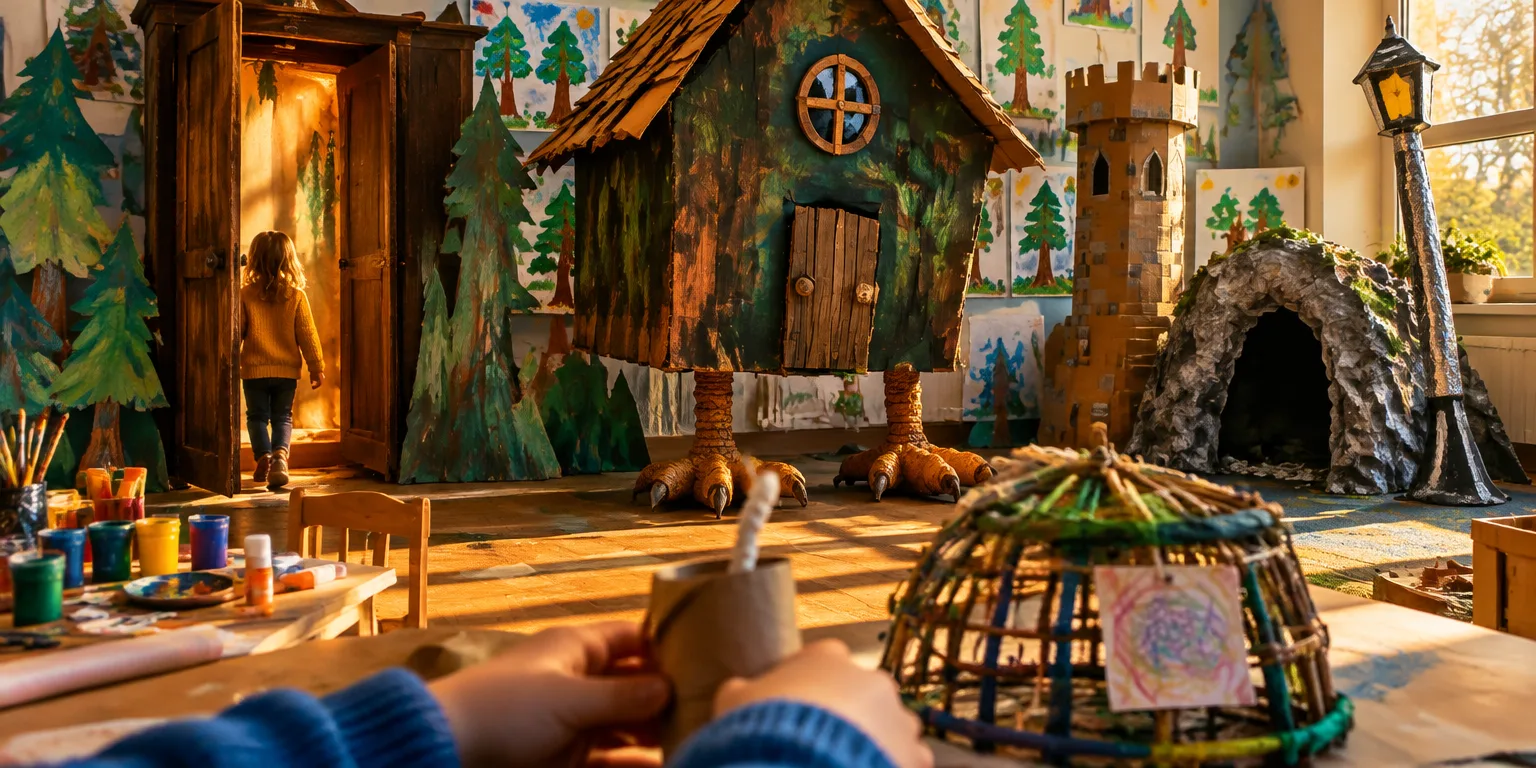
Johanna had started by reading aloud only the first half of the Baba Yaga tale. Then, across the school year, the class wrote and directed its own ending. They built and hand painted the world themselves, including Baba Yaga's tower, the caves where the magical creators lived, the trap where the witch captured people, and trees and a lamppost for the forest. A child drew the witch's hut on chicken legs, and a wardrobe inside the classroom hut became the portal between everyday classroom life and the magical world. Even the grown-ups played along with that doorway when they joined the imaginary world.
Inside that world, Viola's explosion made a strange kind of sense. The children, whom Rainio describes as the experts in a Play World, negotiated with her, and the children asked whether she would blow up some props instead of the whole school. Viola agreed. "This is a good plan because everybody gets to do their own plan," she said.
A week later, Viola was disruptive again. This time Johanna tied the behavior to the story. She told Viola she could not stay in the rescue plan unless she committed to it, because the rescue of the magical creators rested on her, and acting out might alert Baba Yaga.
Viola committed. When her moment came, she first made sure everyone was protected, then threw the pretend bomb at Baba Yaga's trap and led the whole class in a dramatic countdown. The child who might have been excluded became the one everyone was counting on.
Questions people ask
What exactly is a Play World?
Adults and children pick a book, tale, or work of art, then build that world together with props, roles, and new resolutions to the story. The adults join as characters rather than directors, and children help decide what happens next, so ordinary lessons and conflicts unfold inside the story.
Is Viola a real kindergartner?
No, not as one identifiable child. The researcher says the classroom stories are fictionalized composites, with names, book titles, and details changed to protect privacy. Viola represents patterns seen across many real classrooms.
What if a child suggests something truly dangerous?
The approach in the source is for adults to ask whether there is a real reason to say no, and if not, to reshape the request so it can work. In Viola's case, the class kept the explosion but moved it from the school to the story props.