A Last King Wrote for Help That Never Came
The burned city left two meters of ash, and the island workshops left tools hidden for owners who never returned.
 Fall of Civilizations · 2. The Bronze Age Collapse - Mediterranean Apocalypse
Ammurapi, the last king of Ugarit, a busy trading city on the coast of what is now northern Syria, wrote a letter to the ruler of nearby Cyprus.
"My father, now the ships of the enemy have come," he wrote. The raiders had set fire to his cities and done evil in his land. His soldiers and chariots were stationed far away in Hatti, the Hittite homeland inland, and his ships were posted in the land of Lukka and had not returned. "So the land is abandoned," he wrote.
No rescue ever came; the message never left the city. It was baked hard not in a kiln but in the fire that consumed the city around it.
That burned letter is why the end at Ugarit still feels close, more than 3,000 years later. The attackers were what Egyptian records call the Sea Peoples. Ugarit had run a merchant kingdom for at least six centuries, taxing the trade where overland routes met the Mediterranean Sea. Its clerks used at least seven languages, its palaces held expensive libraries, and its temples played what survives as the world's oldest written music, a hymn to the moon goddess Nikkal. Then that whole world vanished, along with palaces and ports across the eastern Mediterranean.
Archaeologists digging at Ugarit found a layer of ash and broken brick two meters thick in places. Roofs had caved in and scorched, streets were littered with arrowheads, and residents stashed prized belongings in haste and never came back to reclaim them. Another unsent tablet, found in the city's kilns, asked for 150 ships to be sent to help, a measure of how large the attacking force must have seemed.
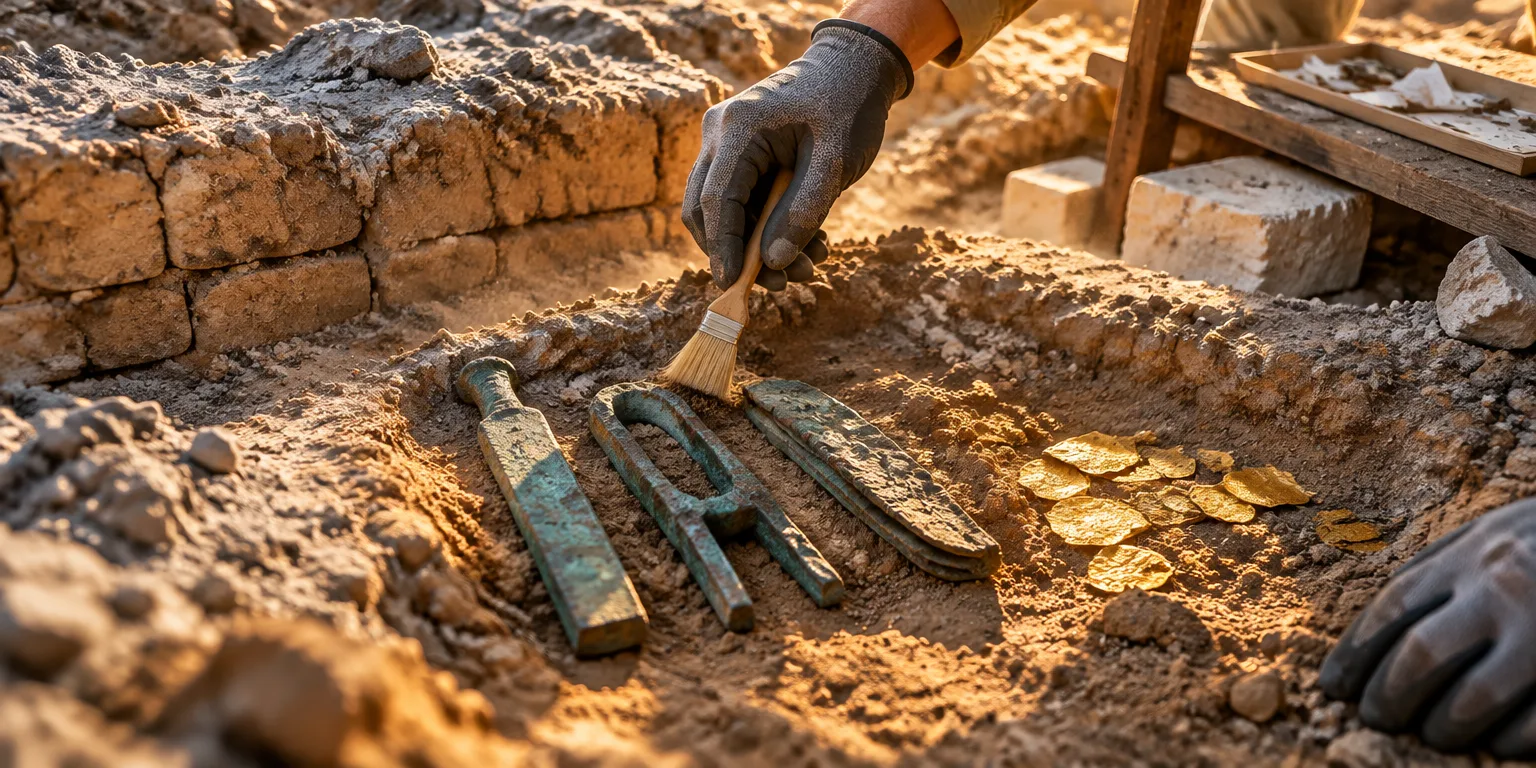
Across the sea in Cyprus, where Ammurapi had hoped help would come from, the same panic played out in miniature. At a town called Kourion, archaeologists found that the whole settlement had been abandoned in a hurry. A bronze worker tucked his implements into the soil of his work yard. A silversmith slipped his silver into a gap in his workbench. A goldworker stashed thin hammered gold in a hole in the ground. None of them ever returned for those precious things.
Hunger stalked behind the violence. A Hittite queen, writing from the dry hills of the Hittite empire, sent a short message to the pharaoh, the ruler of Egypt: "I have no grain in my lands." Another tablet warned a merchant in Ugarit, "There is a famine in your house. We will all die of hunger if you do not quickly arrive here. You will not see a living soul from your land."
Ugarit never got its ships, and Cyprus never got its metalworkers back. The tools are still there, in the ground, where they were left.
Questions people ask
Who were the Sea Peoples who attacked Ugarit?
They were seaborne raiders whose origin is still debated, known mainly from Egyptian carvings that show them in kilts with feathered or horned headdresses. Some had earlier served as mercenaries for Egypt, and some historians go further and see them as victims too, perhaps forced to move by drought and famine.
Why couldn't Ugarit defend itself?
Its army and navy were posted elsewhere when the attack came, with troops in Hittite territory and ships in Lukka. The letter says its troops were stationed in Hatti, while its ships in Lukka had not returned.
What happened to Ugarit after it burned?
Ugarit burned and was left in ruins, with roofs caved in and streets littered with arrowheads. Archaeologists later found its clay tablets because the fire had baked them hard, preserving letters, accounts, and music.