A Loose 60-30-10 Mix Keeps a Room in Balance
Two neutrals, one wood, one metal, and small seasonal swaps keep the foundation steady.
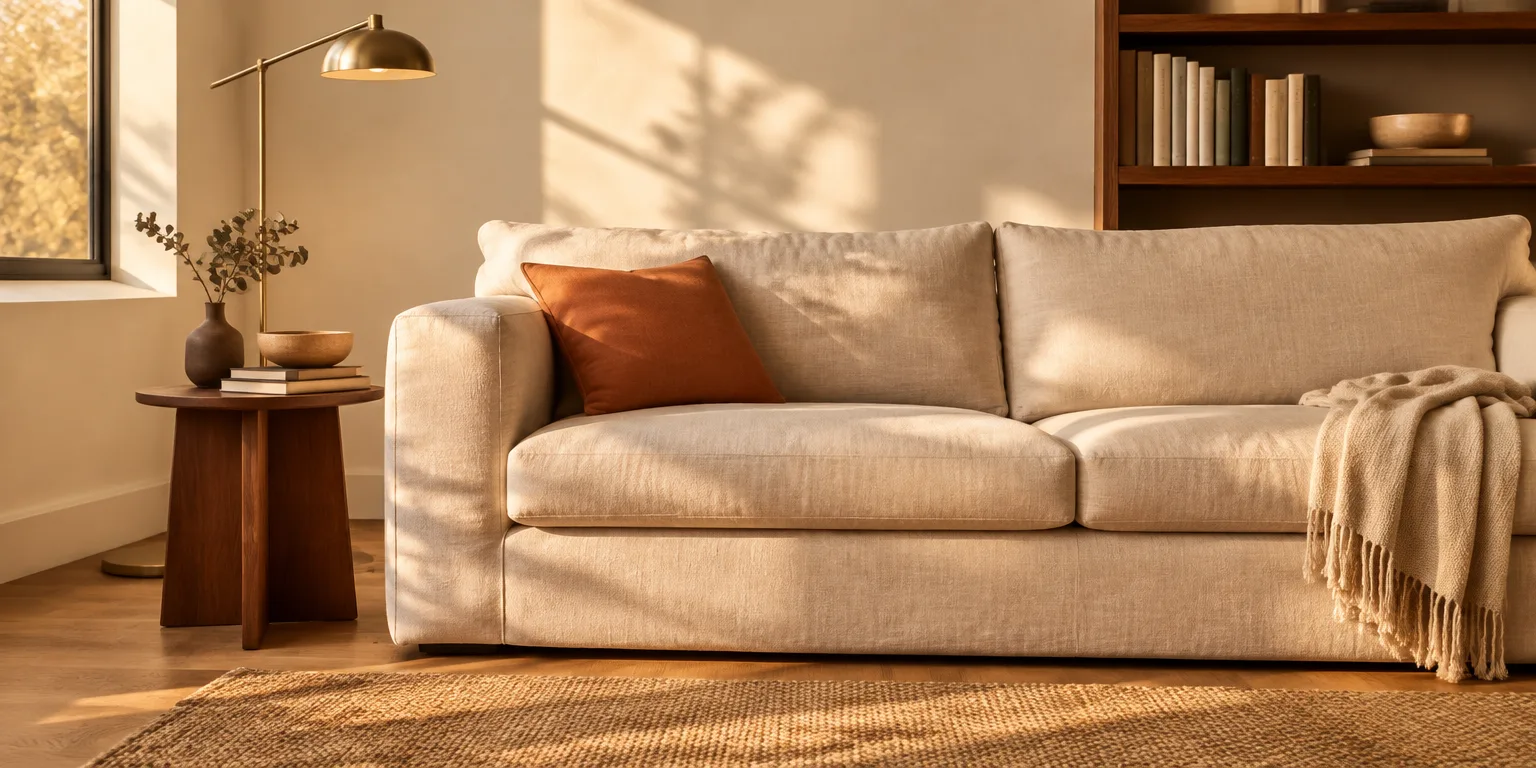
A calm room rarely comes from finding the perfect paint chip. It comes from keeping three groups in proportion, so no single color or finish takes over.
The working rule is 60-30-10. About 60 percent goes to foundation neutrals, about 30 percent to deeper woods and supporting midtones, and about 10 percent to contrast, metal, or a seasonal accent.
Treat those numbers as a guide, not a formula to measure. The point is to keep any single choice from dominating the space.
Start by naming your two neutrals, one main and one supporting. Add a grounding wood tone, one metal finish, one dark note for contrast, and one natural texture.
Then edit. Keep the seasonal accent small, and repeat colors across the room.
When the foundation is coherent, the mood can shift by season without starting over, and the home still feels recognizably the same.
Spring can mean soft sage, pale butter, dusty blue, or fresh green, while summer shifts to sun-washed ochre, terracotta, faded coral, or olive.
Autumn narrows to russet, chestnut, deep olive, and muted aubergine. Winter turns deeper still, to oxblood, forest green, tobacco, and deep plum.
If you are starting today, one suggestion is to pick the main neutral first.
Questions people ask
How do I estimate the percentages without measuring?
Look, do not measure. Walls, large rugs, and curtains usually make up most of the 60 percent, while furniture and wood tones fill much of the 30 percent. If one group catches your eye first and will not let go, it is probably running over its share.
What is the easiest way to change seasonal accents?
Use small, easy swaps like cushions, throws, candles, books, and table linens. Changing those lets spring green give way to autumn russet without repainting or buying large furniture.
Can I use more than one neutral in the 60 percent?
Yes, but keep them close in tone and undertone. Two neutrals with the same warmth, one lighter and one slightly deeper, add softness without making the room look busy or mismatched.