A Map Built for Narrow Wins Can Hand Control to the Other Party
Fowler says strategists see Texas and Florida as tests of maps drawn for small Republican edges.
 Up First from NPR · Hurricane Isaias Prep, Competitive Midterm Races, Trump's Media Ban In Court
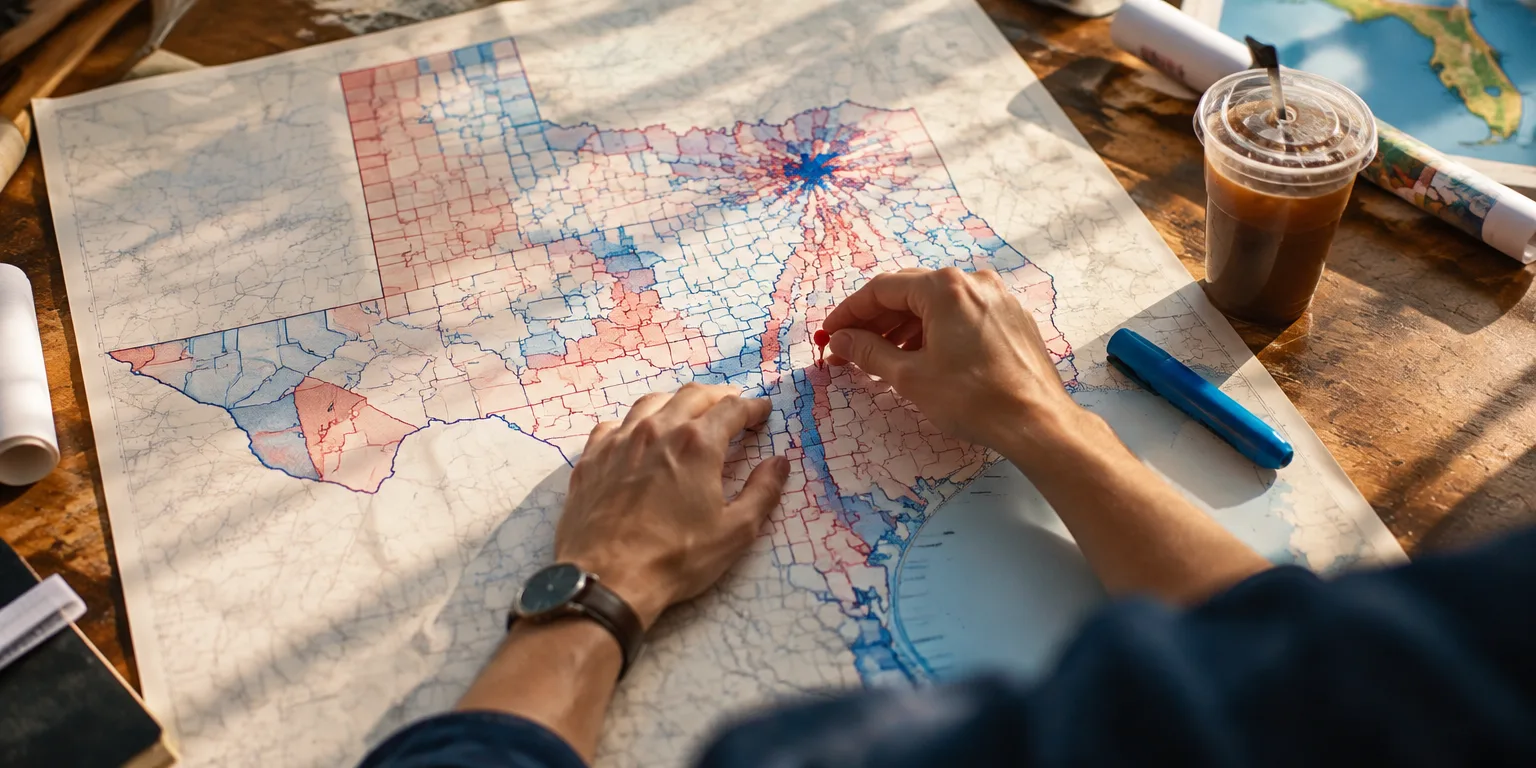
The new congressional maps in Texas and Florida were supposed to help Republicans win more seats. Instead, they could help elect Democrats.
Stephen Fowler, a political correspondent tracking House races, says about one in ten Americans now votes in a district whose boundaries were redrawn since the last election. Republicans started the latest round of mapmaking, drawing lines to favor their candidates, and Democrats drew answering maps of their own.
The general logic of this kind of mapmaking is to win many seats by a little rather than a few seats by a lot. A party spreads its supporters across more districts so each district tilts its way, but only just. When it works, a small edge in votes can become a bigger edge in seats.
As a general pattern, that design leaves little room for a change in mood. If voters turn against the party in charge, many of those tilted districts can change sides together. Fowler points to a difficult climate for Republicans, with an unpopular president, the usual midterm reaction against the White House party, rising prices, and broad voter frustration with incumbents.
When that happens, strategists use an odd word for the failure, dummymander, meaning lines drawn so aggressively for one party that they end up choosing lawmakers from the other party. The discontent is especially strong, he says, among Latino voters who supported President Trump in 2024.
According to Fowler, campaign planners for both sides see Texas and Florida as the places to watch for that reversal. A map made for narrow wins offers little protection when the voters who were supposed to provide the margin move away.
Questions people ask
What exactly is gerrymandering?
It is the drawing of political district lines to favor one party or group. Lawmakers pack rival voters into a few districts they will lose badly, and spread their own voters across many districts they can win narrowly. In most states, the state legislature draws the lines every 10 years after the census, though some states use commissions.
Why does the president's party usually lose seats in midterms?
Voters who are unhappy about prices, wars, scandals, or unkept promises tend to use midterms to punish the party in power, while satisfied voters are less motivated to turn out. Turnout is also lower and different from a presidential year, which can amplify the swing. Since World War II, the president's party has lost House seats in nearly every midterm.