A Molecule From Gila Monster Venom Became the Template for GLP-1 Drugs
The venom held a near copy of a human gut hormone, but one that lasted long enough to turn into medicine.
 Huberman Lab · Best Tools for Gut Health & Weight Loss | Dr. Chris Thompson
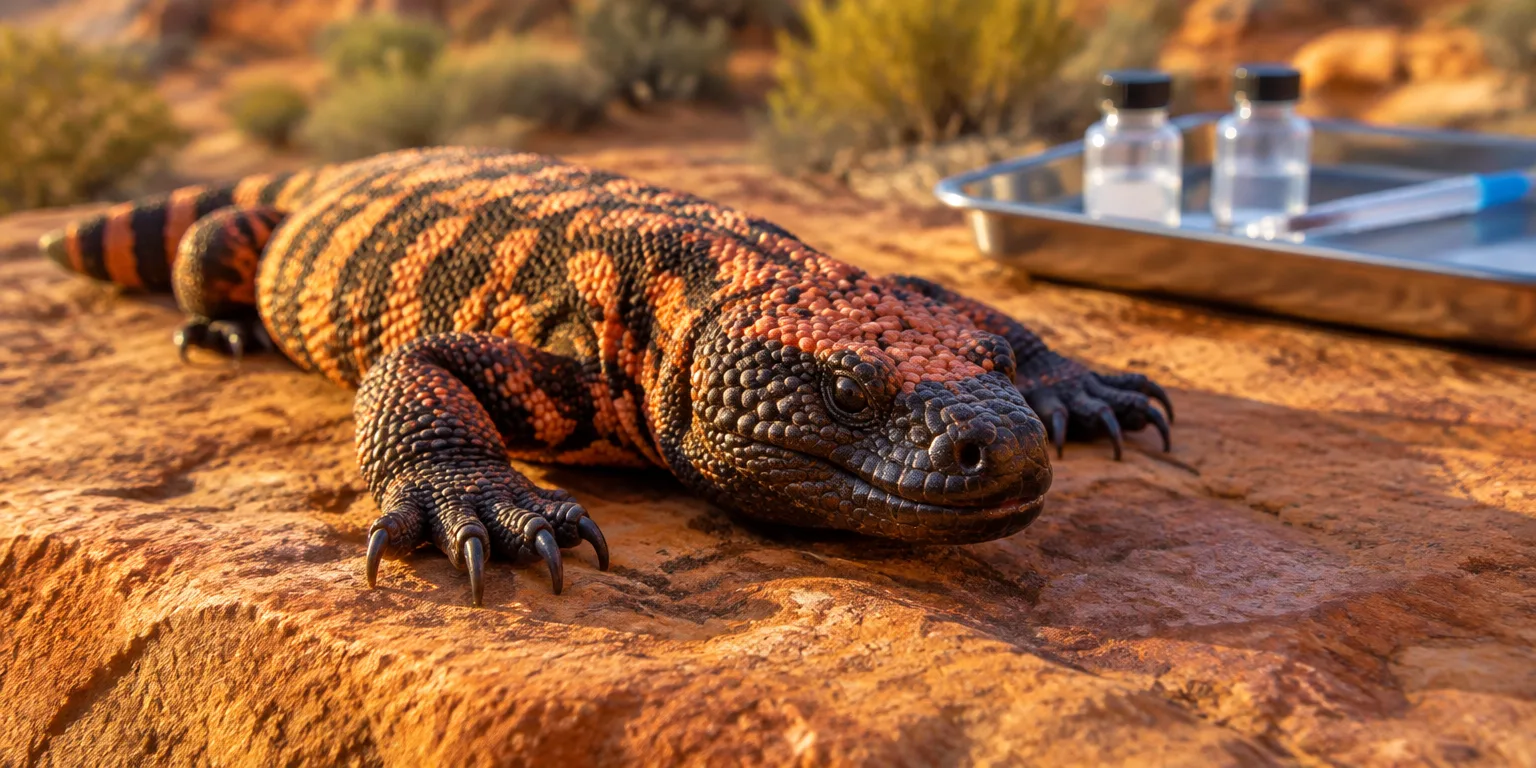
In the 1990s, in the Bronx, a researcher named Dr. Heng was studying Gila monsters, large venomous lizards that can go long stretches without eating. He was not studying appetite. He was studying venom.
He was picking up a hunt that had run for decades. Researchers had been chasing a gut signal, which they called an incretin, that told the body to release insulin after eating. A physician named Bell, working at Lilly Labs, had cloned a precursor protein and identified one of its pieces, a gut hormone called GLP-1, short for glucagon-like peptide-1. Then a physician named Blossom in London found GLP-1 in the bowel, showed that blood levels rose after people were given sugar, and showed that infusing GLP-1 raised insulin and lowered blood sugar.
That result gave a clear sign of what the incretin was, said Chris Thompson, an interventional gastroenterologist at Harvard and Mass General Brigham who retells the history. The problem was practical. Natural GLP-1 disappears in minutes because an enzyme in the blood, dipeptidyl peptidase, chews it up, so it only worked when it was continuously infused.
Heng's lizard offered a way around that. In Gila monster venom, he found a molecule called Exendin-4 that looked almost exactly like human GLP-1 and could attach to the same docking site on cells. It differed by only one building block near one end, and its other end was a little longer and different.
That close copy became the template for the GLP-1 drugs that followed. Drugmakers had a natural molecule that already triggered insulin release and signaled fullness, and they could engineer versions that lasted hours or a week instead of minutes.
Questions people ask
Why would a lizard's venom contain something like a human gut hormone?
Gila monsters eat only a few large meals a year, and compounds in their venom and saliva help manage that feast and fast pattern. Exendin-4 is part of that system, and it fits the human GLP-1 receptor because the gut hormone machinery is ancient and widely shared.
What made Exendin-4 more useful as a drug than natural GLP-1?
Natural GLP-1 is cut up within minutes by an enzyme called DPP-4, so it cannot survive as a weekly shot. Exendin-4 has a slightly different structure that resists that cutting, which gave drug designers a longer lasting starting point they then refined further.
Which current drugs came from this discovery?
Exenatide, approved in 2005 for type 2 diabetes, was directly copied from Exendin-4. Later drugs use the same gut hormone signaling to curb appetite and control blood sugar, with changes that extend how long they last and how strongly they act.