A New Reading Says Franklin Understood Her DNA Photo
The article argues her demand for cleaner proof was read as hesitation, while a rival's leap was called vision.
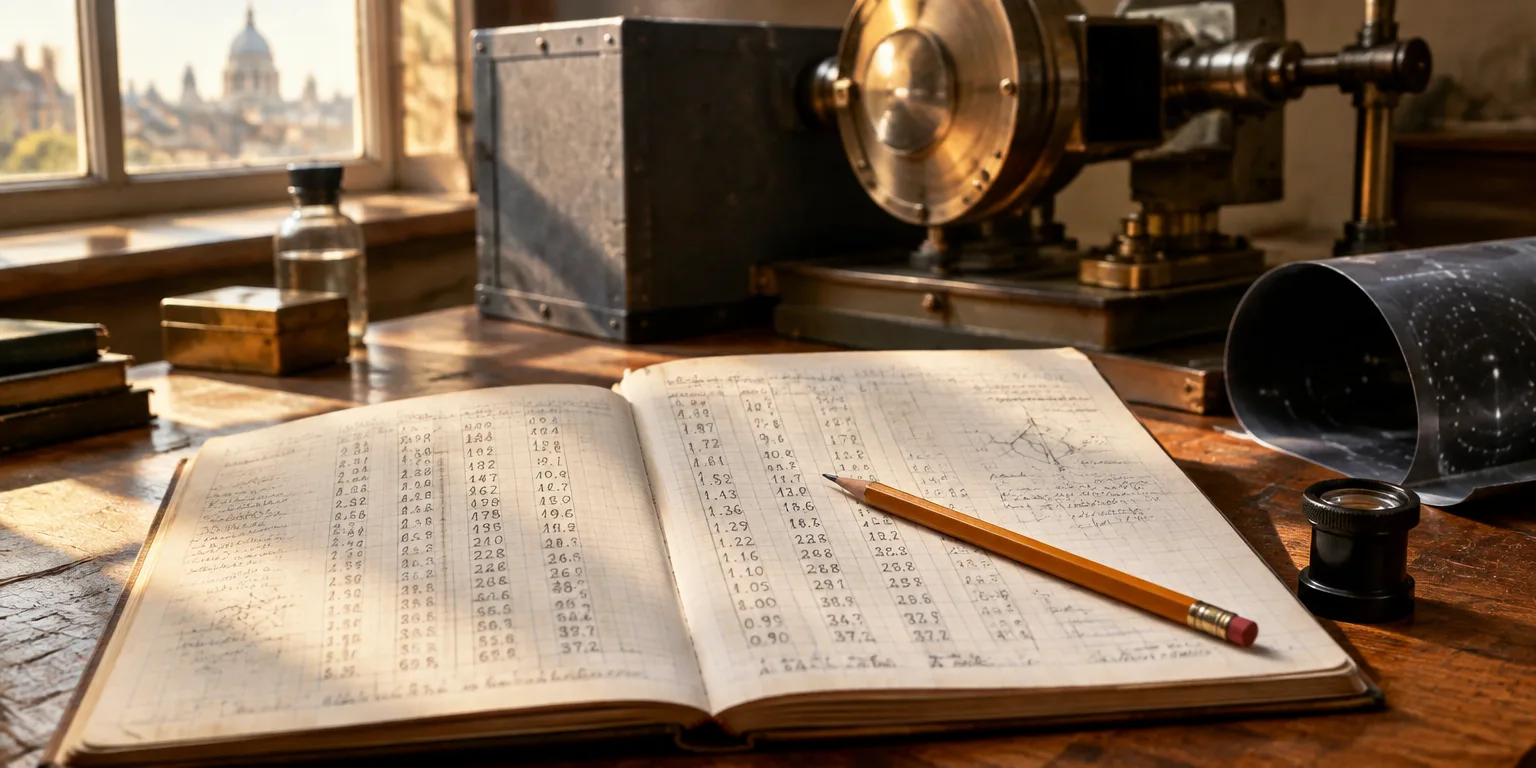
In Rediscovering Rosalind Franklin: The Overlooked Scientist Behind DNA Discovery, a 2026 article revisiting the DNA story, the writer offers a different account of Rosalind Franklin, the scientist whose X-ray work was central to decoding DNA. It argues she has long been miscast, and that her own lab notes point to another explanation: she understood the clues and waited for stronger proof.
For decades, the dominant story described Franklin as a brilliant technician who produced Photograph 51, the X-ray image carrying DNA's spiral signature, yet missed its meaning. That telling was popularized by James Watson, a rival in the race to solve the structure, whose account said Franklin could not see how the evidence fit together.
The article says that account defies logic. Its point is that a seasoned crystallographer, someone trained to read molecular shapes from X-ray patterns, was unlikely to capture a clear helical signature without grasping the implication.
The evidence offered is Franklin's forgotten lab notes, described only as notes scribbled beside experimental measurements. The article does not quote a specific entry or describe a particular measurement, so the case rests on the writer's reading: that the notes show Franklin understood the structural implications and set aside early models until the proof was cleaner.
That reading is where the article finds a double standard. It argues that when Franklin demanded rigor, she was labeled hesitant or unimaginative, while a bolder speculative leap by a competitor was celebrated as vision.
The article also argues that such notes can go unread for many years when they clash with an established story. Discovery, it notes, is rarely a lightning strike but a grind of trial, error and adjustment.
Questions people ask
What exactly was Photograph 51?
It was an X-ray image of DNA made in 1952 during the X-ray work Franklin supervised in London. The dark X pattern at its center is the classic sign of a spiral-shaped molecule, and it helped point researchers toward the double helix.
Did Franklin propose ideas about DNA's structure herself?
She distinguished two forms of DNA and worked out key constraints, including that the phosphate parts faced outward. She rejected some early models because the measurements did not yet support them, which the article presents as rigor rather than indecision.
Why might careful scientists get less credit than bolder ones?
Assertive, speedy claims often attract more attention than careful qualification. That can disadvantage researchers who emphasize uncertainty, document limits, or wait for stronger data, whatever their background.