A NICU Director Decided to Let His Daughter Go, Until He Saw Her Suck
He knew the movement meant almost nothing medically. It meant everything to him as a parent.
 Radiolab · 23 Weeks 6 Days
Keith Barrington walked back into the neonatal intensive care unit to see his daughter one last time. She "didn't move at all for about 36 hours," her father, Keith Barrington, later said. He and his wife had decided to let her go peacefully.
Barrington was not an ordinary parent in that room. He is a neonatologist, a doctor who cares for newborns in intensive care, and the director of the very unit where his tiny daughter lay. She had been born a little past 24 weeks into pregnancy, weighing 720 grams, or about a pound and a half, and she was being cared for in his own unit, the unit he led.
His story shows what happens when a doctor who knows this work well finds that his own child is the patient. He had spent his career in a place where he saw babies make it and saw babies not make it. Then he suddenly found himself there as a father rather than a doctor.
Several weeks after birth came a very big complication. Around that time, his daughter lay still for a day and a half. Barrington and his wife, Annie, decided it was time to stop treatment and let her go.
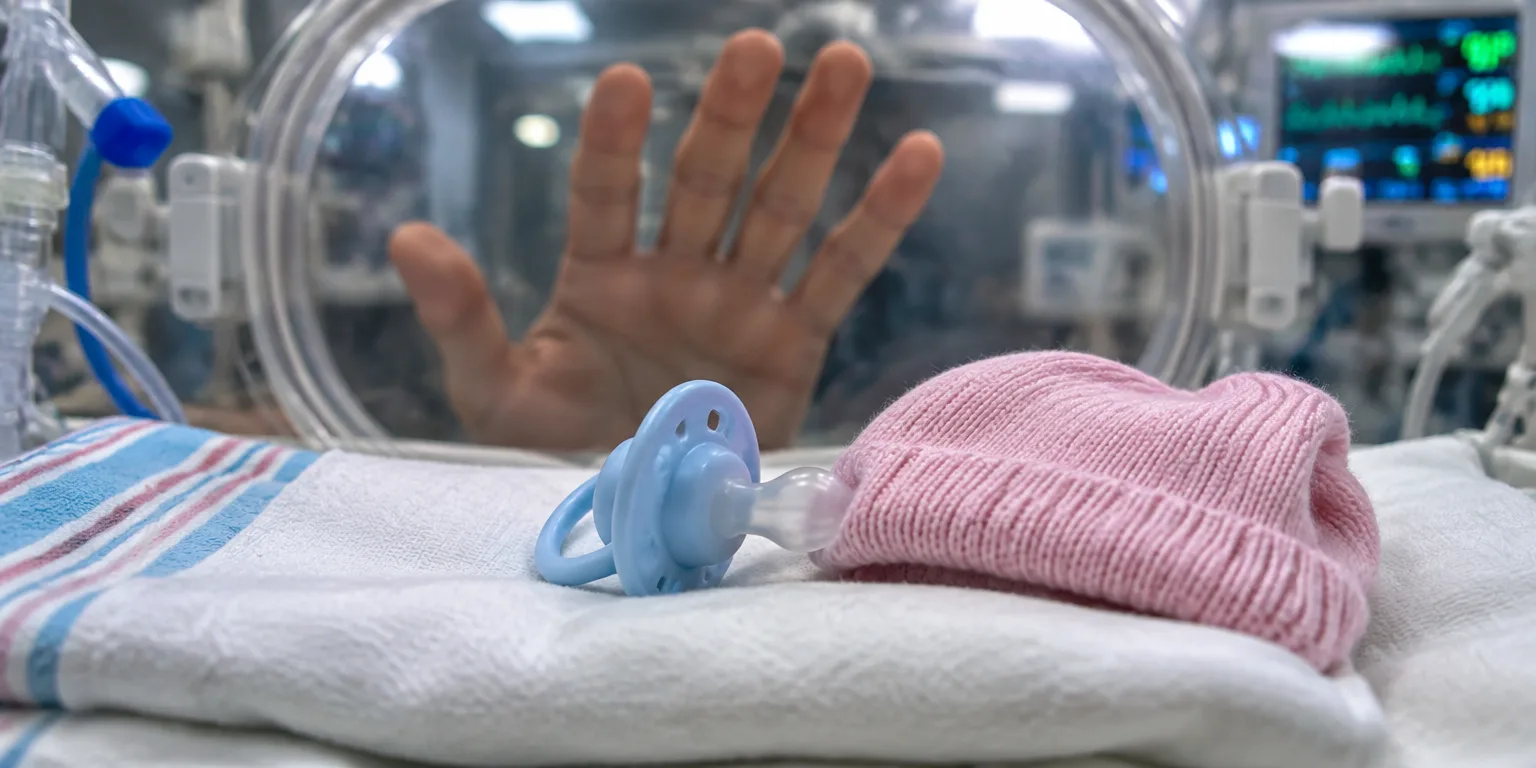
Then he went in to see her. The nurse had put a small pacifier, what he called a soother, in her mouth. Her lips began to move, barely. She started sucking on the soother.
Sucking is one of the most basic reflexes a baby has. Barrington knew that. It comes from the brainstem, the base of the brain that runs automatic functions like breathing, and a baby needs a lot more than the ability to suck to do well when born that early. As a doctor, he could have explained it away in a sentence.
As a father, he could not. Seeing her suck led him to reverse his decision. He went back to his wife, Annie, and said, "We can't stop. I really need to continue and give her the chance."
Later he admitted that the doctor in him was a little surprised at the father in him. Rationally, looking at the evidence, he said he could have gone either way. "I was trying to be the parent there and not the neonatologist," he said. "Just as a father, I couldn't at that point let her go."
Questions people ask
What is the sucking reflex, and why do doctors not see it as a good sign on its own?
Sucking is present before birth and is controlled by circuits in the brainstem, the stalk at the base of the brain that handles automatic functions like breathing and swallowing. It does not require the higher parts of the brain that govern thought and intention. That is why doctors view it as a sign of basic wiring, not proof that a very premature baby will survive or thrive.
Why is birth at around 24 weeks so dangerous?
At 24 weeks, the lungs, gut, immune system, and blood vessels in the brain are still immature. Babies this early often need ventilators, intravenous nutrition, and medicines to support blood pressure, and they face high risks of infection, intestinal injury, and bleeding in the brain. Survival is possible in modern units, but the chance of death or lasting disability remains high.
Do parents and doctors often make these life or death decisions differently than the numbers suggest?
Yes, especially in what doctors call the gray zone, roughly 22 to 25 weeks, when outcomes are uncertain. Many hospitals ask parents to decide in advance whether doctors should attempt full resuscitation. Studies find that personal values, religion, and what families see at the bedside often weigh as heavily as statistics.