A nuclear plant's off-limits canals brought crocodiles back from near extinction
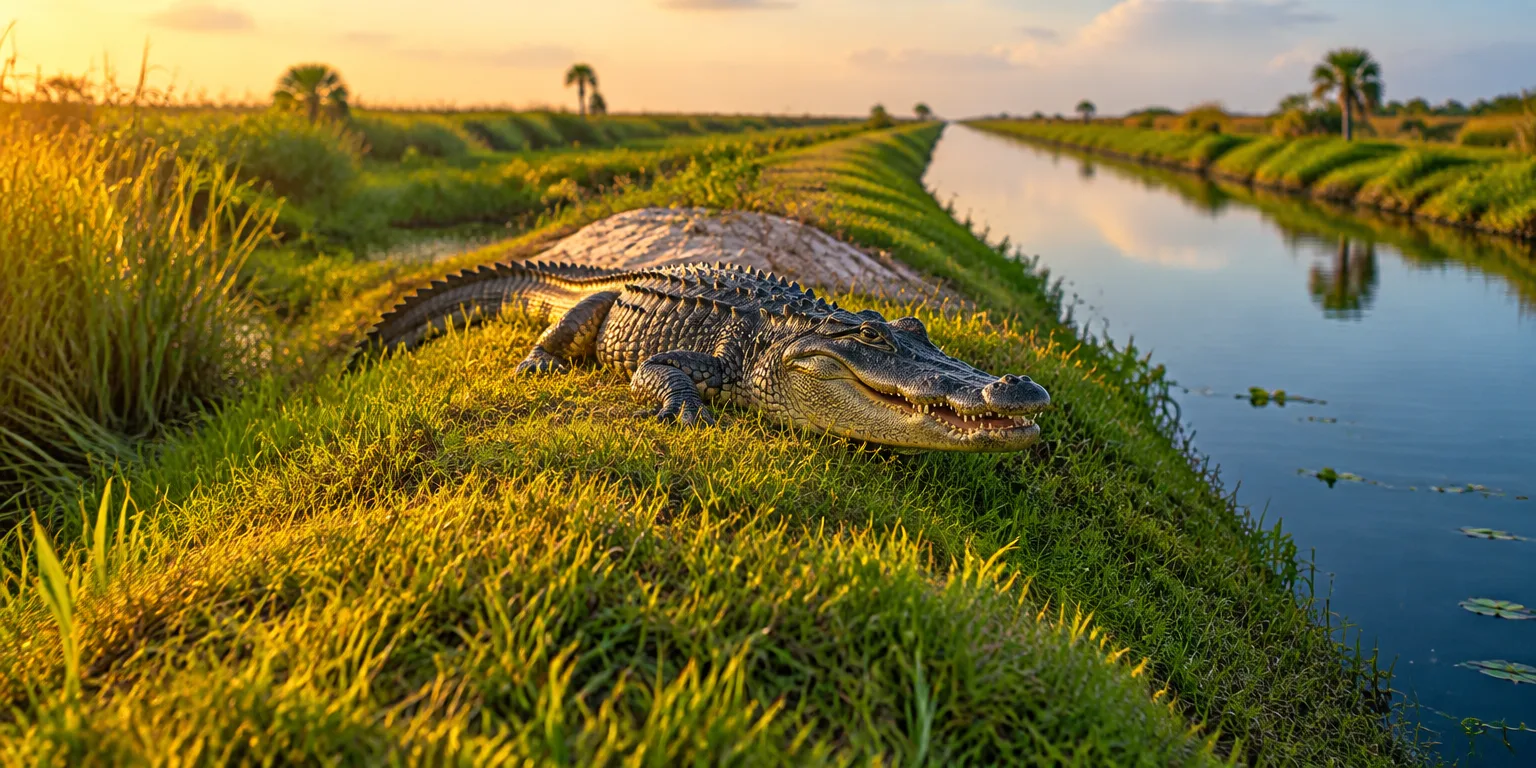
The canal water never touches radioactive equipment, the public cannot get in, and the raised banks are used for nesting.
 PBS Terra · Why Crocodiles Are Thriving in the Shadow of A Nuclear Plant
Jodie, who works at Turkey Point, recalls that "in 1978, while doing some work on site, we found a crocodile nest." The plant is the Turkey Point Nuclear Power Plant just south of Miami. Its two nuclear units started running in the early 1970s, a few years before the nest turned up.
At the time, American crocodiles in South Florida were in deep trouble. Mike Lloret, who monitors the crocodiles at Turkey Point, says the population was "about 150 to 300 animals in the '60s and '70s." Houses had replaced much of the coastal habitat where the animals nested.
After the nest was found, staff at the plant started learning more about the crocodiles on site. The closed site turned out to be an accidental refuge. Turkey Point now holds South Florida's densest cluster of American crocodile nests, and the regional population has risen from just a few hundred animals to more than 2,000. In 2007, the species was moved from endangered to threatened.
The refuge exists because of how the plant cools itself. Water moves through the plant to carry away excess heat, then loses that heat while moving through a grid of canals. Jodie compares the setup to a radiator. The water takes about 48 hours to cycle back through.
The canal system stretches for 168 linear miles, so large it can be seen from space. Jodie says talk of radioactivity in the canals is a misconception. She says the crocodiles live in brackish water that cycles through the plant without coming into contact with radioactive equipment.
No one built the canals for wildlife. But after the 1978 nest was found, staff recognized three things the closed site offered crocodiles. The canal system had become its own ecosystem with prey for the animals to eat. The raised berms beside the canals were dry ground that could be used for nesting. And the public is not allowed on the site.
That last point mattered as development spread. Lloret says building houses took away a lot of habitat from the crocodile. As crocodiles lost nesting ground elsewhere in South Florida, some began using Turkey Point instead. Monitoring since the 1970s shows the South Florida population rising from only a few hundred crocodiles to more than 2,000.
Questions people ask
Can visitors go see the crocodiles at Turkey Point?
No. The site is an operating power plant with no public access, and the nesting banks are inside the secured canal system. Researchers enter under federal permits to monitor nests and hatchlings, but there is no viewing area.
Why did American crocodiles nearly disappear in Florida?
Hunting and habitat loss drove the decline. They were killed for their hides and, earlier, hunted as pests, while roads and houses filled in much of the coastal nesting ground in South Florida. Federal protection and the accidental refuge at Turkey Point eased both pressures.
How can you tell an American crocodile from an alligator?
Look at the snout and teeth. An American crocodile has a longer, narrower, triangular snout with teeth that show when its mouth is closed, especially a large fourth lower tooth, while an alligator has a broad, rounded snout. Crocodiles also tolerate salt water, so they favor coastal bays and canals where alligators are rarer.