A Party Punch Shirt Outlines Uranium Enrichment No Hobbyist Could Copy
Stevens calls the shirt no risk because enrichment needs state level equipment, and he notes that any enrichment breaks American law.
 The Rest Is Science · Are There More Raindrops In Clouds Or Data In THE Cloud?
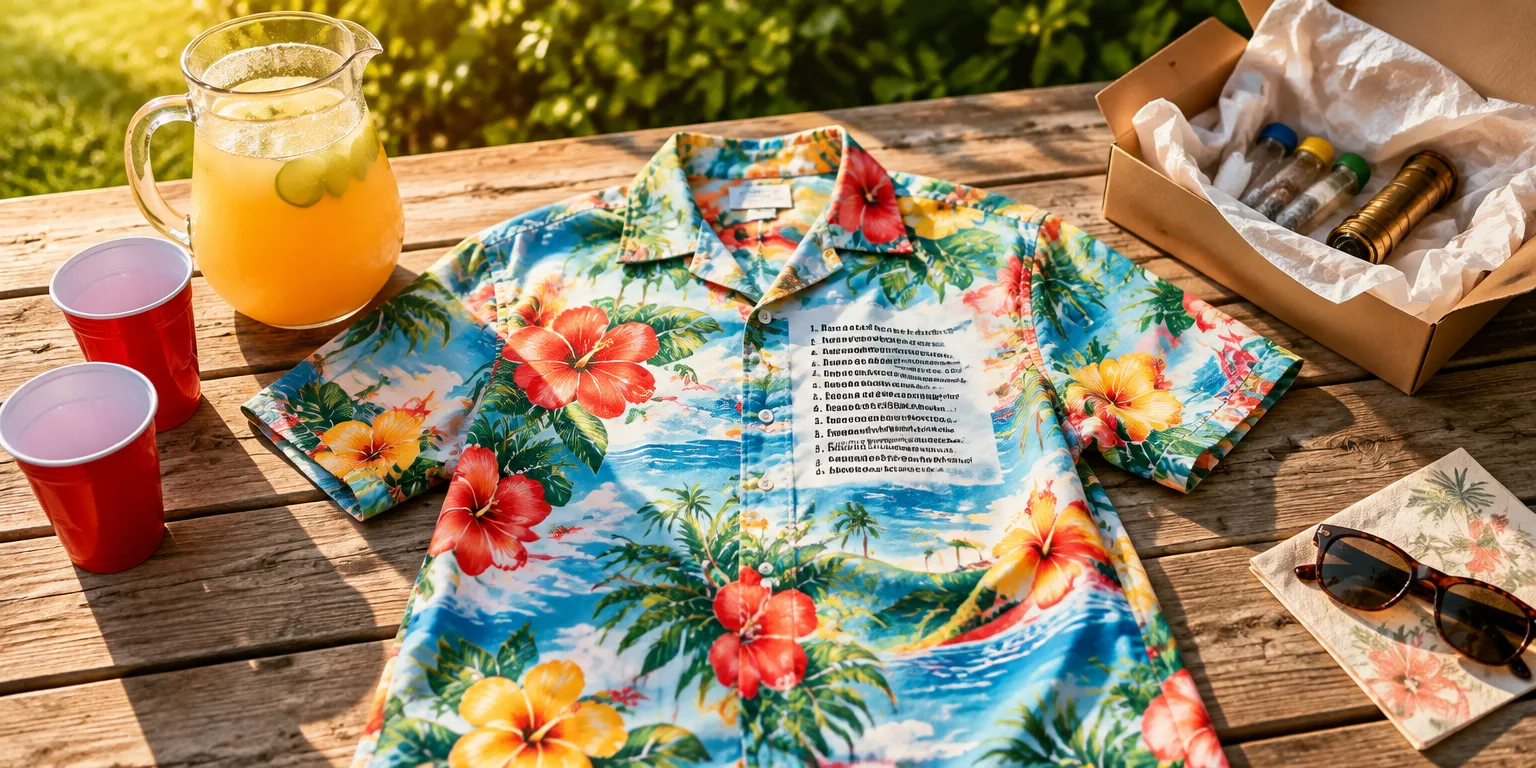
Michael Stevens, who runs the Curiosity Box, a subscription box of science inventions sent four times a year, held up a new piece of apparel his team made to go inside the box while talking with his co-host Hannah Fry.
The shirt is his take on a spring break shirt. It reads Senior Inks, for party time, and carries what looks like a printed recipe for party punch, the kind of margarita mix found on souvenir shirts.
The point is that the text outlines how uranium ore becomes reactor fuel, in steps no home hobbyist could copy. It first describes processing ore into yellowcake, then describes enriching that material. Stevens said he enjoys forcing people to take a closer look and discover it is not a drink at all.
Yellowcake sounds alarming, but Stevens explained that it is not more radioactive than the ore dug from the ground. The rock holds dozens of elements, while yellowcake holds only two, uranium and oxygen. It is still about 99.3 percent uranium-238, the common form, but it weighs less and is more concentrated, so it is easier to transport and to work with for the next steps.
From there, the shirt moves to enrichment. Stevens guessed, "I, I think you shoot the yellowcake with fluorine gas, which is really reactive. And it rips the uranium off and probably burns the oxygen," leaving uranium hexafluoride, a gas that can be spun in a centrifuge. That spinning, which separates lighter atoms from heavier ones by weight, is enrichment, and it picks out the more unstable uranium-235 while what remains is called depleted uranium.
Power plants need fuel with only about 3 percent uranium-235, Stevens said, with higher levels used for submarine and aircraft carrier engines and higher levels still for weapons grade material. He called the shirt method the old-fashioned recipe, saying, "today they don't even really use centrifuges, they use lasers."
Fry, examining the shirt with him, joked, "And this is the point when the American government are onto you." Stevens agreed, saying, "Any kind of enrichment is against the law in the United States." He added that a hobbyist could not do this from shirt instructions because it would require centrifuges, money, experts, and information held only by governments.
Stevens said knowledge is power and allows people to be wiser. He then joked that wearers can keep the instructions handy in case they forget details such as how much hydrogen peroxide to use.
Questions people ask
What exactly is yellowcake?
Yellowcake is a powder made mostly of uranium oxides that is produced after uranium ore is crushed and treated with acids or alkalis. It is called yellowcake because early batches were bright yellow, though modern batches are often brown or black. It is a concentrated, transportable form of natural uranium, not yet usable as reactor fuel.
Is yellowcake highly radioactive?
No, not relative to its mass. It is mostly uranium-238, which decays very slowly, with a half-life of about 4.5 billion years. It is chemically toxic if inhaled or ingested, like many heavy metals, so it is handled with masks, gloves, and sealed drums, but it does not give off intense penetrating radiation.
What is the difference between uranium-235 and uranium-238?
Both are forms of uranium with 92 protons, but uranium-235 has three fewer neutrons, making it lighter and far more likely to split when struck by a neutron. Natural uranium contains only about 0.7 percent uranium-235, with the rest mostly uranium-238. Enrichment raises the share of uranium-235 so a sustained chain reaction is possible.