A Passenger Says He Faced Three-Story Waves on the Way to Antarctica
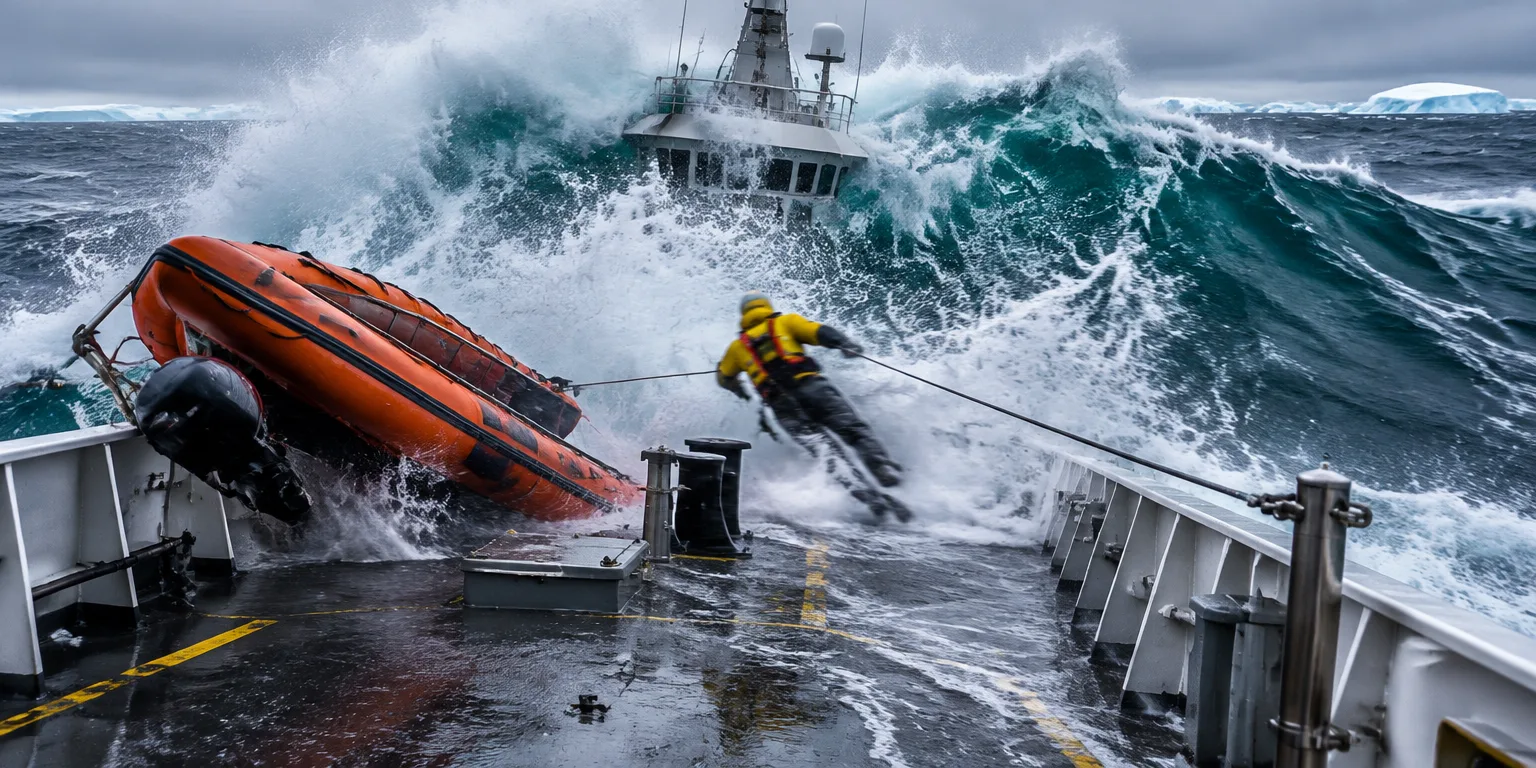
On Olsen's crossing, a rogue wave swept the deck and threw a watchstander across it, and only his safety wire held him.
 The Why Files · The Basement: Brad Olsen | Antarctica’s Forbidden Zones
Brad Olsen, a paying passenger on a small boat bound for Antarctica, climbed on deck in the Drake Passage and thought they were in serious trouble. He had traveled his entire adult life and visited all seven continents, and he later called this the hardest trip he had taken.
Olsen and a companion had found berths after the regular cruises were full. The co-captain offered a cash fare, and Olsen said it took about three weeks of small ATM withdrawals during high inflation to assemble the money.
Olsen said the waves were “as tall as three-story buildings.” It was the crew's first crossing on the rough ocean route toward Antarctica.
On his trip, the routine meant violent motion, vomiting below deck, and long watches above deck looking for ice. He described a crossing of about 92 hours, with passengers throwing up below when they were not on watch.
Olsen was below deck when the worst wave struck. A rogue wave slammed the boat, ripped away a dinghy and other deck equipment, and hit so hard that it bent the captain's instrument panel.
The man on watch was thrown across the deck. He wore a vest attached to the boat by a wire, and that tether held him aboard.
Without it, Olsen said, they would have lost him. Olsen said the man would have faced hypothermia and been gone within minutes.
The man survived with a badly cut leg that kept healing for the rest of the trip. The scare did not end the watches.
On that boat, passengers stood four hours on and eight hours off, night and day, if they felt well enough to stand. They worried most about smaller bergs, about the size of a Volkswagen, which are hard to spot but can still damage a hull.
Questions people ask
Why worry more about small icebergs than huge ones?
Large tabular bergs are easier to see on radar and with the eye, especially with extra lookouts. Smaller chunks, sometimes called growlers or bergy bits, sit low in the water and can be missed among waves. They are still solid ice and can puncture a hull, which is why Olsen's boat kept people on iceberg watch.