A Podcaster Faked an Identity to Lure a Suspect to a Bar
He spent three hours asking about a missing woman in Nome, then ordered McDonald's until the suspect delivered it.
 The Shawn Ryan Show · #357 Payne Lindsey - “He Was the First Monster I Ever Really Encountered”
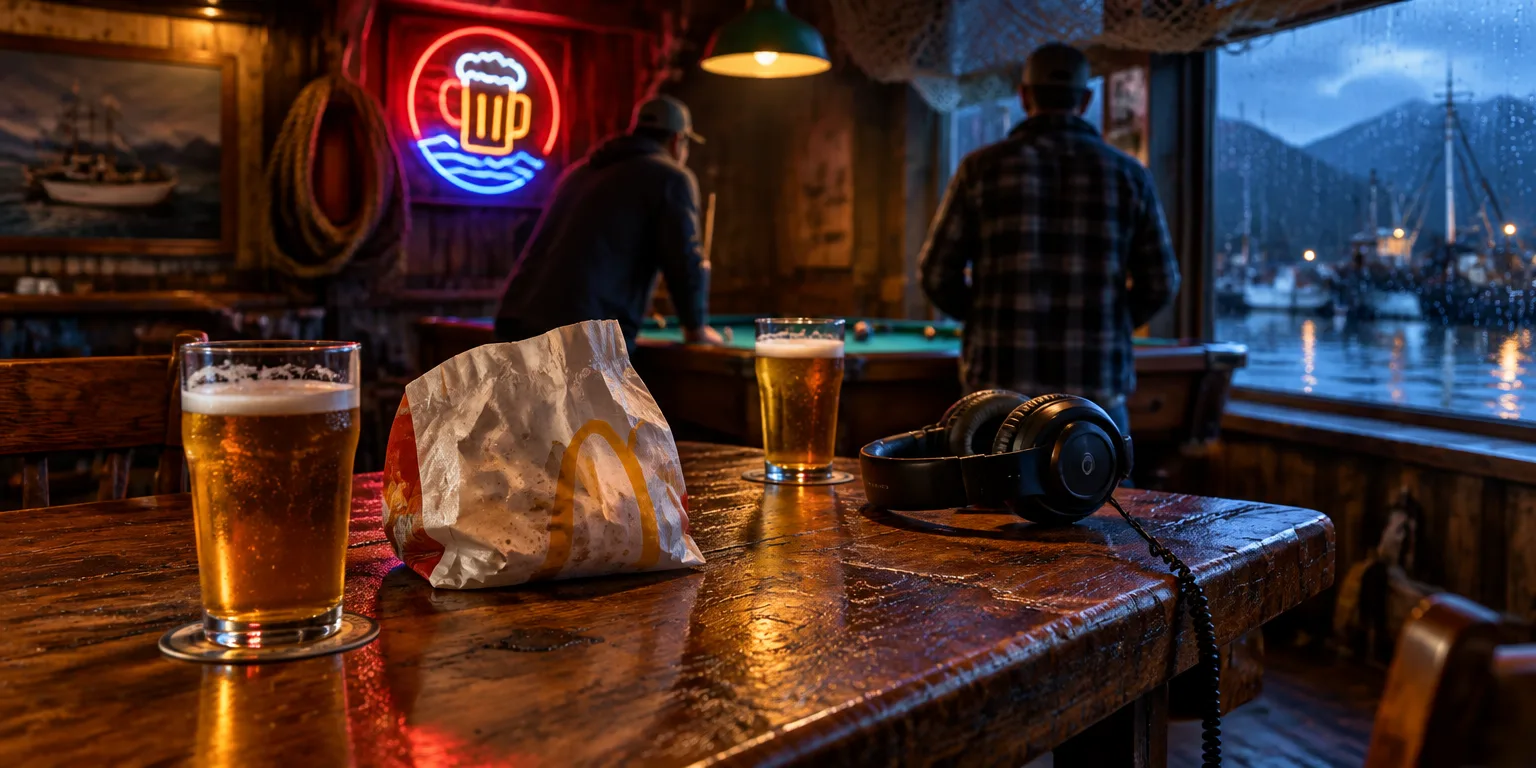
The man called Oregon John walked into the Ketchikan bar on a Wednesday night to meet two aspiring deckhands for a beer.
Only one of them was real. Payne Lindsey, a true crime podcaster from Georgia, was pretending to be a young man from Kodiak who wanted advice on working cargo ships. Two teammates played pool in the back, listening through earpieces hidden under headphones.
Lindsey was chasing answers in the disappearance of Florence Akpiluk, a Native woman last seen with John in Nome, a remote town near the Arctic Circle. John had acknowledged that Florence had been staying with him, and he ended up with her phone and clothes after she vanished. Lindsey was convinced John knew what happened.
The meeting was nine months in the making. Lindsey had first contacted John from an old, spare Facebook account, then built a backstory about an uncle with money who was kicking him out, and a friend who also wanted to become a certified seaman.
John took the bait, explained the ship schedules, and agreed to meet. Lindsey and his friend flew to Alaska in 48 hours. To deflect suspicion, Lindsey acted loud, curious, and a little gullible.
Over three hours, he steered the talk back to Nome every 25 minutes or so. John said people thought he had murdered a missing woman and that he left town because he could not stand the accusations, then offered rambling theories Lindsey took as deflections.
Near the end, John studied him and said he had first thought Lindsey might be that podcast guy. Lindsey said he froze, then answered fast, asking what he meant by podcast guy. John described Lindsey himself, without realizing it, and kept talking for another half hour.
Four months later, Lindsey needed to reach him again. He knew John was delivering for DoorDash, the phone based food delivery service, so he kept ordering McDonald's to his hotel until a driver named John arrived. In the lobby, he told him, you can keep the food, this is Payne Lindsey.
John agreed to try again. He volunteered to take a lie detector test, then failed it twice. More important to Lindsey was one answer the examiner scored as truthful, that John had not been completely truthful with police about his role in Florence's disappearance.
Questions people ask
Can a failed polygraph prove someone is guilty?
Polygraphs measure heart rate, breathing, and sweat, and examiners look for stress linked to deception. Most scientists say they are unreliable, and results are generally not allowed as evidence in American courts, though investigators sometimes use them to press suspects or rule people out.
Are journalists allowed to pretend to be someone else?
News organizations generally discourage reporters from lying about who they are, and many consider impersonation acceptable only as a last resort for important public matters. Podcasters and independent investigators face the same ethical questions, with even less formal oversight, and Lindsey said he felt uneasy about tricking John.
Why is a disappearance in Nome so difficult to investigate?
Lindsey said Nome is small and remote, with only a few thousand residents, and that getting a real investigator to visit is hard to come by in Alaska. He said his investigation stalled even after John made contradictory statements that warranted a visit. Lindsey said he believes there is likely corruption or serious incompetence at the local and state level, though he does not think every officer is complicit.