A professor argues Gen Z's nonsense videos are a refusal to be sold to
The absurdity is the point, she says, a way to stay honest in a system that treats attention as something to extract and sell.
 Deep Questions with Cal Newport · The Truth About Brain Rot
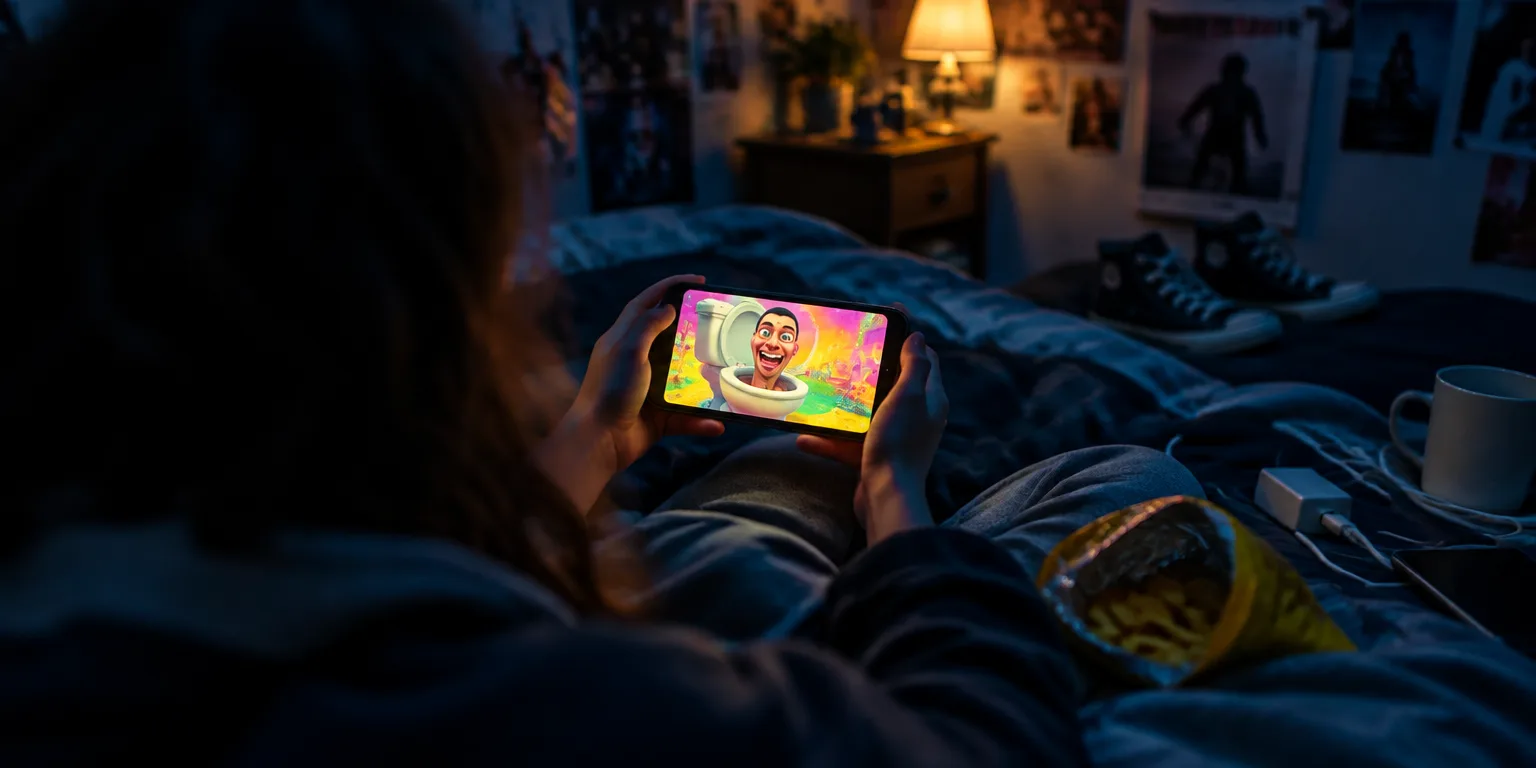
The computer scientist and author Cal Newport had just played two clips he could barely explain. One was a singing toilet known as Skibidi Toilet. The other was an Italian language clip about hybrid animals called Trippi Troppi. He wanted to know why a generation watches such empty videos so intently.
He said he found an answer in an essay in The New York Times, called "The Truth About Brain Rot," by Maxi Heitmeier, a professor at Rowan University who had interviewed members of Gen Z. Heitmeier argues that the viewing is deliberate.
One young person she interviewed put it this way: "If everything is content now, then brain rot is anti-content. It is the only way to be free online, which is to do something so stupid that it can't be monetized."
What they meant starts with the business. The essay adds that the system chases engagement. Heitmeier writes: "The business model of social media treats user focus as a commodity to be extracted and sold." She writes: "The more time we spend, the more advertising revenue we generate for the owners of the platforms." And she writes: "It does not promote high-quality content."
Heitmeier argues that brain rot "breaks the mold of social media through its absurdity," through what she calls "its deliberate refusal of narrative, purpose, or message."
She compares it to Dada, the nonsense art movement that emerged during World War I as a rejection of the reason and nationalism that the artists blamed for the war. Just as Dada artists, in Heitmeier's words, "rejected the cultural logic that had led to industrialized killing," she argues brain rot, "in its own meme-driven way," "refuses to participate in the attention economy on the economy's terms."
Newport added his own gloss. The generation that grew up with what Heitmeier describes as "its every digital interaction tracked, measured, and monetized" is rebelling by making itself boring. It will not play the game he said millennials played, getting attached to figures on Twitter or Instagram and feeling included in a wider online conversation, when, in his view, the attachment was really exploitation.
But Heitmeier adds: "Do not romanticize brain rot." She describes what she calls "the emotional register of people living inside a system they cannot escape." She writes: "They see the manipulation, understand what the algorithms are doing, but they keep scrolling anyway because they cannot imagine a life outside the system." As Newport puts it: "brain rot is less about resistance than it is resignation."
As Heitmeier writes it, and as Newport reads it: "The joke is that there is no joke. The meaning is that there is no meaning."
Questions people ask
What is Skibidi Toilet?
Skibidi Toilet is a long-running animated web series about fighting human-headed toilets, made with a video game animation tool. It started on YouTube in 2023 and became hugely popular with younger viewers. Its plot is chaotic and loud, which is part of why adults often find it baffling.
What was Dada?
Dada was an art and literary movement that began in Zurich around 1916, during World War I. Its artists made deliberately irrational, silly, and anti-beautiful work, including readymade objects, collage, and nonsense poetry. They meant it as a rejection of the reason, nationalism, and industrial culture they blamed for the war.
What does parasocial relationship mean?
A parasocial relationship is a one-sided sense of closeness with a media figure who does not know you back. Viewers can feel they are friends with a podcaster, influencer, or TV character. Researchers say social media intensifies the feeling because creators reply, livestream, and share daily life.