A Researcher Says the U.S. Could Shut an Ally Out of Military GPS by Leaving It Off the List
A researcher tracing odd satellite messages says they may deliver new military codes from space, and show how a former partner could be shut out.
 Computerphile · GPS Hidden Messages - Computerphile
The clue was a day when navigation satellites stopped acting normal. The researcher had been counting how often a set of hidden GPS messages changed, using an archive stored since 2007. For years the roughly 31 satellites had broadcast the same message together for about 3.7 days, then switched together. Around 26 May 2011 that rhythm broke. On 26 May every satellite stopped sending random-looking data and sent only the repeating pattern 101010, which is not allowed by the specification. At midnight at the start of 27 May they returned to random-looking data, now rotating about every 1.8 days.
That year matches when an over-the-air system for distributing fresh codes was advertised to start, the researcher says, and he reads the hidden messages as likely carrying that rekeying. He adds that he is not certain and it could be other things. Journalists asked the military, which gave no immediate response, so the design remains unconfirmed.
In the researcher's account, the need starts with how fragile ordinary GPS is. The public signal leaves the satellite with about as much strength as a faint household bulb, and almost nothing remains by the time it arrives at the ground, so even a very small transmitter can overpower it. Because the public signal is predictable, an attacker can calculate what it would look like somewhere else and broadcast that fake version to confuse receivers. The researcher said spoofing is "That's exactly the sort of thing that the military are worried about happening in conflicts."
The military version uses the same satellites but adds encryption, so a receiver needs a secret code as well as satellite positions. That code goes only to the United States and allies, and the researcher says it greatly raises the difficulty of fakery. Jamming, or drowning out the signal with noise, is also harder to do with precision, because an enemy that cannot predict the signal has trouble targeting it.
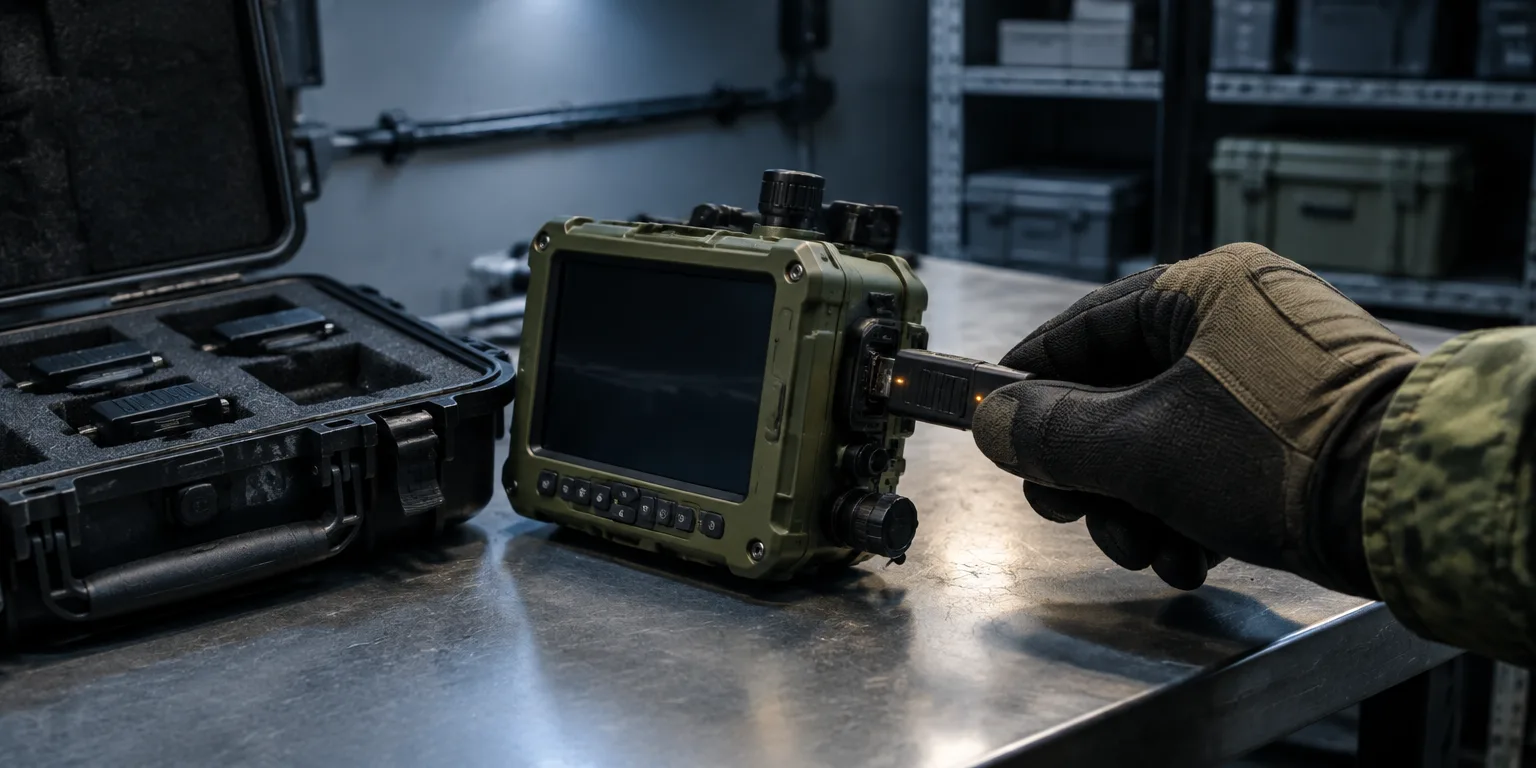
Getting fresh codes out is awkward, he says. They can't simply be put out on the internet, so teams have to go physically from receiver to receiver, loading them with what he calls glorified USB sticks. Alliances also change, so working codes must be replaced regularly.
What the scheme could do, in his reading, is use layers. Long-lived upper codes would go separately to the U.S. military, to NATO, and to current partners, while the working code that unlocks the signal, valid for a week, would be broadcast from space locked separately under each upper code. If Washington had a falling out with a partner, he says, it would simply stop including the version locked under that partner's upper code and send only the others. That partner would still hold a valid upper code, in his reading, but it would no longer receive the new working code, and so would no longer be able to use the signal.
Questions people ask
What is the difference between spoofing and jamming?
Jamming means blasting noise to drown out the faint satellite signal so a receiver cannot get a fix. Spoofing means broadcasting a carefully built fake that looks real, so a receiver calculates the wrong position. In the researcher's account, encryption makes both spoofing and precise jamming much, much harder, because an attacker who cannot predict the signal cannot fake it convincingly or target it precisely.
Why can't the military just email the GPS keys?
Any code sent over the open internet can be intercepted, copied, or stolen, and then an enemy could use the encrypted signal or fake it. Physical loaders and encrypted radio broadcasts keep copies inside controlled hardware and trusted channels. The inconvenience is the point: fewer copies in fewer places means fewer chances to leak.
If the revoked ally recorded yesterday's broadcast, can it keep using GPS?
Only briefly. In the researcher's reading there are two lifetimes. The working code that unlocks the signal is short lived, valid for about a week, so an old recording soon stops working. The upper codes used to unlock new working codes last much longer. A former partner keeps its upper code but, left off the broadcast, cannot learn the next working code.