A Roman soldier marched nearly 36 kilometers in heavy gear, then built camp and stood guard
In Germany, beyond Rome's roads, soldiers spent more time building causeways and camps than fighting.
 TED-Ed · A day in the life of a Roman soldier - Robert Garland
For Servius Felix, a Roman foot soldier serving in Germany in 15 CE, a great march meant covering 30,000 Roman paces in a single day, or nearly 36 kilometers, on foot.
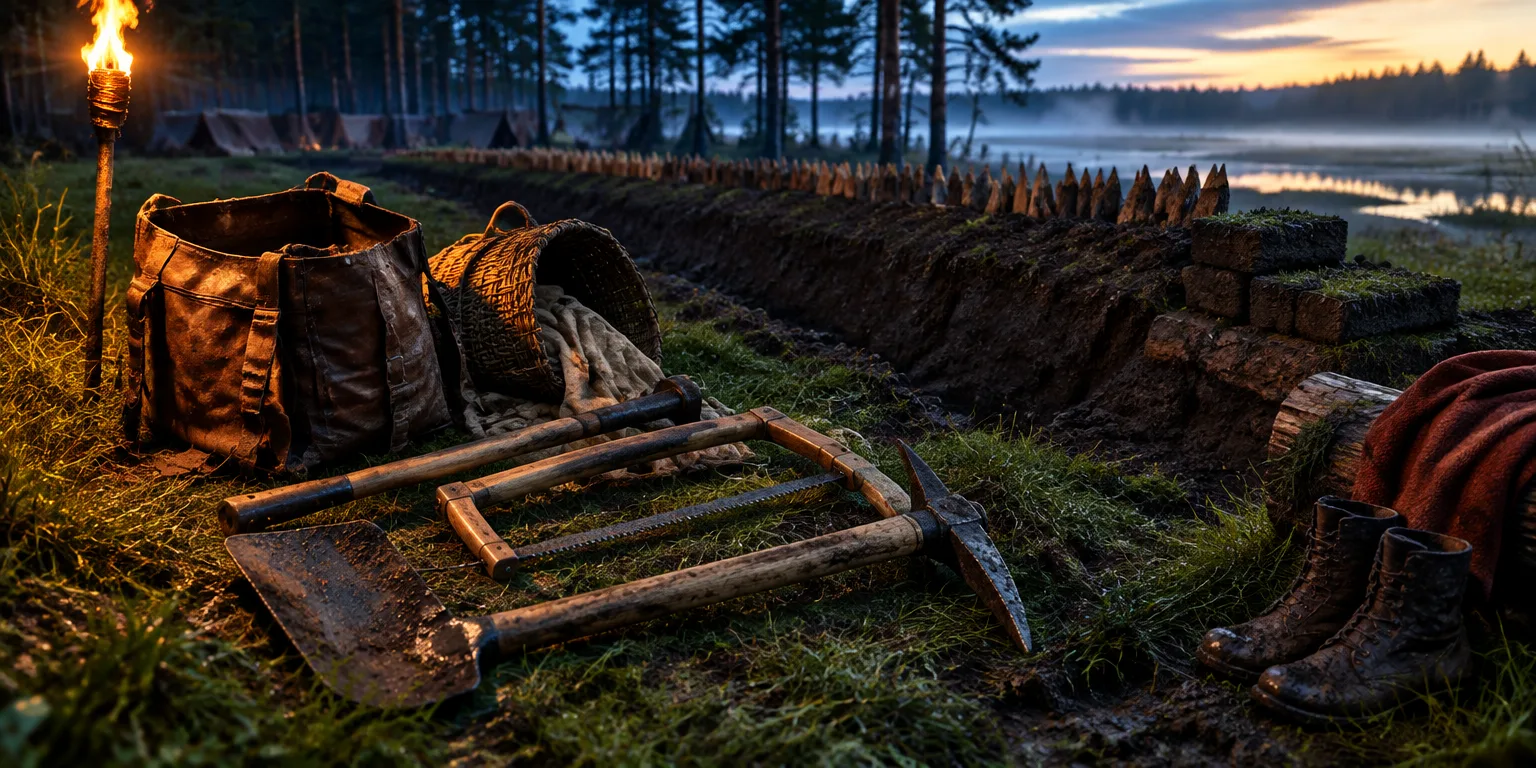
He did it carrying more than 20 kilograms of armor and weapons, not counting his pack. That pack, called a sarcina, held his food and the tools for his second job of the day. Inside were a spade, a saw, a pickaxe, and a basket.
In Germany, the marching itself was harder than it sounds. The forests and marshes lay beyond the empire's road system, so legionaries had to build causeways and bridges just to keep moving. Lately, they had spent more time on that construction work than on fighting.
Arrival did not mean rest. Each night the men built a fortified camp, digging and cutting and hauling with the tools they had carried all day. Then there was guard duty.
After one great march, Servius drew first watch. That meant tending the pack animals and staying alert for ambush, so although he was exhausted, he barely slept. The next morning, he would march again.
Questions people ask
Why build a whole camp every night?
Almost every night on campaign. The camp was ringed by a ditch and an earth wall topped with stakes, with tents laid out in the same order each time. It protected against surprise attack and kept thousands of men, animals, and supplies organized.
What did a soldier eat on the march?
Mostly grain, which he ground and baked into hard bread or porridge, plus sour wine, salt, and whatever could be foraged or bought. The army also moved with mules and wagons carrying extra rations, tents, and artillery.
How could anyone walk that far day after day?
Training and pace. Recruits were drilled to march 30 kilometers in about five hours in full kit, and a lighter step on ordinary days made the great march possible. Even so, blisters, sore shoulders, and exhaustion were part of the job.