A Runaway Teen Turned Rice Deliveries Into His Own Shop
He swept the entrance before anyone arrived, treated bicycle deliveries as a craft, and was offered the business.
 Founders · #440 The Most Inspiring Autobiography I've Ever Read: Born of This Land: Chung Ju-yung
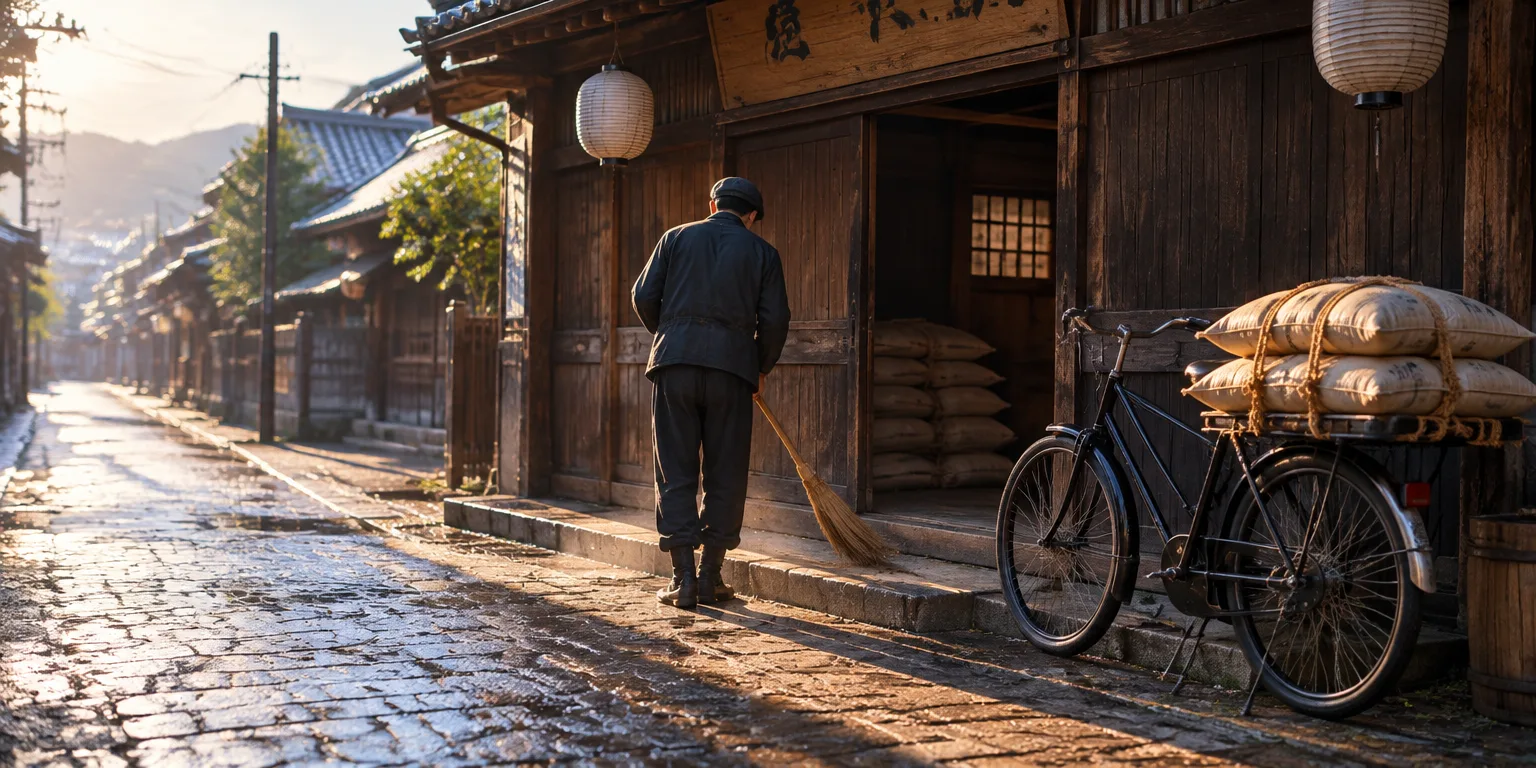
The rice shop was still closed when Chung Ju-yung showed up with a broom.
He was 19, on his fourth and final run from his family's farm, and newly hired as a delivery boy. From the first day, he made himself the first to arrive and swept the entrance before work began.
In two years, that delivery boy would own the shop. It is a story about what full effort can do in an ordinary job, even delivering rice by bicycle.
Chung, the farm boy who would later build Hyundai, had grown up in crushing poverty. His family saved human waste for fertilizer, ate tree bark when winter food ran out, and his parents argued constantly over food.
He had decided that farming would only make his life a copy of his father's. If he worked as hard in the city as he had on the farm, he thought, the same effort might pay more.
In Seoul, he took any work he could find, hauling stone and lumber, laboring for a moving company, and serving as a factory errand boy. Then a rice shop hired him, with what felt like rich benefits, one free bag of rice a month.
For the first time, he felt optimistic. Chung wrote, “Every day was full of joy and excitement,” and that after three years his pay had risen to 20 bags of rice a year.
He did not reach out to his father, fearing that his father would come get him if he found out where he was. When he finally wrote, his father answered, “My son, it seems like you made it.”
At the shop, Chung treated small work as work worth practicing. While the owner's own son slacked off, Chung poured his energy into every bicycle delivery and refused half measures.
His rule, as he later put it, was, “Do it until nothing more can be done. Give it your all to the very end.” After two years, the owner offered to sell him the business.
At 24, four years after running away, Chung renamed it Number One in Seoul. Chung said he “aimed to make it the best rice shop in all of the city,” and began hunting relentlessly for new customers.
Questions people ask
Why was being paid in rice such a big deal?
Rice was the staple food and a form of wealth in 1930s Korea, especially for a young man who had known winters when his family survived on tree bark. A steady wage plus a monthly bag meant he would not go hungry.
What happened to the rice shop?
He lost it about two years later when Japanese authorities, then ruling Korea, imposed rice rationing and took over rice businesses during the Second Sino-Japanese War. Chung and two friends then turned to auto repair, and later to construction, the path that led to Hyundai.
Did Chung ever reconcile with his father?
Yes, in time. Chung had avoided writing home because he feared his father would come and fetch him. After three years, when Chung reported earning 20 bags of rice a year, his father replied with pride that his son seemed to have made it.