A Rusting Battery Can Store Electricity for 100 Hours
Feed it electricity and the rust turns back into iron, ready to rust all over again.
 Half as Interesting · Why This Giant Bag of CO2 is Actually Useful
The battery that could keep the lights on for four days straight runs on rust.
An iron-air battery makes electricity the same way an old truck gets rusty. When iron meets air, it bonds with oxygen to form rust, and that chemical reaction releases energy. In the battery, that energy is captured as electricity. That is the discharge.
Charging runs the same trick in reverse. Feed electricity into the rust, and it splits apart again into plain iron and oxygen. The iron is then ready to rust again, and the cycle can repeat.
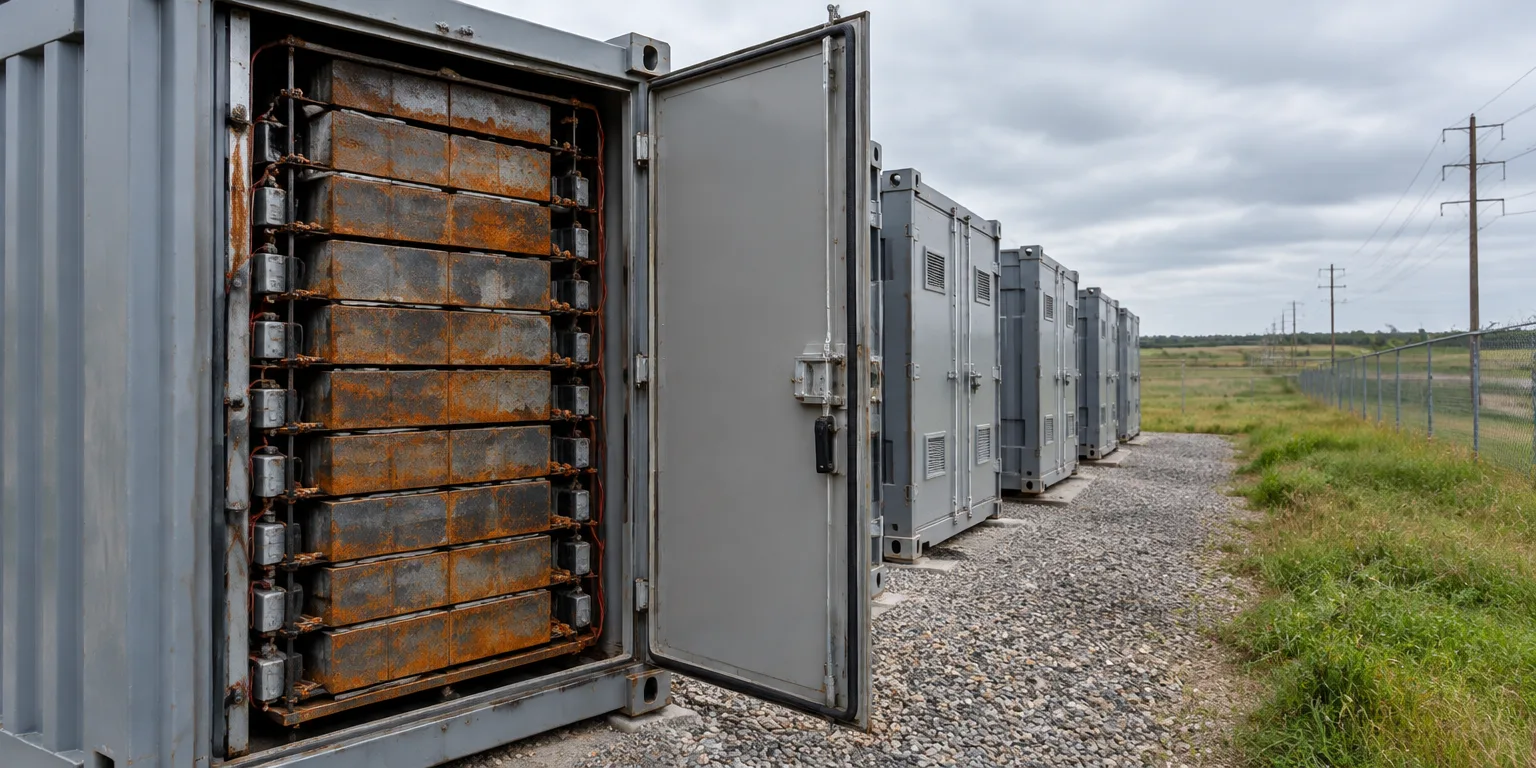
It happens not in one big pot of rust, but in about 50 small iron-air cells working together. A single battery takes up roughly as much space as a pair of kitchen dishwashers. Wire several together and they reach the size of a shipping container, and those containers can be grouped into even larger blocks to serve the power grid.
The payoff is duration. An iron-air battery can store and release power for up to 100 hours, or a little more than four days. It returns about 50 to 60 percent of the energy put into it, with the rest lost in the conversion.
The idea is already out of the lab. Or Energy, a Dutch company, has one running in Delft, and Form Energy, an American company, has projects underway across the United States. Built from cheap, plentiful iron, the system offers a simple bargain: let metal rust when you need power, and unrust it when you have power to spare.
Questions people ask
Why does rusting release energy in the first place?
Rust forms when iron bonds with oxygen from the air, and forming those chemical bonds releases energy as heat. An iron-air battery is designed to capture much of that energy as electricity instead of heat. The reverse reaction needs an input of electricity to break the bonds apart.
Why does the battery return only 50 to 60 percent of the energy?
No energy conversion is perfect, and some electricity is lost as heat when rust forms and when it is split apart again. Fans, controls, and other equipment also use power. For very long storage, operators often accept lower efficiency in exchange for cheap materials and many hours of backup.
Is iron actually cheaper and easier to get than battery metals like lithium?
Yes. Iron is one of the most abundant metals in the Earth's crust and is mined at massive scale for steel. It does not require the specialized mines and processing used for lithium, cobalt, or nickel, which is why developers favor it for huge, stationary grid batteries where weight matters less.