A Scottish Family Endured Three Months Of Stones, Fire, And Apparitions
A minister gathered signed testimony about the torment to argue that spirits were real.
 After Dark: Myths, Misdeeds & the Paranormal · Scotland's Worst Poltergeist
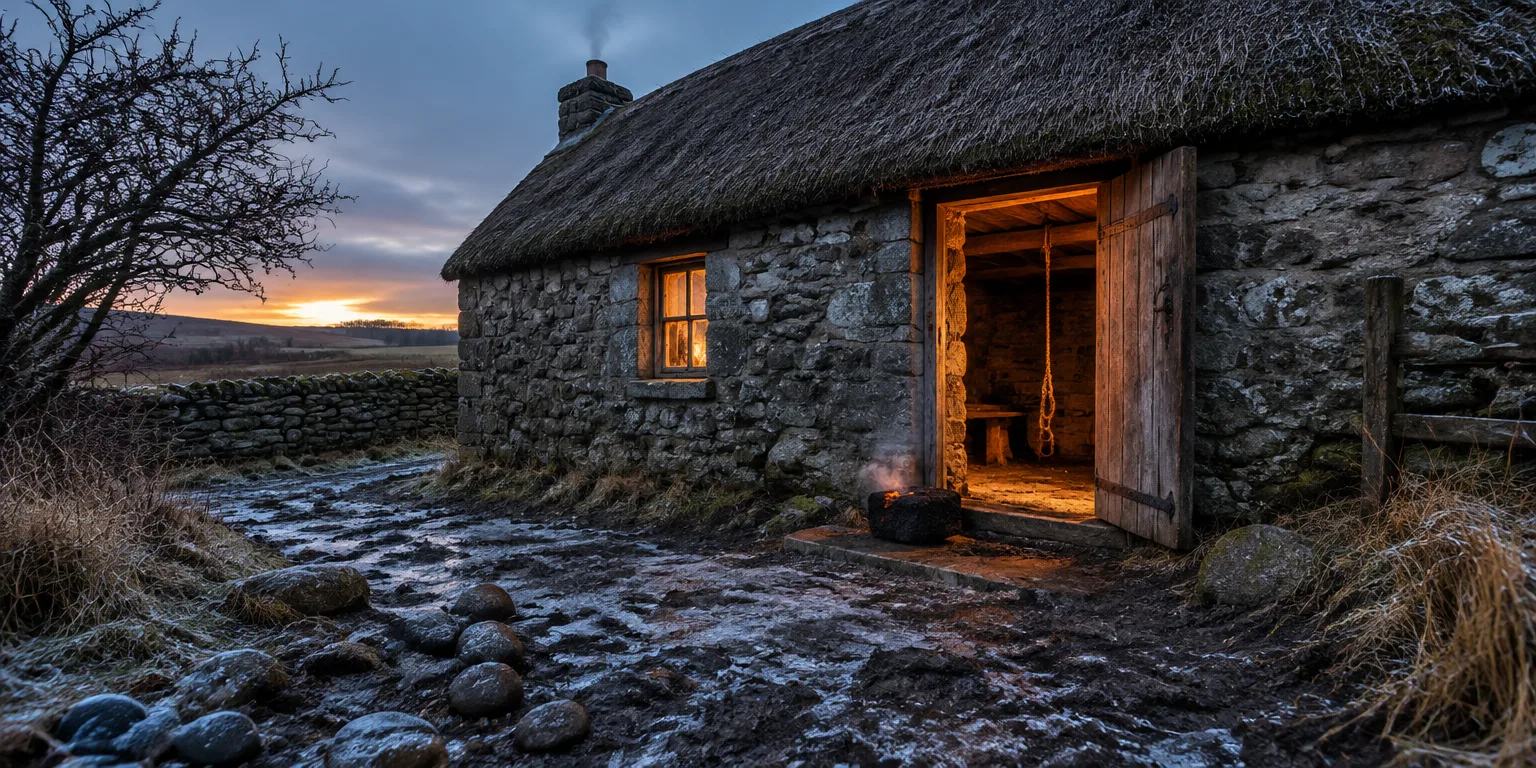
In February 1695, stones started pelting the house of Andrew Mackie, a Scottish stonemason.
From February to May 1, the family suffered disturbances that a local minister recorded in a detailed account to prove that spirits were real.
Alexander Telfair, the Presbyterian minister of the parish, said he was writing "for the conviction and confutation of that prevailing spirit of atheism and infidelity in our time." He gathered statements from neighbors and fellow ministers who said they had seen the disturbances themselves.
The attacks were relentless and physical. Stones struck the walls and the people, often when the family was at prayer. The unseen visitor slapped the children on the hip, and tossed burning blocks of peat, a dense fuel cut from the earth and dried for heating, into the house to start fires. It also set the barn alight.
The animals fared strangest. Cows were untied and then retied in odd places. One cow was hoisted by a rope to the ceiling, its feet barely grazing the floor.
Martha McGill, a historian who studies ghosts and belief, says people at the time thought God gave the Devil limited power to vex people, but more latitude to torment animals. Even so, McGill says she does not think any of the Mackies' cows or sheep died.
At times the tormentor took shape. Telfair said he saw a white arm, from elbow to hand. A neighbor reported a blond-haired man peering through a window. The children saw a boy of about 14 in a bonnet, and near the end came a black cloud that seemed to fill the air.
People then believed the Devil, as a spirit, had no fixed body. He could borrow a corpse or shape a body from air, as if molding clay, McGill says.
Ministers from neighboring parishes came to investigate and to help make sense of the visitor. There was no exorcism, a formal rite to drive out evil, but the ministers watched, questioned, and later signed their names to Telfair's pamphlet.
Near the end, the Mackies left for a night and neighbors moved in to keep watch. The disturbances eased and stopped on May 1, as if the spirit had been allowed only a set season to torment them. The family moved back in. What became of them afterward is unknown.
Questions people ask
What does the word poltergeist mean?
Poltergeist comes from German words for rumble and ghost. It is used for cases that center on noises, thrown objects, and physical interference, rather than a single figure that speaks or delivers a message.
What is peat, and why was burning peat dangerous?
Peat is partly decayed plant matter cut in blocks from boggy ground, dried, and burned for heat. In a house with thatch, timber, and stored grain, a burning block thrown indoors could easily start a destructive fire.
Why would proof of a ghost matter to arguments about atheism?
In the late 1600s, some philosophers argued that the universe worked like a machine, which raised doubts about spirits, the Devil, and life after death. Ministers and other writers collected well witnessed ghost accounts as evidence that invisible spirits still acted in the world.