A showman psychiatrist drove town to town doing 19 lobotomies a day
Walter Freeman used a carnival barker's tricks to sell brain surgery, and once killed a patient when he paused to take a photo.
 Astral Codex Ten · Your Book Review: Great And Desperate Cures
At Cherokee State Hospital in Iowa, Walter Freeman, a psychiatrist and neurology professor in Washington, operated on 25 people in one day. Three died during or soon after surgery. One loss came from a mishap no one in the room expected.
Getting into the brain through the eye socket normally took a firm tap with a mallet. In one woman, the bone was unusually thin, and the instrument slipped through with almost no pressure. Freeman paused to record the position with a photograph, and the tool dropped farther into her head on its own. She never regained consciousness. An autopsy later found the tip well past the frontal lobes, deep in the midbrain near a small structure that helps control movement.
Freeman was, above all, a performer who built crowds and then used them to spread the operation.
As a young professor at George Washington University, he dissected human brains in class with a small wooden point and drew nervous system diagrams on the blackboard with both hands at once. The Saturday demonstrations moved to a large auditorium and drew as many as 70 people, though attendance was optional, and some medical students brought dates just to watch. His future surgical partner, James Watts, a neurosurgeon, first noticed him in 1933 strutting on the Atlantic City boardwalk in a wide brimmed hat and carrying a cane, shouting at medical meetings that his films were about to start.
From 1936 to 1946, Freeman and Watts kept a psychosurgery display at the annual meeting of the American Medical Association. Freeman stood beside it clicking a noisemaker to pull physicians closer. Watts recalled that he would "begin to talk like a barker at a carnival," describing relief from depression and suicidal thoughts while showing before and after pictures, X-rays, and sketches. Freeman said the publicity was needed to push hospital administrators to give the method a fair trial.
He sold his 1942 book, Psychosurgery, the same way. He created the dust jacket art and wrote the back cover copy himself, urging readers to "Read the last chapter to find out how those treasured frontal lobes, supposed to be man's most precious possession, can bring him to psychosis and suicide!" The cover showed a drilled skull releasing black butterflies, a reference to the French phrase for depression, "J'ai des papillons noirs," or "I have black butterflies."
By then the older operation, which opened the skull from the side and needed a neurosurgeon, was too slow and costly for crowded state hospitals. Freeman promoted a faster method through the eye socket that required no drilling and no neurosurgeon, and he took it on tour with his tools in his pocket.
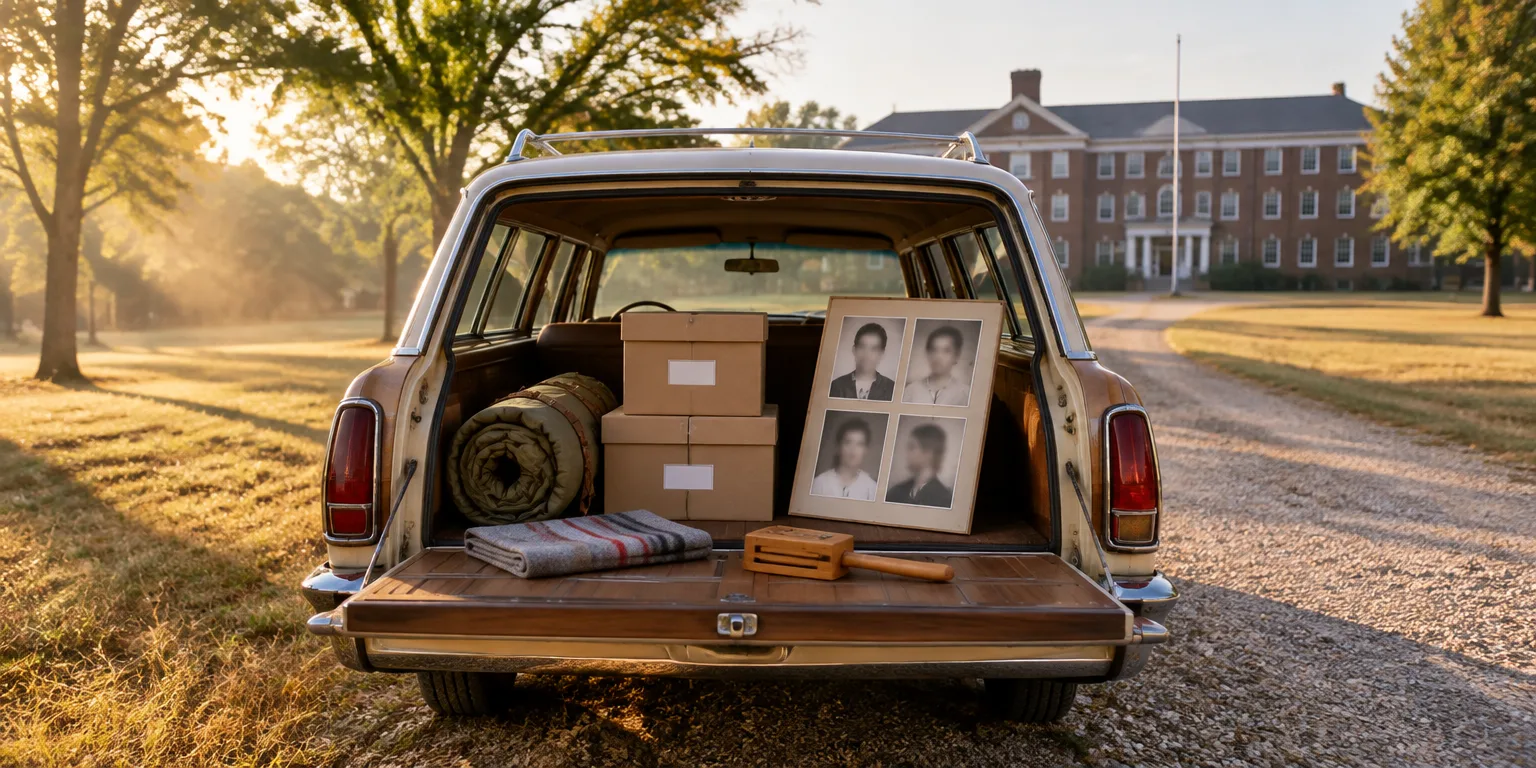
On one summer drive that stretched five weeks, he covered 11,000 miles in a station wagon packed with camping gear plus a shock treatment device, a voice recorder, and a filing cabinet of records and photographs. His log lists four patients in Little Rock on 29 June, then stops in Texas, California, Washington, South Dakota, Nebraska, and Missouri, with 25 in Cherokee, Iowa, on 8 August and 16 in Independence, Iowa, the next day. With hospital staff helping, he completed 225 procedures in 12 days in August 1952, or about 19 per day.
He kept operating until hospitals barred him from surgery. In February 1967, at age 72, he operated for the last time at Herrick Memorial Hospital. The woman on the table was someone he had first operated on in his Washington office in 1946 and again in 1956. During this third operation, a blood vessel tore during the deep cut, causing severe bleeding. She died several hours later. Freeman died in 1972, largely ignored by the small psychosurgery community that remained.
Questions people ask
What exactly was a transorbital lobotomy?
It was Freeman's streamlined version of the lobotomy. Instead of drilling holes in the side of the skull, he hammered a long, ice pick like tool through the thin bone at the back of the eye socket and swept it to sever fibers connecting the frontal lobes. It took minutes, required no neurosurgeon, and patients often left quickly, which is why state hospitals embraced it.
Did lobotomies ever help anyone?
Rarely, and not reliably. Some agitated or depressed patients became calmer, and Freeman kept Christmas cards from grateful families. But most suffered apathy, loss of judgment, incontinence, seizures, or death, and the operation did little for schizophrenia, the diagnosis many hospitals used most.
Why did hospitals let him operate so fast?
Crowded state hospitals were desperate and broke, with hundreds of thousands of patients and few staff or treatments. A Delaware superintendent once calculated that each 250 dollar operation could save hundreds of thousands of dollars if even some patients went home or became easier to care for. When antipsychotic drugs arrived in the mid 1950s, cheaper and less destructive, lobotomy quickly collapsed.