A sick chimp made medicine from a toxic plant and was better the next day
Scientists were unimpressed, but a decade of chimp droppings and chemistry showed the sick ape knew what she was doing.
 Short Wave · How scientists discovered that animals are doctors, too
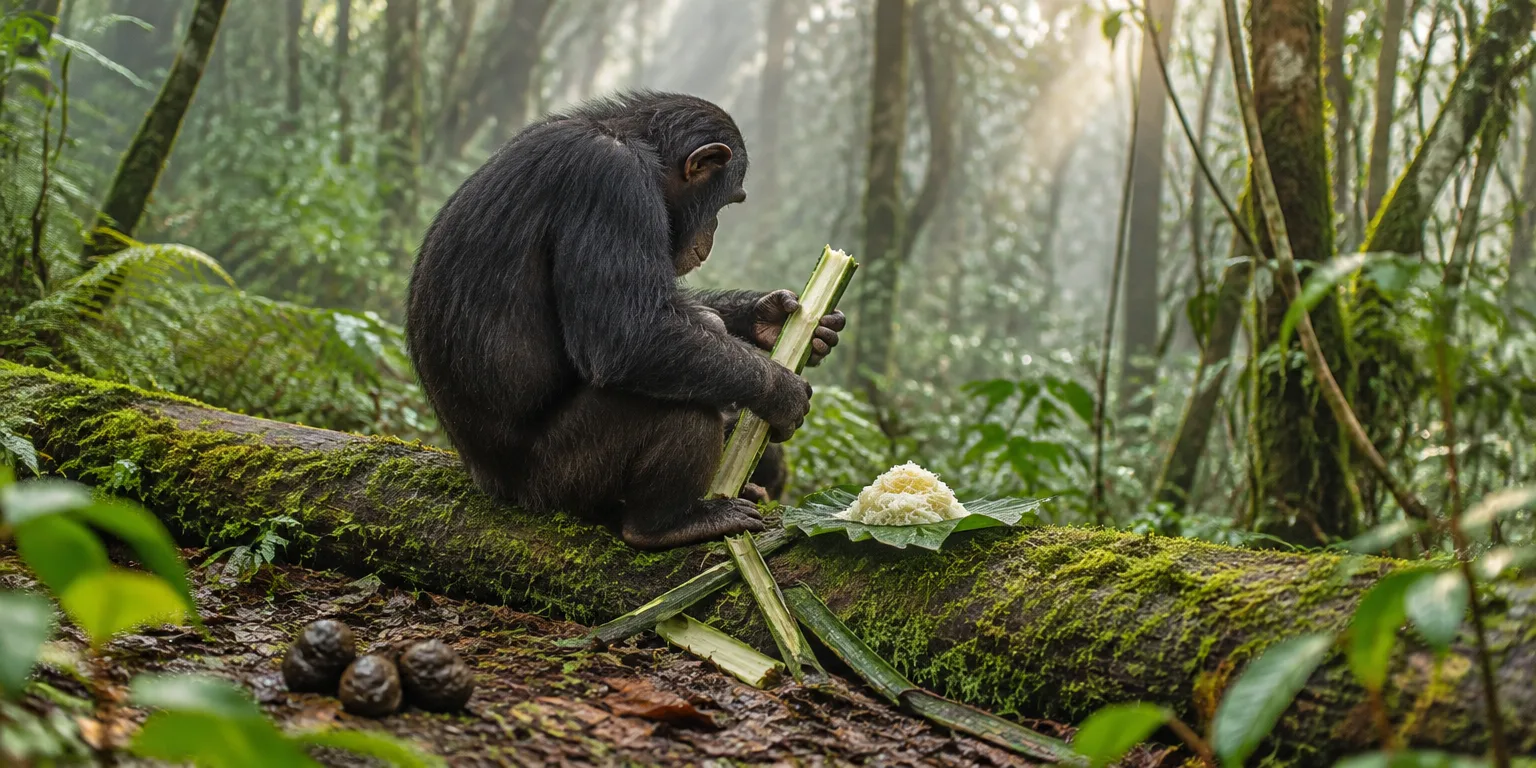
In the hills of Tanzania in 1987, Michael Huffman, who studies primate behavior, was trailing a group of wild chimpanzees, taking notes on what they ate and how they acted, when one mother stood out. Her name was Tsau-shiku, and she was moving slowly and seemed ill. Then she turned to a tropical shrub that is usually kind of toxic and not something they normally ate.
What caught Huffman's eye was not just the choice but the technique. Tsau-shiku peeled away the bark and leaves, chewed the soft inner stem to suck out the juice, and then spat out the fibrous pulp. She was not feeding. She was preparing something.
That unusual meal was something new, and work since then has shown that wild animals use medicine. The shrub was the bitter leaf plant, a plant widely used by people in the region to treat intestinal upsets and malaria, the same kinds of troubles Tsau-shiku seemed to have. Within about 24 hours, roughly the recovery time seen in people who use the plant, she was better.
Huffman might have missed the connection if not for Mohammed Kolunde, the guide walking with him.
Kolunde, a game officer in the Mahale Mountains, told him that his grandfather, his mother, and his mentors in traditional healing all knew stories of plants named for the animals seen using them to treat sickness. Huffman later said he "literally almost fell off the log" he was sitting on.
Back at camp, senior researchers were unimpressed. They told him they had seen chimps nibble that plant all the time, and one insisted that wild animals never get sick. It sounded certain, but Huffman kept watching Tsau-shiku and the others.
Proof took a decade. His team collected and tested large amounts of chimpanzee droppings to confirm which animals carried parasites, tracked whether the sick ones sought out bitter leaf, and checked whether they improved afterward. Chemists found the plant contained about 13 chemicals that were then unknown to researchers. The lethargic mother who had sucked juice and spat fiber had pointed scientists to a plant they had not studied as medicine.
Questions people ask
If the plant is toxic, why would a sick chimp eat it?
Many medicines are poisons at the wrong dose. The bitter leaf plant contains strong, bitter compounds that can harm parasites or pathogens while the chimp absorbs only a small amount of juice and spits out the fiber. That careful preparation likely limits the dose while delivering the active chemicals.
How do chimps learn which plants help when they are sick?
Scientists think the knowledge is largely social and learned. Young chimpanzees spend years watching their mothers closely, including what they eat and how they prepare it. A rare behavior like peeling bitter leaf and sucking the juice is the kind of detailed technique an infant could pick up by imitation.
Do people still use bitter leaf as medicine?
Yes. Bitter leaf, known as Vernonia amygdalina, is widely used in African traditional medicine and cooking, often washed to reduce bitterness. Laboratory and animal studies have found antiparasitic and other bioactive properties, though doctors do not prescribe it the way they prescribe approved malaria drugs.