A Slipped Film Spoiled Franklin's Sharpest DNA Image, So She Retook It as Photo 51
The flawed earlier exposure still showed the helix, but Franklin wanted a cleaner picture for publication.
 science.org · How did Rosalind Franklin miss the helix in her iconic DNA image? She didn’t | Science | AAAS
In a London laboratory in the spring of 1952, Rosalind Franklin and her student Raymond Gosling directed a narrow beam of X-rays at a thin fiber of DNA and waited for hours.
The scattered rays formed a pattern of spots and arcs on film, and that pattern could reveal the shape of the molecule that had scattered them.
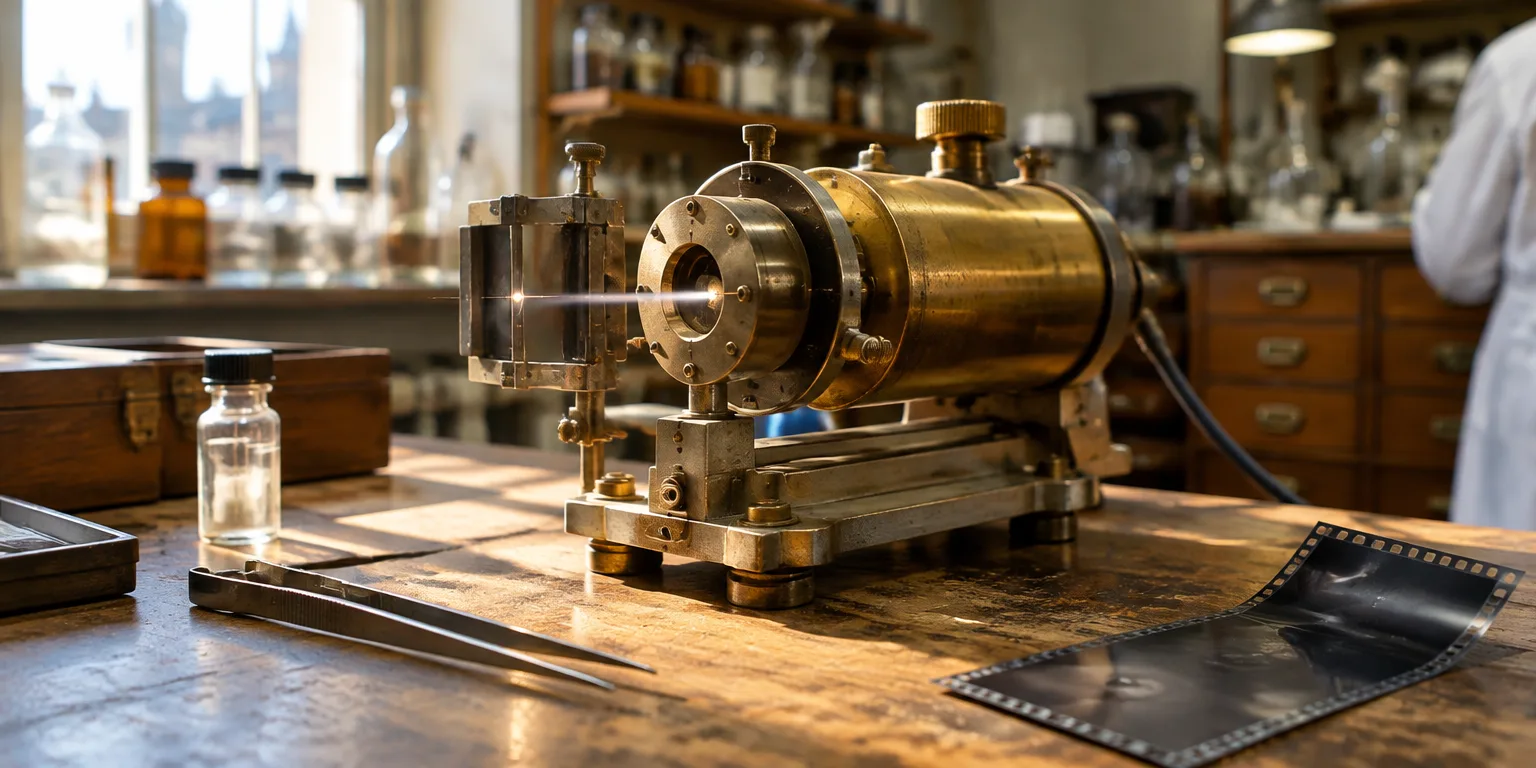
Their camera was a small brass instrument that fit in the hand. The fiber hung across a tiny opening in front, while bits of film inside recorded the scattered rays during the long exposure.
One exposure gave the clearest pattern they had yet made, but it came out lopsided and clipped at one edge. Science historian Alistair Sponsel and crystallographer Brian Sutton later concluded that the support holding the film had moved during the exposure.
That spoiled exposure was photograph 49, and the famous photograph 51 was its replacement. Franklin studied the flawed image and read signs of a helix in it, judged it unfit for publication, and started again within hours with the same speck of DNA.
Elspeth Garman, an Oxford researcher who studies crystals, called Franklin "an experimental perfectionist" and said of remaking the picture, "That’s just what I would do if I had a big result."
The second picture gave Franklin a clean, publication quality record of what she and Gosling had already observed and measured. Nathaniel Comfort, a science historian working on a biography of James Watson, reads it that way, saying photograph 51 was deliberately made to better show a phenomenon they had already recognized.
Franklin left almost no comment about photograph 51 in her laboratory notebooks, and in Comfort's reading that silence made sense. Comfort says the retake was not a new discovery but a clearer illustration for publication.
Questions people ask
What is an X-ray diffraction photograph?
X-ray diffraction bounces X-rays off molecules and records how they scatter. The resulting pattern of spots and arcs lets scientists work backward to the shape of the molecule, much as a shadow suggests the object that cast it.
Why did each picture take hours or days?
Early X-ray setups produced a weak beam, and DNA scatters X-rays only faintly. The film therefore had to sit in the camera for hours or days to build up a pattern clear enough to read.
What happened to the flawed photograph 49?
Sponsel and Sutton studied photograph 49 alongside Franklin's laboratory notebooks kept at Cambridge and the surviving camera gear at King's College London. They used those materials to reconstruct why she made the second exposure.