A Stamp on a Visa Saved His Life in a Congo Cobalt Pit
A local colleague told him to carry a stamped visa, and armed men who had him on the ground let him walk away.
 The Joe Rogan Experience · #2556 - Siddharth Kara
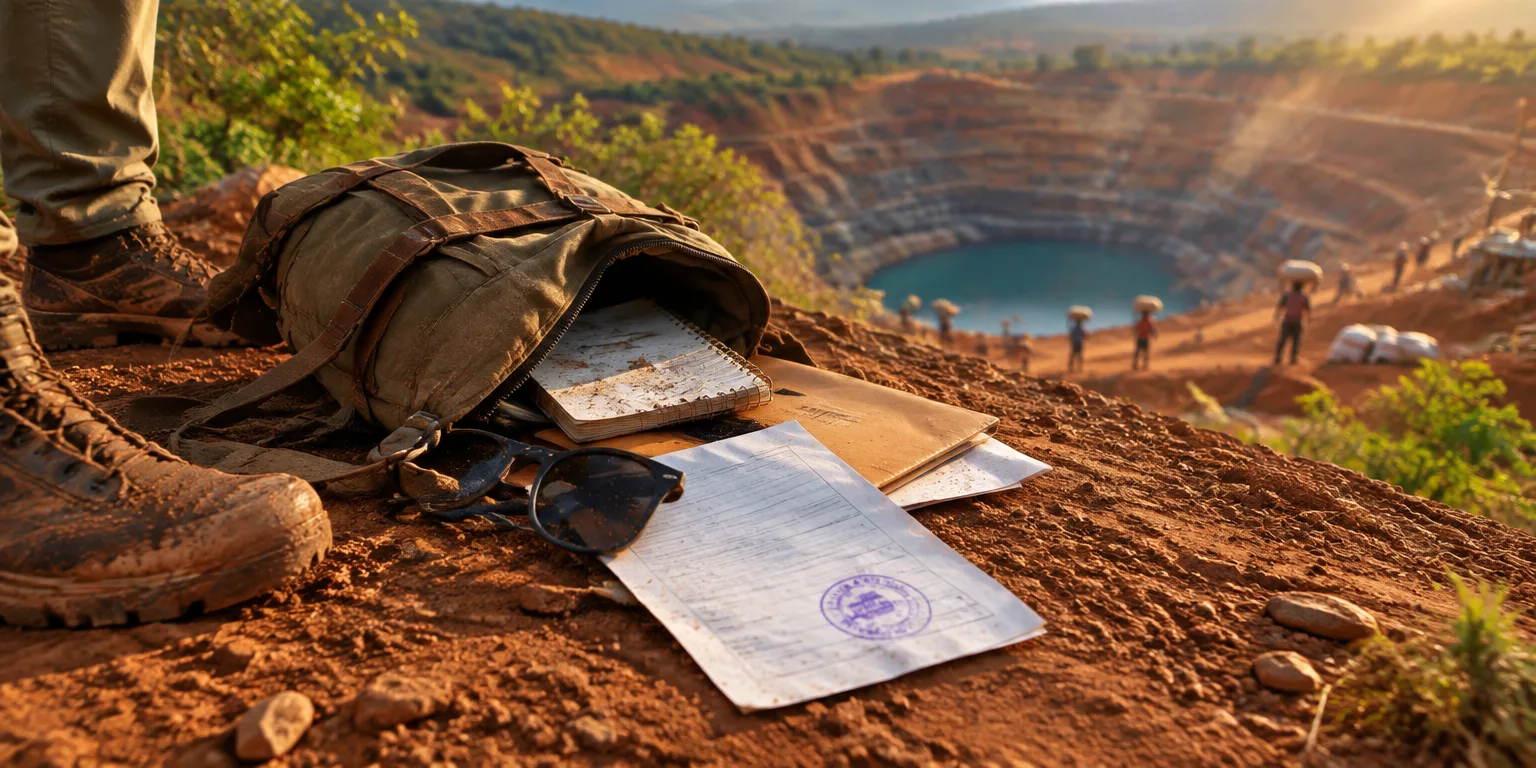
Siddharth Kara, a researcher documenting forced labor in the Congo's cobalt mines, was standing on a remote hill above a militia controlled pit when armed men came barreling up at him with AK-47s.
They threw his backpack off his back, shoved him to the ground, and yanked his belongings out onto the dirt. They pointed their guns at him and demanded his phone, to see if he had taken photos and videos.
Kara had come to document forced labor. That pit, and many like it, help supply the cobalt, lithium, nickel, copper, and tantalum that go into smartphones and tablets. The work is done under coercion, including by children, and by militia run crews whose output passes through traders into the formal supply chain.
On that hill, Kara thought he was going to die. He recalled thinking, "This is it." His guide's face went pale.
What saved him was his visa paperwork stamped by the governor, lying on the ground among his scattered things. Before visiting any mining area, a local colleague had told him, "Siddharth, before you go to any of these places, you gotta get a stamp from the governor's office on your visa paperwork, and you take that with you everywhere." The stamp would signal to any militia that he was under the governor's protection.
Kara had persuaded the governor of Haut-Katanga Province that he was not there to shame the Congo, but to seek the truth about how the Congolese were being exploited to feed demand for rechargeable products. The governor put his stamp on Kara's visa paperwork. Kara carried it everywhere.
His guide just gestured, and Kara knew what he was intending. Kara found the folder, pulled the paper out, and showed the stamp. The gunmen told him and his guide to get out, and let them go.
The phone held another narrow escape. The men forced him to unlock it, but Kara had hidden his mine photos and video in a password protected folder. He showed them only innocuous pictures, of his home and his daughter and other personal things, and they did not know enough to find the rest.
Kara has not returned to the Congo since his book Cobalt Red was published. A colleague told him soon after publication that there was a bounty for him. He continues to get ground research done through contacts there, and says conditions are "not much better," and in some ways have continued to degrade.
Questions people ask
Why is cobalt mining in the Congo so dangerous for workers?
Much of the digging is done by hand in open pits and tunnels without protective gear, and the dust and water carry toxic metals. Kara's later testing found heavy metals far above safe limits and village wells that were strongly acidic. The health toll includes breathing damage, cancers, and birth defects.
What is artisanal mining?
It is a formal term for small scale mining done by hand rather than with large machines. In the Congo, it often means entire families, including children carrying heavy sacks, working waist deep in mineral grit and toxic water for very low pay or under coercion.
Can I avoid Congo cobalt by buying a different phone or an electric car with a different battery?
Not reliably. Congo dominates mined cobalt, and traders mix material from many pits before it is refined, so metal from harsh sites enters the general supply. Even some newer battery chemistries still depend on other Congo minerals such as copper, lithium, or tantalum.