A startup founder bets a thousand tiny data centers that sometimes fail will make AI cheaper
Movva argues that skipping backup generators and accepting outages works because background AI agents running for hours will not notice a delay of minutes.
 Invest Like the Best with Patrick O'Shaughnessy · Neil Movva - Making AI 10x Cheaper - [Invest Like the Best, EP.488]
Neil Movva, founder of Sale Research, a startup selling AI computing at the lowest possible price, was explaining why giant data centers have become almost impossible to build when he laid out his alternative.
"First we scavenge chips and then we scavenge power for those chips," he said.
By scavenging, he means he does not want to bid against larger AI labs for the same supplies. "I'm never going to get concentrated supply. I will only get aggregate supply," he said, and collecting enough of what others will not touch, he argues, will give him unbeatable economics.
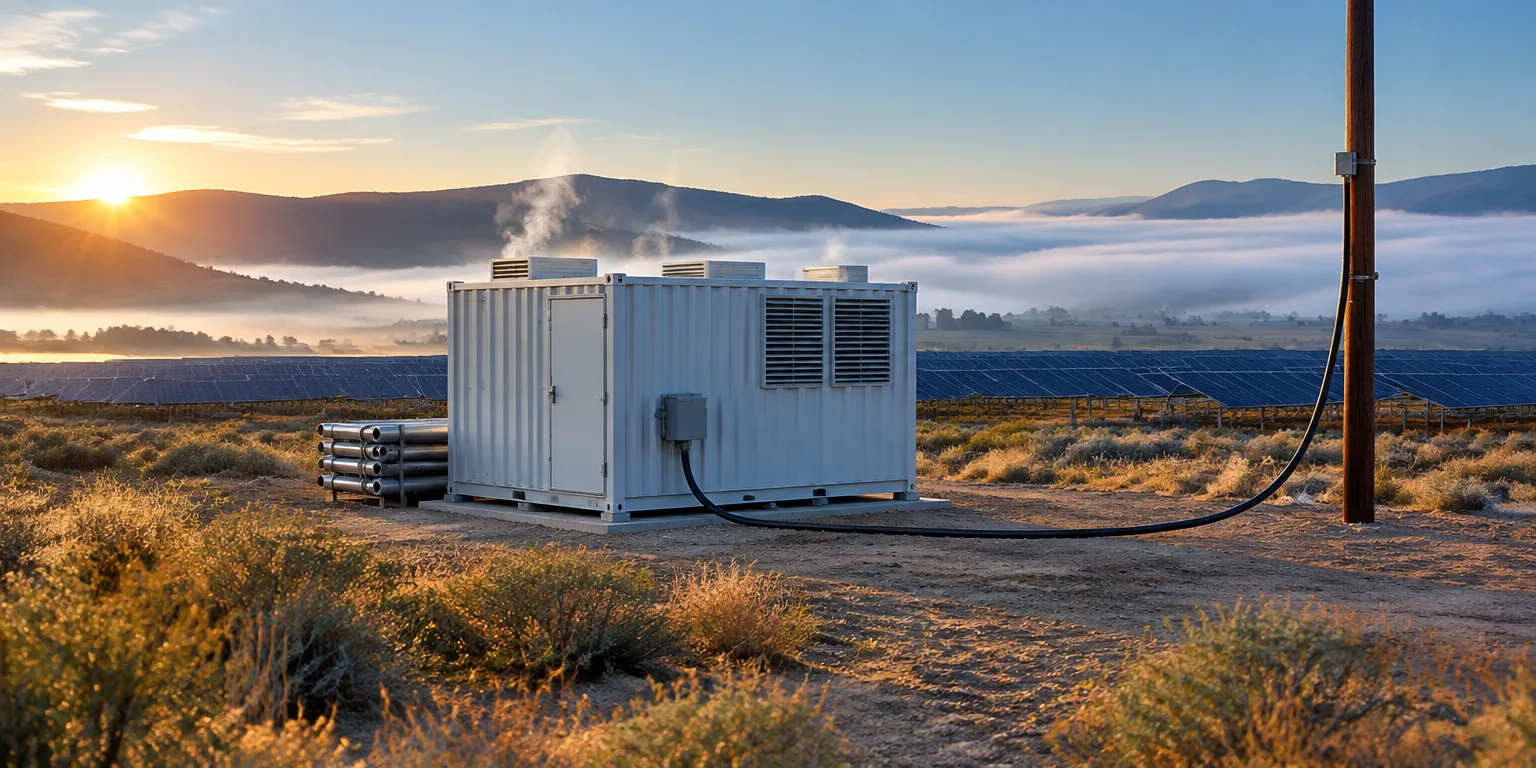
The logic starts with size. Movva says a gigawatt data center is hard to build in the United States anymore, 100 megawatts is increasingly hard, 10 megawatts is on the edge of what is possible, and one megawatt is plentiful. With liquid cooling, he said, a megawatt of computing now packs into about eight racks, each roughly as large as a kitchen fridge.
His plan is to string together a thousand of those small sites and strip out everything that makes big sites expensive. He would buy any chip, anywhere, for any length of time, then install it with no redundant power, no backup diesel generators, and in many cases a single line of fiber with no backup. Uptime might fall to 95 percent, a number he calls fatal for anyone else. He is happy, he said, to be the first buyer for it.
That works, he argues, because of the kind of AI he serves. His customers run background agents that work for hours while the user sleeps, so if a site fails and his control software has to move the job elsewhere, a single step may take minutes longer and nobody cares. Average speed stays competitive, he said, while the worst delays are uncontrolled. "In return, I'll give you unbeatable economics," he said.
He would go further if the price is right. Movva, who describes himself as a son of California who loves solar and wind, said he could probably tolerate 80 percent uptime and outages measured in days or weeks when the wind stops or fog settles over a valley. His answer is to model the weather, predict when a solar or wind powered site will go dark, and shift the work elsewhere.
"We're trying to build the best steel factory in the world, but it will come through mini-mills, not through large monolithic steel plants," he said.
Questions people ask
Why is it easier to find one megawatt than 100 megawatts?
Movva says lots of power exists in aggregate across the country, but it is not concentrated in one place. Training needed it concentrated in one spot because no one wants to deal with training across data centers, he says, so builders chased big sites. Inference can run spread out, which makes small leftover pools useful.
What actually happens when one of his data centers goes offline?
Movva says his control software handles a failure in any single site by finding a new GPU to put that request on. That move can add minutes to that one step. For an agent that runs for hours overnight, he argues, the user never notices.
What does he say about running data centers on solar and wind?
Movva says solar and wind are undertapped in the United States. He says the problem has always been intermittency, a persistent power need met by an intermittent source, but he thinks a solution is not far off because he can model the weather and move work before a site goes dark.