A Study Found People Ate 500 More Calories a Day on Ultra-Processed Food
The extra eating happened without trying, and one nutrition scientist says that overeating, not the processing itself, is the problem.
 Andrew Huberman · Essentials: The Science of Eating for Health, Fat Loss & Lean Muscle | Dr. Layne Norton
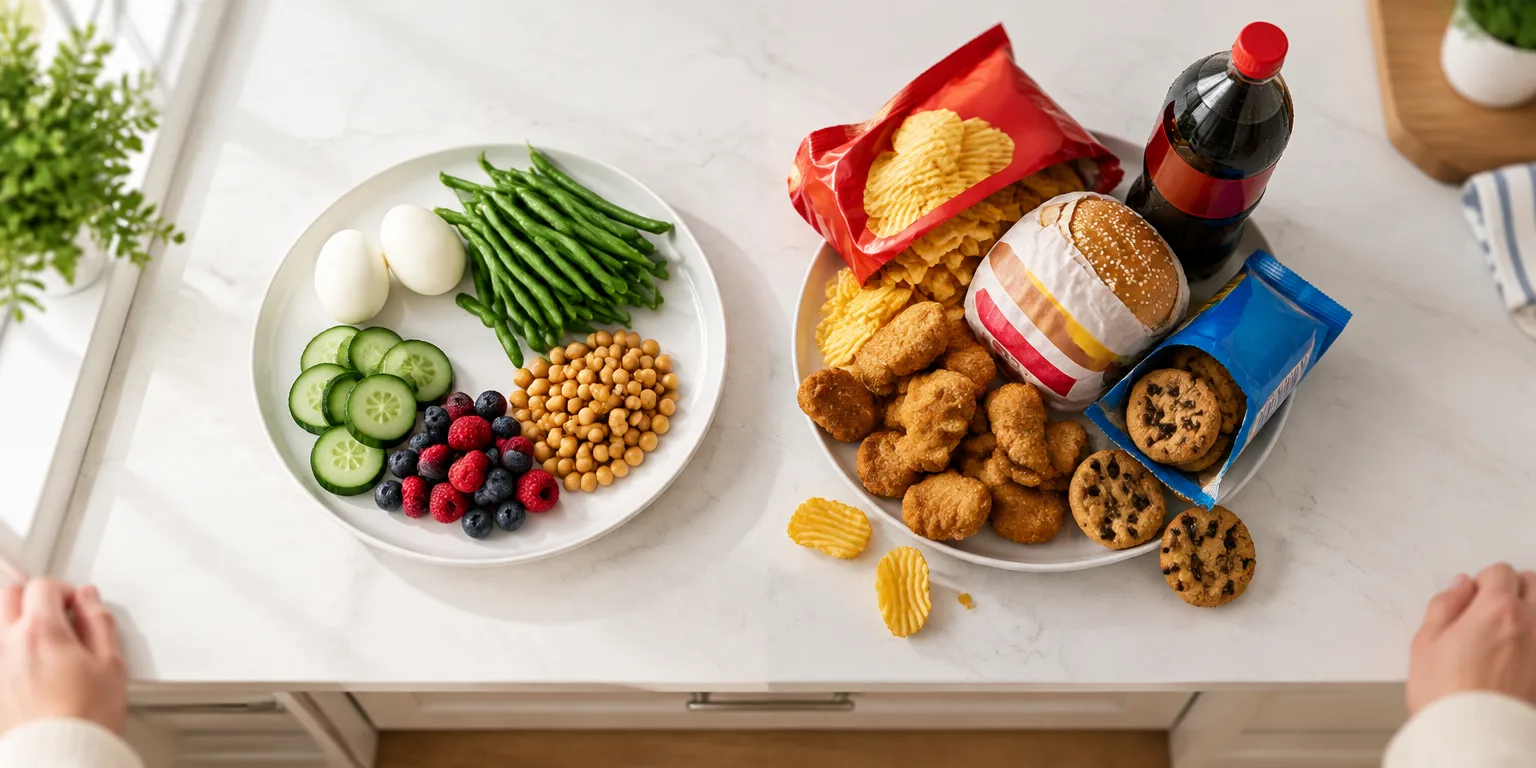
On average, people ate about 500 more calories a day when they switched from minimally processed food to ultra-processed food, in a study described by nutrition scientist Dr. Layne Norton.
The controlled diet study was run by researcher Kevin Hall. Volunteers moved from meals built around whole ingredients to highly manufactured foods. They were given few instructions except to eat until they felt satisfied, and their intake rose spontaneously by about 500 calories daily.
Norton says the lesson is not that processed foods are bad in themselves, but that they tend to produce calorie overeating. He adds one caveat for very high needs. For someone consuming 4,000 calories daily, like an NFL offensive lineman, getting it all from minimally processed food would leave a person miserable and so stuffed with food they could barely move.
Questions people ask
What counts as ultra-processed food?
It generally means factory-made food with ingredients you would not use at home, such as flavorings, emulsifiers, sweeteners, and refined starches and oils. Examples include soda, packaged snacks, frozen pizza, and fast-food burgers and nuggets. Minimally processed food is closer to its natural form, like fresh fruit, eggs, plain meat, beans, and frozen vegetables.
Why do people eat more of ultra-processed foods?
Researchers point to several overlapping reasons: they are often softer, faster to eat, more calorie-dense, and engineered to taste rewarding. They also tend to be lower in fiber and protein per bite, so it takes more calories to feel full. In this study, people were told only to eat until satisfied, and still ate much more.