A Survivor Returned to Bury the Legions Lost in the Forest
After one of Rome's worst defeats, soldiers gathered the scattered bones for a proper military burial.
 TED-Ed · A day in the life of a Roman soldier - Robert Garland
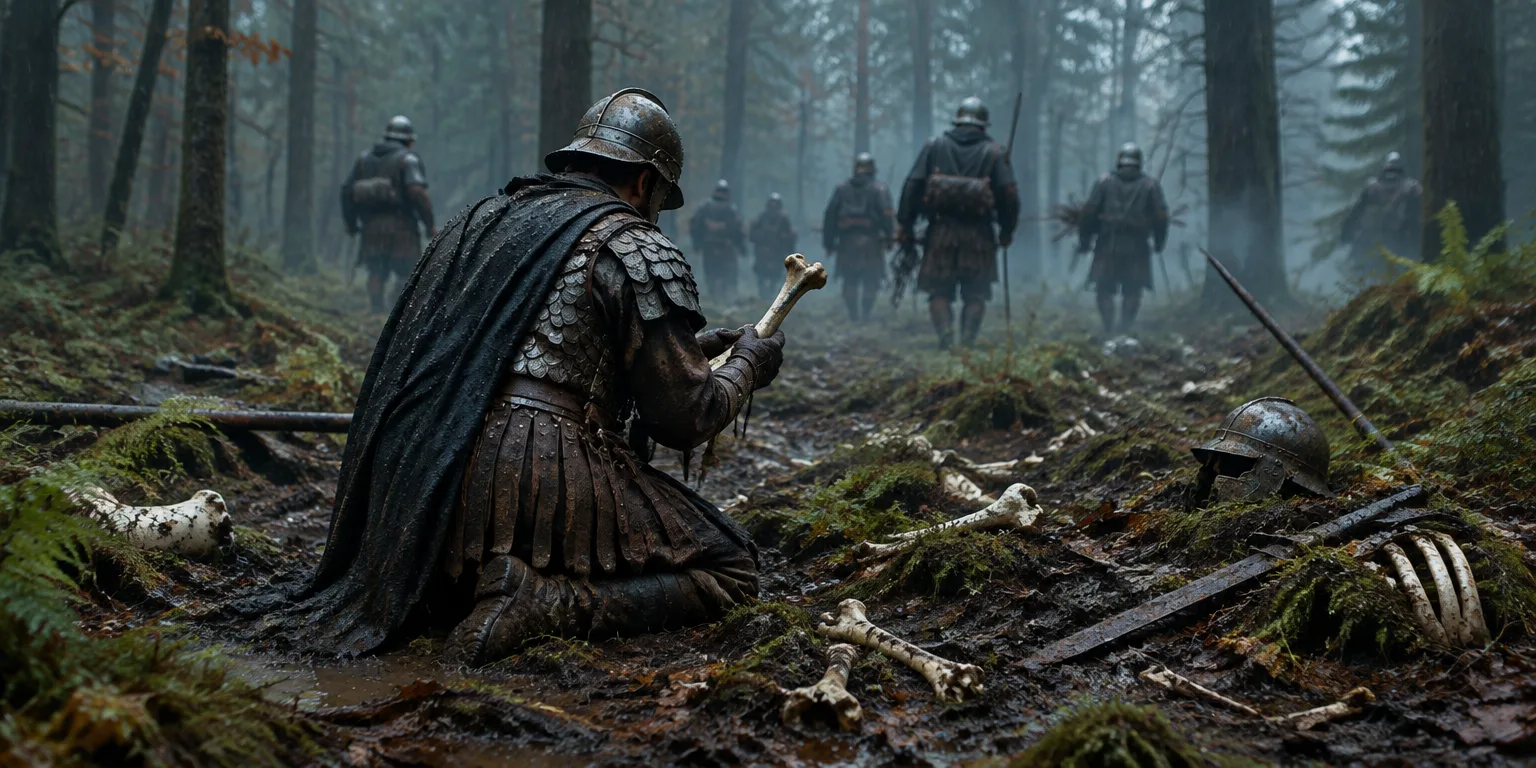
Servius knelt in a clearing on the edge of a dark German forest and lifted a bone from the wet ground. He turned it in his hands and wondered if it had belonged to someone he knew.
Servius is a Roman foot soldier, one of thousands marching through Germania, a wild region of marshes and forests beyond the reach of the empire's roads. To get here they had marched about 30 kilometers that day, stopping to build causeways and bridges to move forward, work that lately has taken more of their time than fighting. He knows this clearing too well. Six years earlier, three Roman legions, large army units of thousands of men each, were wiped out here.
The Romans had suffered one of the worst defeats in their history in this place, and now, at last, an army had returned to give the dead full military honors.
The disaster had come during the reign of Augustus, the Roman emperor. The legions had been marching along a narrow path near what is called the Teutoburg Forest when Germanic tribesmen under their chieftain, Arminius, struck from the cover of the trees. It was pouring rain, and with escape blocked, the Romans were trapped and destroyed.
Servius was among the handful who escaped alive. For six years he has carried the sight with him. At night he still has nightmares of fellow soldiers lying on the ground where they died.
Now the work is finally at hand. Rank by rank, soldiers gather the scattered white bones for proper burial. Servius forces himself to keep moving. More than once he feels like crying out at what he sees and touches, yet he keeps working.
He lays the bones down, pays the honors due to a fellow soldier, and reaches for the next.
Questions people ask
Why were the bodies left unburied for six years?
The defeat was so complete that there was no Roman force left in the area to recover the dead. The region was still held by hostile tribes, so Rome could only return with a large army once it was strong enough to march back safely.
Who was Arminius?
Arminius was a chieftain of the Cherusci, a Germanic tribe. He had served with the Roman army and understood its tactics, which helped him plan an ambush that trapped three legions on a narrow, rain-soaked path.
What did a full military burial involve for Romans?
Roman soldiers normally cremated or buried their dead together, said prayers, and built a mound or memorial. For men killed in battle, the rites also honored their service to Rome and gave surviving comrades a formal way to mourn.