A top scientist thought science had all the answers until dying patients showed him it did not
After two years of searching, he became a Christian, a faith he still calls the anchor of his life.
 Not Dead Yet · Francis Collins
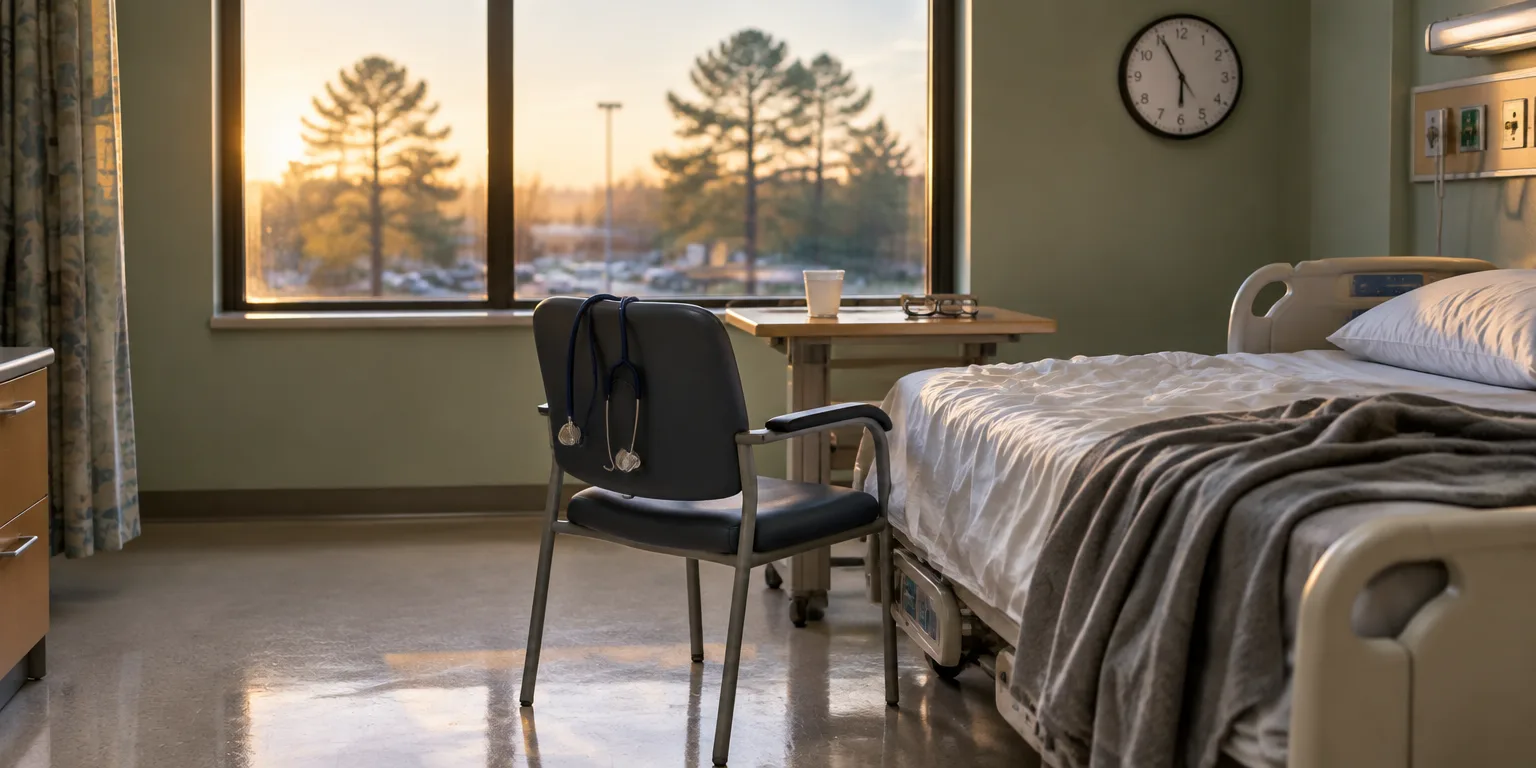
Francis Collins sat at the bedside of people who were dying in North Carolina, good and honorable people who had done nothing to bring it on. Collins, then a young doctor in training, had answers about chemistry and physics. He had nothing to offer about why they were suffering, or what their lives had meant.
A few years earlier, that limitation would not have troubled him. Collins had earned his undergraduate chemistry degree in Virginia and his advanced degrees in physical chemistry at Yale. As a doctoral researcher immersed in atomic physics and molecules, he was an atheist, convinced that any question worth asking was a question science could answer.
That certainty is what makes what happened next unusual, and why it still matters. The man who would go on to co-discover the genes for cystic fibrosis and Huntington's disease, lead the national project that mapped all human DNA, and direct the National Institutes of Health from 2009 to 2021 says the turn began not in a laboratory, but in hospital rooms.
His scientific outlook, he said, did not help him there. "I realized I was bankrupt. I was impoverished," Collins said. He felt he lacked something essential about human life.
So he started asking questions he had long dismissed, the kind science is not built to settle. Collins said he asked, "Why am I here? Why is there something instead of nothing? Is there a God, and does God care about me?"
He spent two years wandering through other philosophies and theologies to find out. The search surprised him. At age 27, the former atheist became a Christian.
It has stayed with him ever since. He calls faith the anchor of his life, the framework that lets him see laboratory work as exploration of a creation, and not as a rival to belief.
Questions people ask
What did Collins study before medical school?
Physical chemistry uses physics to explain how molecules behave, and quantum mechanics describes how matter acts at the scale of atoms and electrons. Collins studied both at Yale before going to medical school at the University of North Carolina.
What was the Human Genome Project he later led?
It was the international public effort to read, letter by letter, the roughly three billion chemical units of human DNA. Completed in 2003 under Collins's leadership, it gave scientists a reference instruction book for building and running a human body.
Did Collins ever write about this conversion in more detail?
Yes. He wrote about his atheism and conversion in his 2006 book, The Language of God, and later founded BioLogos to encourage conversation about science and faith. He describes himself as an evangelical Christian.