A Trucker Sold Everything He Had to Ship Freight in a Steel Box
Before steel boxes, loading a ship took more than a week, and dockworkers joked about wages plus all the Scotch they could carry home.
 Wendover Productions · Containerization: The Most Influential Invention That You've Never Heard Of
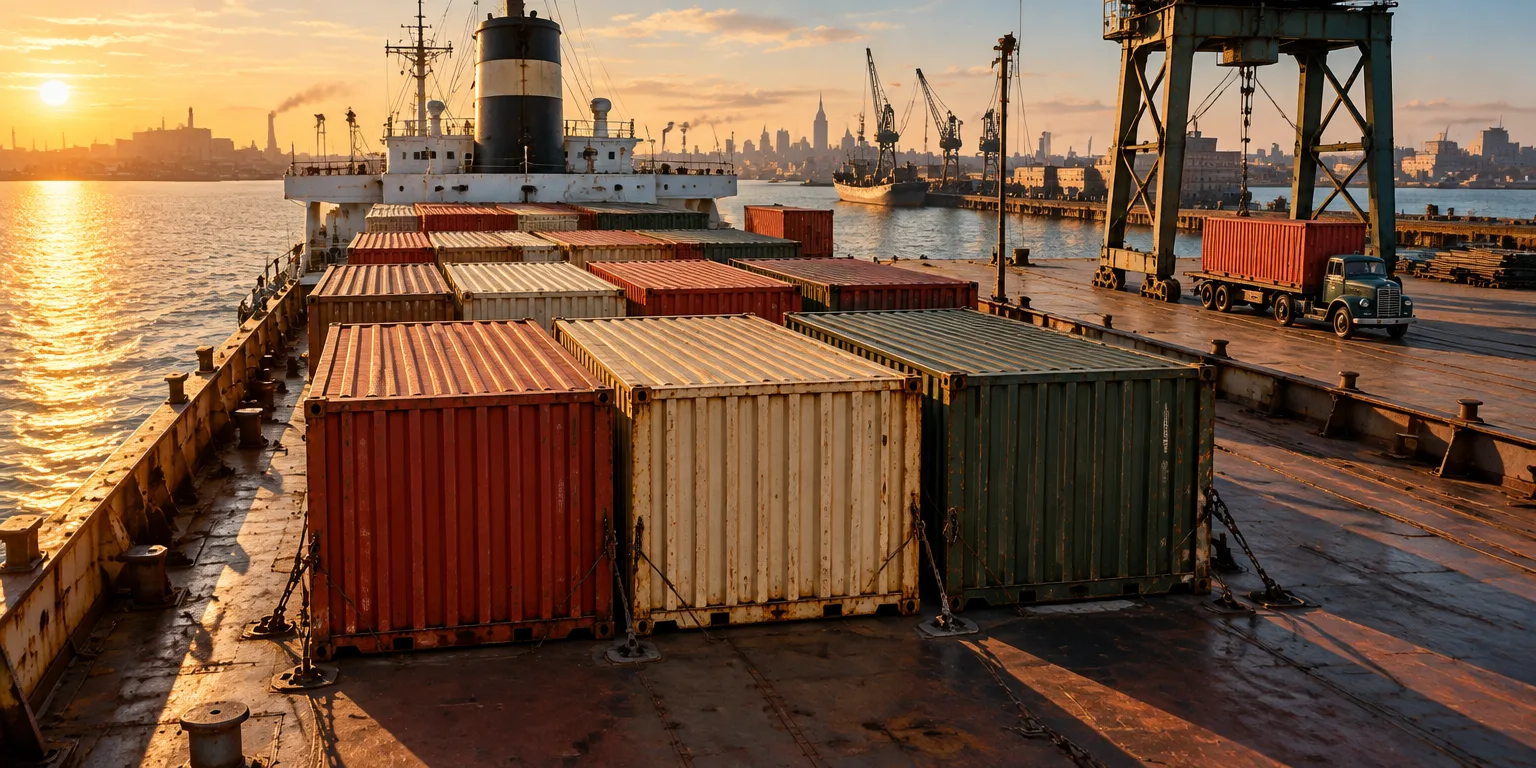
On April 26, 1956, the Ideal-X, an older oil tanker refitted to carry freight, left Newark, New Jersey, on a run down the coast.
What made the voyage different was that its cargo was packed into containers instead of lying loose in the holds, the large compartments below deck where goods were stored.
For centuries, shipping had worked the same way. Trucks hauled whisky and rice and hammers to the dock, where gangs of longshoremen stowed each barrel, sack, and crate by hand into the belly of the ship, and packing one ship that way needed over a week.
This method was called break-bulk cargo, piece-by-piece loading, a technique said to go back to the Phoenicians. While goods waited on the dock and in open holds, they sat exposed and easy to steal, so much so that dockworkers were said to earn “twenty dollars a day and all the Scotch you could carry home.”
Before containers, it simply did not pay to ship ordinary goods very far, so most common items were made within a couple hundred miles of the people who bought them. The Ideal-X showed how that limit could be broken.
Malcolm McLean, who owned a trucking company and knew those docks and delays firsthand, decided the whole system needed to change. He sold everything he owned to get a ship and build a different way of moving freight, centered on a strikingly simple object: a box made of ridged steel, plus trucks and a ship built to carry it.
Under McLean’s plan, the box did the work. A manufacturer loaded it once, and then no hands touched the merchandise inside until that same box reached the vendor, distributor, or consumer, connecting the manufacturer straight to the customer with the port no longer a place to unpack and repack everything.
The Ideal-X was the test of whether steel boxes could move from truck to ship without being emptied in between, and if they could, the week of lifting, sorting, and stealing could shrink to hours, letting cheap, everyday goods travel around the world and still make money.
Questions people ask
How big was McLean's box?
They were built to the size of truck trailers, so they could ride on a truck chassis and then be lifted onto the ship. Within a decade the industry settled on standard sizes, most commonly boxes 20 and 40 feet long, so the same container can move by truck, train, and ship.
Did other shipping companies copy the idea?
Yes. McLean kept running container ships, other shipping lines built their own box ships and terminals, and ports and railroads changed to handle them. By the end of the 1960s, international standards fixed common box sizes, which let containers move across companies and countries.