A Virginia port expansion studied since 1997 is now due in 2065
The original island took two years to build. Its extension required a 1,400-page federal review, and 28 years later it is still mostly dirt and dikes.
 The Works in Progress Newsletter · Why San Francisco isn’t bigger
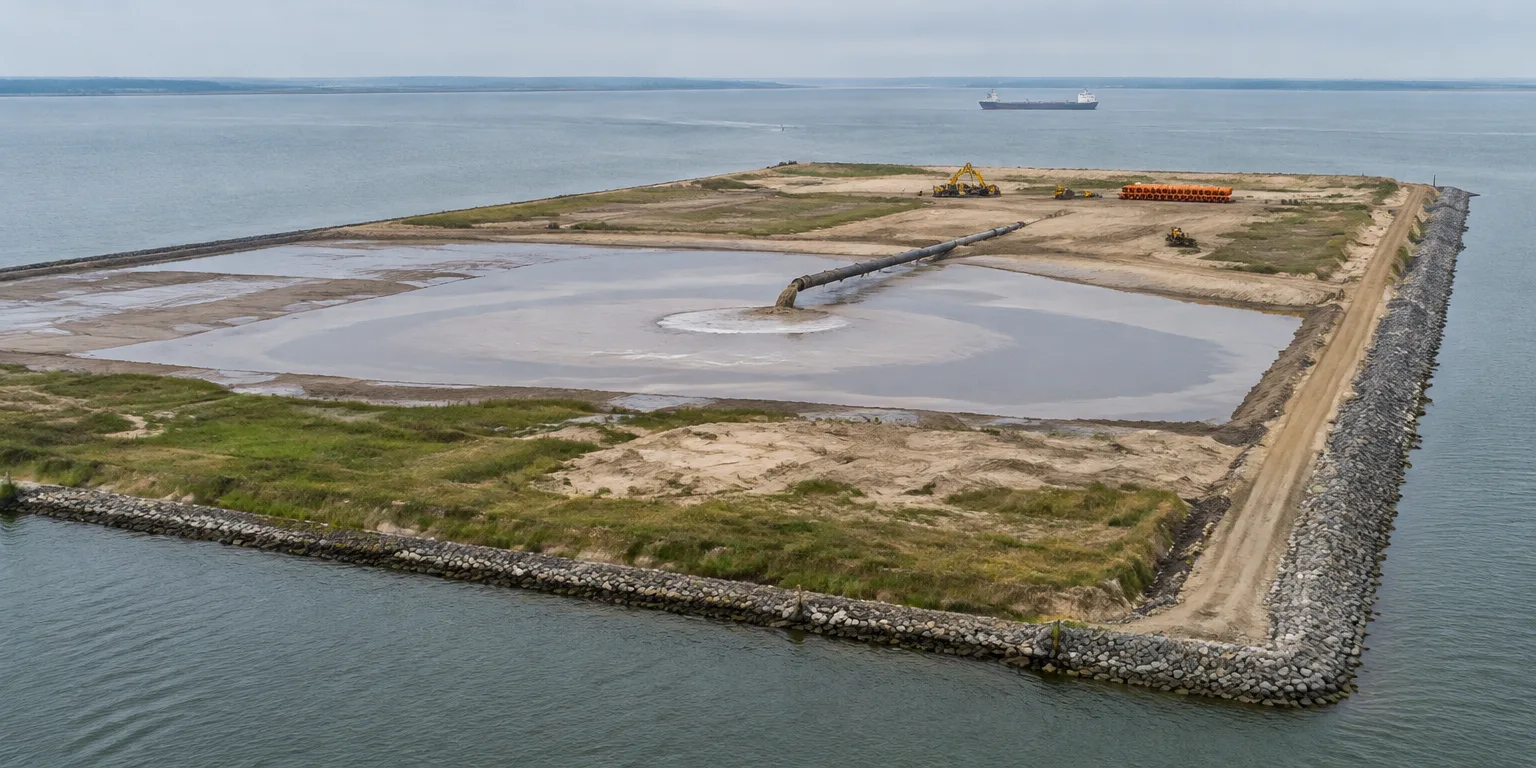
Off Norfolk, Virginia, where the Elizabeth River opens into the bay, there is an island that is not really an island. It covers roughly four square miles, a walled enclosure of soil and sand built for a single unglamorous job, to hold mud and silt scooped from Chesapeake Bay shipping lanes.
It is also a measure of how environmental review, more than construction, now sets the schedule for making new land. Since the big wave of environmental statutes in the 1970s, building land from water slowed sharply nationwide, and Craney Island shows why.
Federal lawmakers authorized an examination of making it larger in 1997. The idea was to push the island eastward, prolonging the useful life of the disposal site while adding a container terminal for Norfolk's harbor. By historical standards, the work would have been easy.
The first version, spanning 2,500 acres, went up between 1956 and 1958. It took two years. The eastward addition has instead stretched across decades.
Because the work meant placing dredged material into American waters, it needed a permit under the Clean Water Act, the law that restricts dumping pollutants and fill into American waters. Oversight fell to the U.S. Army Corps of Engineers, and the application triggered a full environmental impact statement, a federal report on a project's effects and alternatives.
That environmental impact statement lasted nine years and filled about fourteen hundred pages. It appeared in 2007. Virginia's environmental quality department granted permits three years afterward, in 2010.
Then came a decade of funding doubts and postponements. In 2023 officials revised how dredged material, mud and silt dug from shipping channels, would be placed, a change that called for a follow-up supplemental environmental assessment.
Close to twenty-eight years after researchers started the feasibility work, the location looks largely unchanged, with almost no construction having occurred. Federal planners now list completion, using their term, on schedule for 2065, or 68 years after the study began.
Craney Island does not stand alone as an outlier. Few such efforts were launched late in the 1900s, and no prominent city-focused efforts to make land from water have happened in the current century.
Questions people ask
Why dump dredged mud to make land?
Dredging keeps shipping channels deep enough for large vessels, and the mud, sand, and silt that are scooped up have to go somewhere. Craney Island is a confined disposal area, a diked basin where that material is dumped and allowed to settle, which both maintains the port and, over time, creates stable ground.
What takes nine years to study?
An impact statement studies alternatives to the project, effects on water quality and wildlife, and ways to reduce harm, often with public comment and agency consultation. For Corps projects they now average about six years, in part because agencies write defensively to avoid lawsuits that can force them to start over.
Do other countries still build land this way?
Yes. Other countries including China, Singapore, and Japan have continued to build ports, airports, and industrial islands in recent decades. In the United States, by contrast, large reclamation largely stopped after the 1970s, and very few projects have started since.