A Waterlogged Bog Became the World's Richest Country Per Person
Behind dikes, cut-off rivers, and 700 legal codes, crowded Dutch cities built modern finance.
 The Rest Is History · The Nation That Invented Capitalism: The Rise of Holland | National Anthems EP 4
The richest country per person in the 1600s was a bog with no bones in it. That was how a 17th-century English writer described Holland, "the great bog of Europe," "the buttock of the world, full of veins and blood, but no bones in it." That waterlogged and divided corner of Europe is where stock markets, deposit banks, and trading in contracts for future delivery and options grew, and where a tiny republic became the richest state on Earth per person by a wide margin.
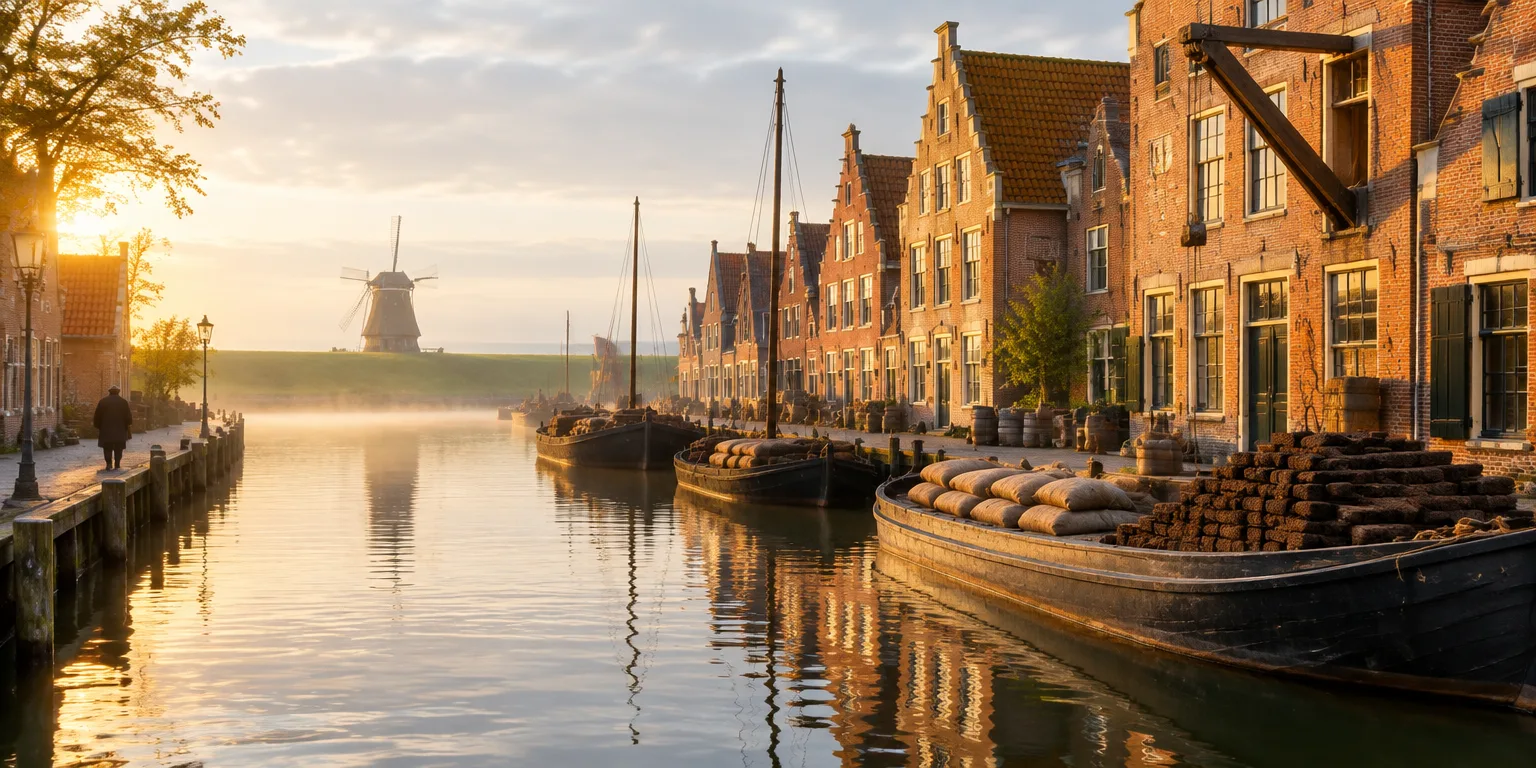
The starting point was bad farmland and busy water. Holland had been reclaimed from seas, bogs, and lakes, and was crisscrossed by rivers, canals, and drainage channels, with dikes holding back the sea. Next door, Zeeland was even wetter, a chain of islands in a great estuary where rivers meet the North Sea. Four great rivers meeting in one marshy delta separated Holland and Zeeland from the richer southern cities of Flanders and Brabant, Antwerp, Ghent, and Bruges, then the beating heart of early capitalism.
Politics were just as broken up. The Low Countries held 17 distinct provinces, each with its own legal framework, tax arrangements, and centuries-old charters and privileges that cities guarded jealously. Across the whole area there were about 700 different legal codes, plus different languages.
In 1588 the northern rebels formed a federal republic, the United Provinces of the Netherlands. It was intensely urban and built around a culture of merchants and townspeople, not nobles. In Holland, 60 percent of people lived in cities, an enormous share for the time. That crowded, water-bound republic was also the birthplace of modern capitalism, with stock markets, banks that held deposits, and markets for futures and options. Small beside China or India, it controlled an insanely large share of world trade.
It was modern in religion as well. Unofficial but real religious toleration gave room for religious skepticism, which in turn fed what became the Enlightenment.
Questions people ask
What is deposit banking?
A deposit bank holds merchants' coins and bullion for safekeeping and moves money by shifting balances on its books rather than hauling metal. In Amsterdam, that made payments safer and cheaper for long-distance traders and helped settle bills from around the world in one place.
What are futures and options?
A future is a contract to buy or sell something, like grain or shares, at a set price on a later date. An option is a contract that gives you the right, but not the duty, to do so. Both let merchants and investors lock in prices, bet on movements, and spread risk without exchanging the goods right away.
Why did dikes and canals matter so much?
Low, flat land floods easily, so dikes, canals, and drainage channels were needed to keep fields and towns dry enough to farm and build on. Once built, the same water network moved peat, food, and goods cheaply by boat and connected dense cities to the sea.