A woman appears to have run a Roman port bar with monkeys on the counter
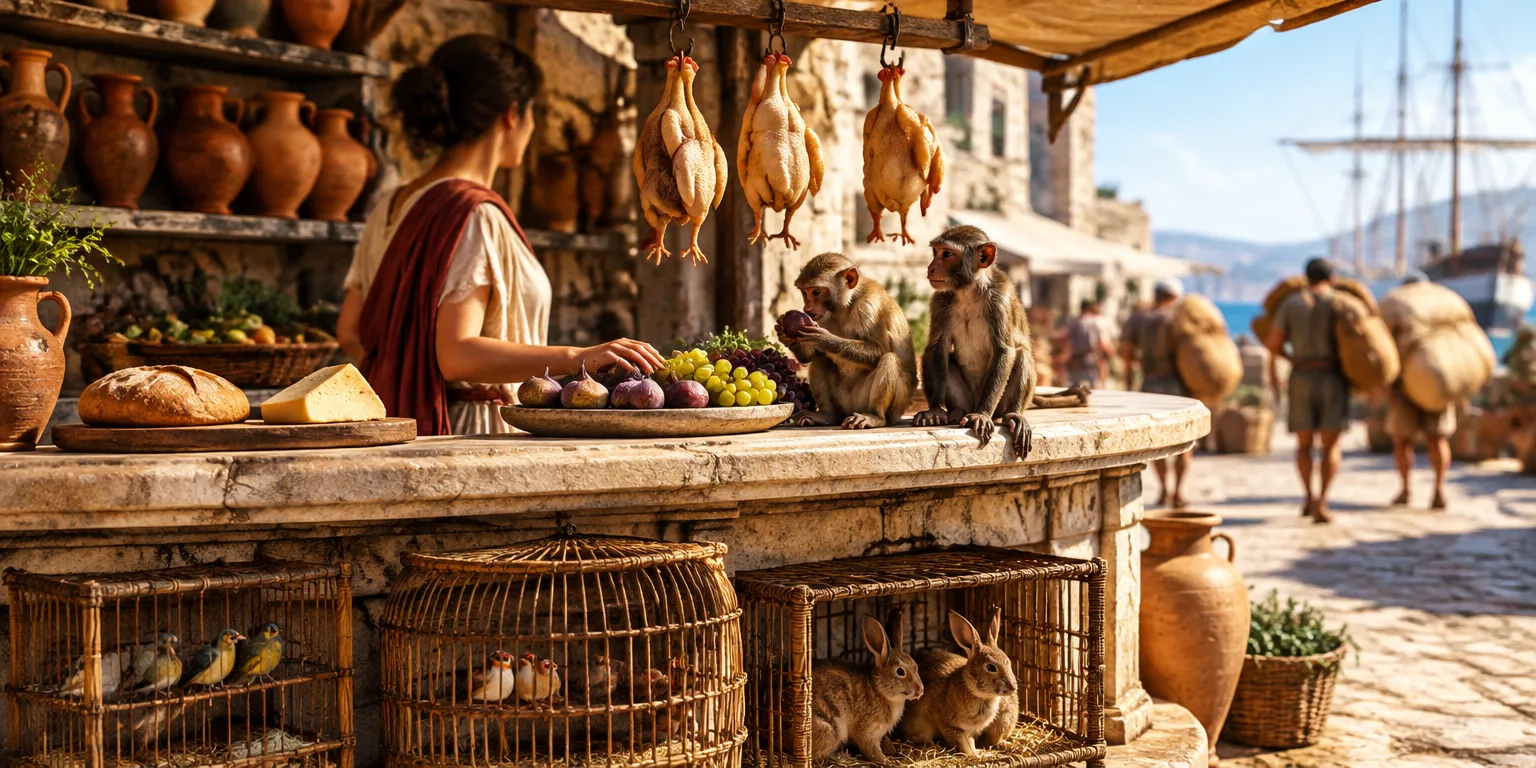
The carving shows chickens hanging above, rabbits and birds caged below, and no one knows if the monkeys were pets or merchandise.
 Ancient Rome Live · Daily Life in Ancient Rome
In the port town of Ostia, which served ancient Rome, a woman appears to have run a bar with two monkeys sitting on the counter.
The scene survives in a stone carving, one of the most unusual bar scenes known from the ancient world. The woman stands behind the counter, apparently the owner. In front of her are two plates of fruit. Above her hang chickens for sale, and beneath the counter are caged birds and caged rabbits.
On the counter beside her sit a pair of monkeys. Whether they were pets or merchandise is unclear.
The carving captures the bustle of a working port. The bar was where travelers staying in inns and renters living above shops bought their daily meals because they did not have the full kitchen found in a wealthy private house.
At this counter, the monkeys sat beside the goods for sale.
Questions people ask
Where was Ostia?
Ostia was Rome's harbor town at the mouth of the Tiber River, about 15 miles from the capital. Grain, oil, wine, and other goods arrived there by sea and were moved upriver to Rome. Its bars and inns fed sailors, porters, merchants, and travelers passing through.
Did women run bars and shops in Roman towns?
Women did run shops, bars, and inns, especially in the non-elite commercial world. Such businesses were often family operations, and widows or independent women appear in legal and archaeological records as proprietors.
Did ordinary Romans really eat out every day?
Some did, mainly those without kitchens. Travelers staying in inns and renters living above shops bought daily meals at bars because they lacked the full kitchen of a wealthy house. Menus could include bread, cheese, stews, meats, fruit, and wine.