A Younger Brother Got the Empire, Then Starved His Older Brother's City for Two Years
After a two-year siege, scholars think Shamash-shum-ukin died in the flames of his own burning palace.
 Stuff You Missed in History Class · Ashurbanipal
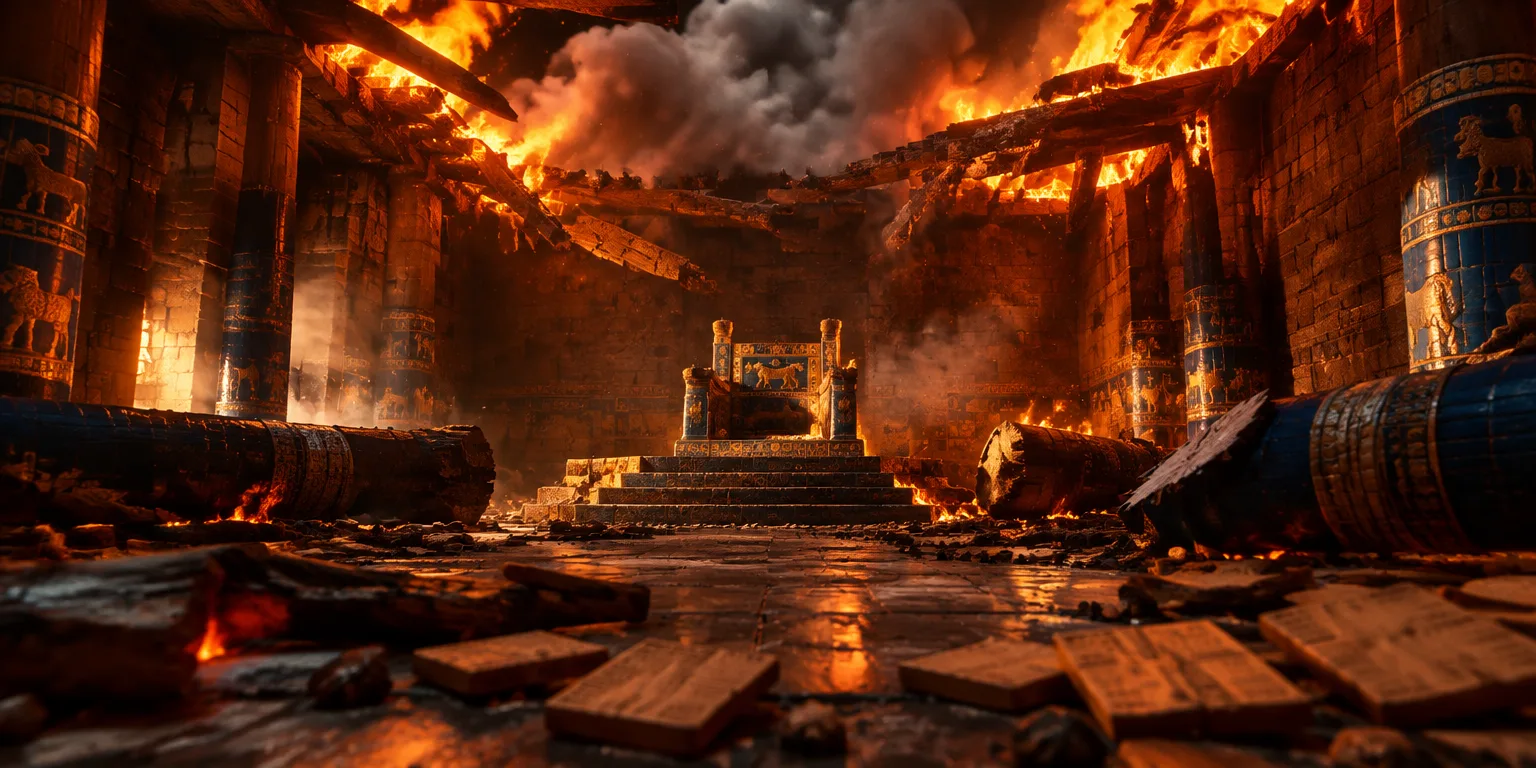
In 648 B.C., the palace at Babylon was burning. Inside it was Shamash-shum-ukin, the king of Babylon. Scholars think he hurled himself into the fire as the building burned around him.
Twenty-four years earlier, his father had divided his realm between his two sons. Esarhaddon, king of Assyria, the great power based in what is now northern Iraq, gave Babylon to his older surviving son, Shamash-shum-ukin. He named his younger son, Ashurbanipal, crown prince of Assyria.
That order broke with birthright, but it reflected court politics and religion. An eldest brother had died, and omens and prophecies carried great weight in Assyrian decisions about succession. Nearly the whole court, his father among them, appears to have favored Ashurbanipal.
When Esarhaddon died in 669 B.C. while marching to put down a revolt in Egypt, the handover held. Treaties already bound subject kingdoms to stand behind the heir, and Ashurbanipal's grandmother, Naqi'a Zakutu, made counselors and aristocrats pledge their support to him. For more than a decade, the brothers' divided rule over Assyria and Babylon seems to have gone well enough.
Then the brothers' relationship soured, and Ashurbanipal tried to control Babylon. Historians still debate what their father intended, whether Shamash-shum-ukin was meant to rule independently or as a vassal to his younger brother. In practice, Shamash-shum-ukin chafed at being told what to do. Ashurbanipal called his brother ungrateful and traitorous, and rarely named him without an insult.
Ashurbanipal encouraged townspeople in Babylon to rise against Shamash-shum-ukin. Shamash-shum-ukin built his own coalition for revolt against Assyria, working with Elam, a kingdom to the east in what is now southwest Iran, Lydia, a western kingdom in present-day Turkey, and other territories.
Ashurbanipal attacked those allied cities one by one, and then laid siege to Babylon itself. The siege lasted two years. Cut off from food and supplies, people inside the walls starved and suffered terribly.
When the end came in 648 B.C., scholars think Shamash-shum-ukin ended his own life in the fire, and Babylon fell back under his brother's power. The younger brother favored for the empire now held all of it.
He did not remake it to last. Ashurbanipal died in 627 B.C., after giving two of his own sons shared power over different territories. His successors faced internal divisions and constant pressure from neighboring kingdoms, and they could not hold the enormous empire together across the slow distances of the seventh century B.C. In 612 B.C., a coalition that included the Babylonians and the Medes, a people of ancient Iran, took Nineveh, the Assyrian capital. Assyrian lands were folded into the Babylonian Empire, which Persia then took over in 539 B.C.
Questions people ask
Why did the father give the bigger prize to the younger son?
Assyrian succession was not strict birthright, and divination mattered a great deal. The sources suggest omens favored Ashurbanipal, an eldest brother had already died, and both their father and most of the court seem to have preferred Ashurbanipal over his older surviving brother.
What was life like inside Babylon during the two-year siege?
Detailed accounts describe famine so severe that people ate things normally considered inedible, and prices for tiny amounts of food soared. Sieges of this kind worked by cutting off grain, livestock, and trade until hunger forced surrender, and Babylon's size made the suffering especially large.
Did Ashurbanipal punish Babylon after his brother died?
Yes. Assyrian royal inscriptions say Ashurbanipal spared some Babylonians who had remained loyal but killed or enslaved rebels, and he plundered temples and palaces. The harsh reprisal was meant to warn other cities that revolt would bring ruin.