Adding Yet Tells a Child That Skill Grows With Practice
Researcher Carol Dweck says the word signals that skill is learned over time, and tells a child to keep trying.
 GreatSchools · Carol Dweck on the power of "Yet"
Researcher Carol Dweck says she has "fallen in love with a new word." The word is "yet." She says "we're doing research on it."
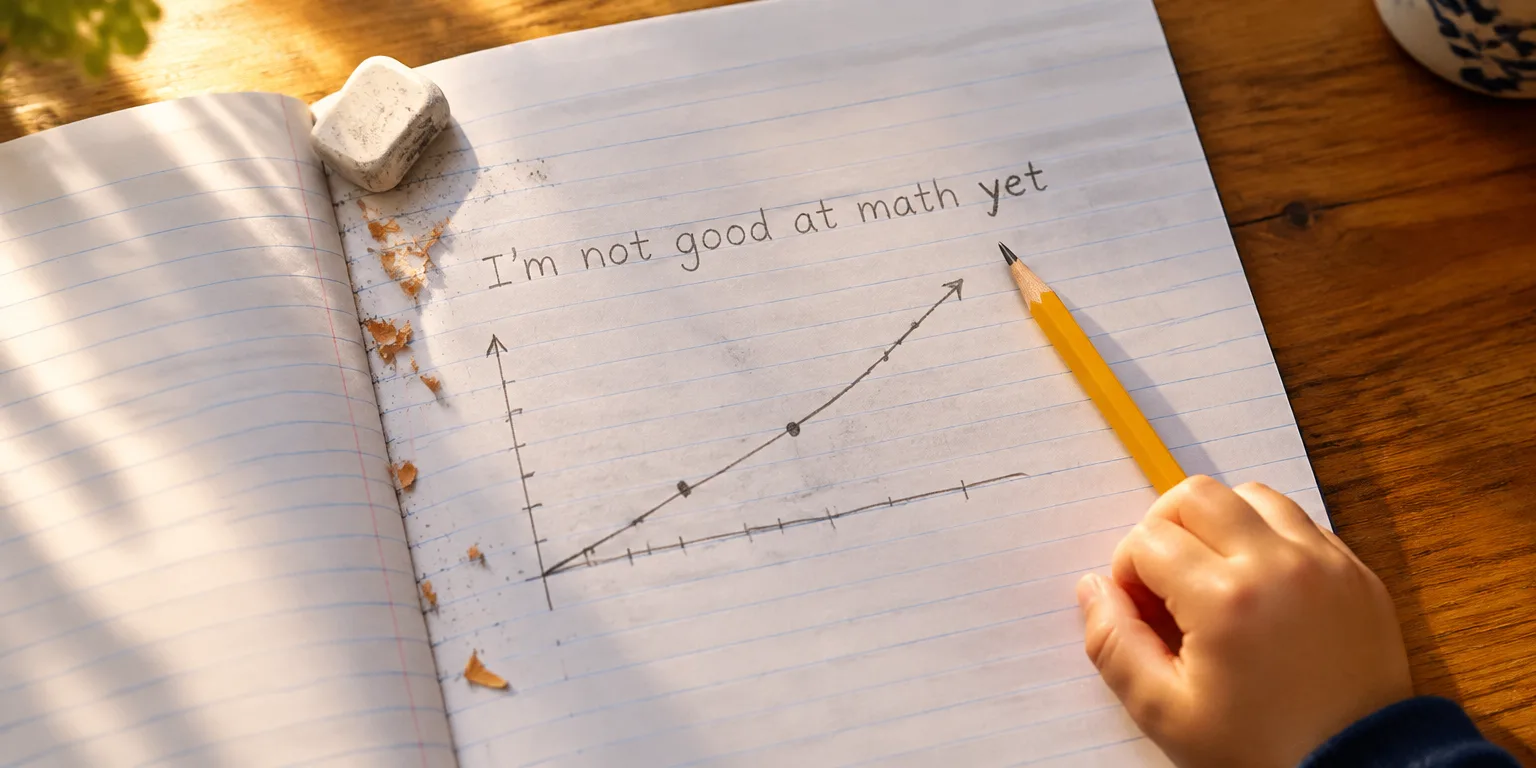
Dweck argues that the word changes what a statement about failure says. She gives two examples of how a child might use it: "I'm not good at math yet" and "I tried X and I couldn't do it yet."
What the word says, in her words, is "this is a skill that's acquired over time." She puts it another way in the same explanation: "it's not something you're good at or you're bad at."
Dweck describes that process as staying on a curve. As she puts it, "there's a learning curve and you're on that learning curve." The child who adds yet, in her account, is still in the process of learning.
That is why Dweck says she uses the word as a prompt to continue. When she says yet to a child, she says she "means get back on that learning curve." She argues that the child should stay with the work and keep trying, because, as she puts it, "everyone can learn math" and "everyone can get better at it."
Questions people ask
What is a growth mindset, and how does yet fit in?
A growth mindset is the belief that ability can improve with effort, strategies, and help. A fixed mindset is the belief that ability is largely set. Saying yet reflects a growth mindset because it treats a current result as temporary and changeable.
How can a parent or teacher use yet without it sounding forced?
Add it to the child's own sentence and pair it with a next step. For example: You have not solved it yet. What could you try next? Research on helpful feedback suggests that naming a strategy, not only effort, makes persistence more useful.