Adults Cannot Tell When a Child Is Lying
Judges, police officers, and parents all score about as well as a coin flip.
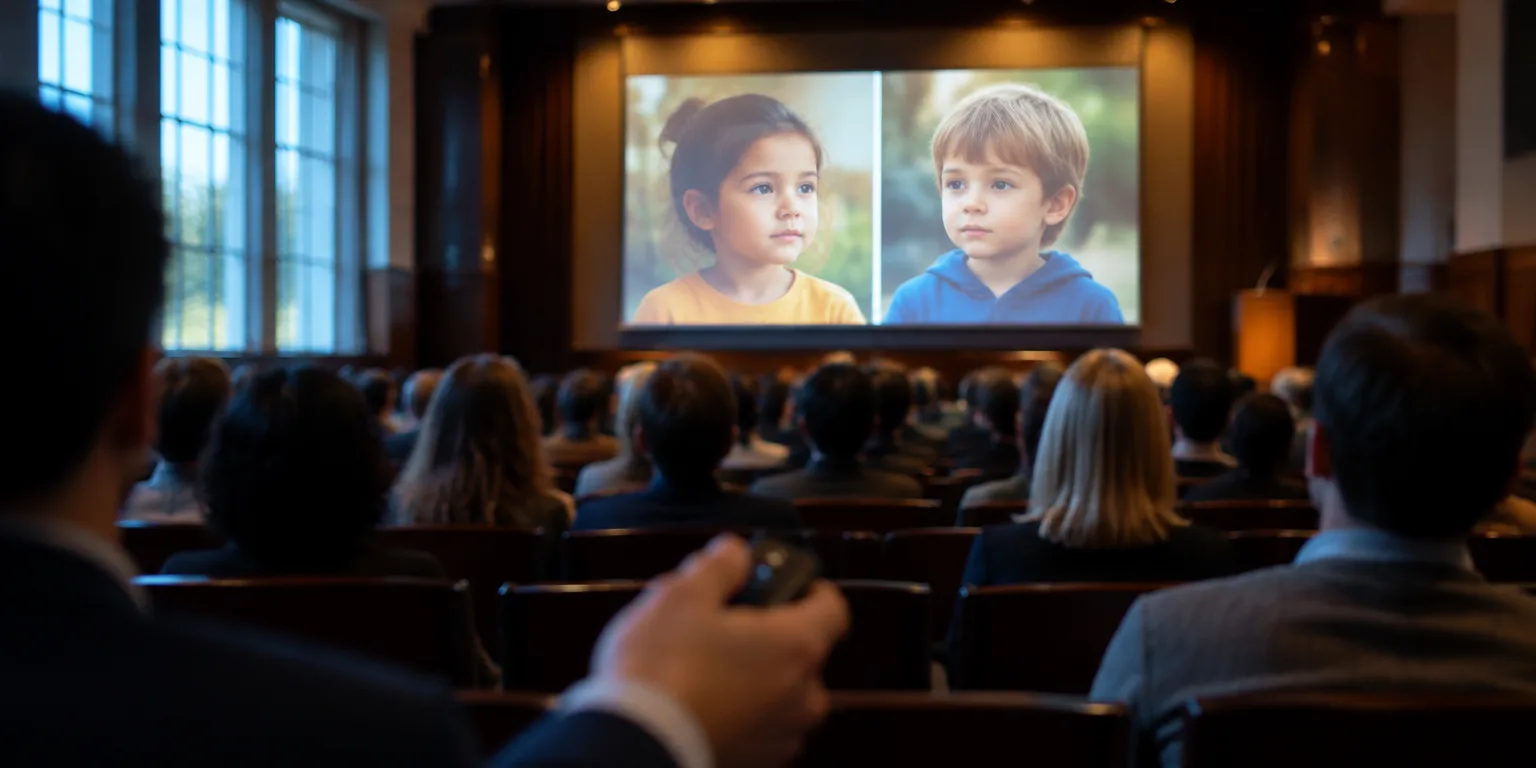
 TED · Can you really tell if a kid is lying? | Kang Lee
Put a roomful of adults in front of two children, ask which one is lying, and most of them will pick wrong. That is what happened when researcher Kang Lee, who has spent 20 years studying how children lie, showed his audience two videos of children answering the same question, "Did you peek?" Most of the audience failed. The first child was telling the truth, and the second was lying.
It was not just that crowd. Lee has run the same test, with half liars and half truth tellers, on undergraduates, law students, social workers, child protection lawyers, judges, and officers who work in policing and customs. Every group landed around 50 percent correct, the same as guessing at random.
Parents did no better, with other people's children or with their own. When it comes to spotting a child's lie, experience does not help.
Questions people ask
Why are children's lies so hard to spot?
Partly because children give away so little. When they lie, their faces tend to stay neutral, and the fear, guilt, or excitement they feel inside flashes by too quickly for most adults to catch.
At what age do children start lying?
Earlier than most people expect. In Lee's peek-a-card experiments, about 30 percent of two-year-olds lied, about 50 percent of three-year-olds lied, and more than 80 percent of four-year-olds lied.
Can anything detect a child's lie better than people can?
Lee's lab is working on one. Using an ordinary video camera plus software that tracks subtle shifts in facial blood flow, his team reports about 85 percent accuracy in telling lies from truth, far above human performance.