Affordable Housing in Los Angeles Can Profit Without Subsidies, a Developer Argues
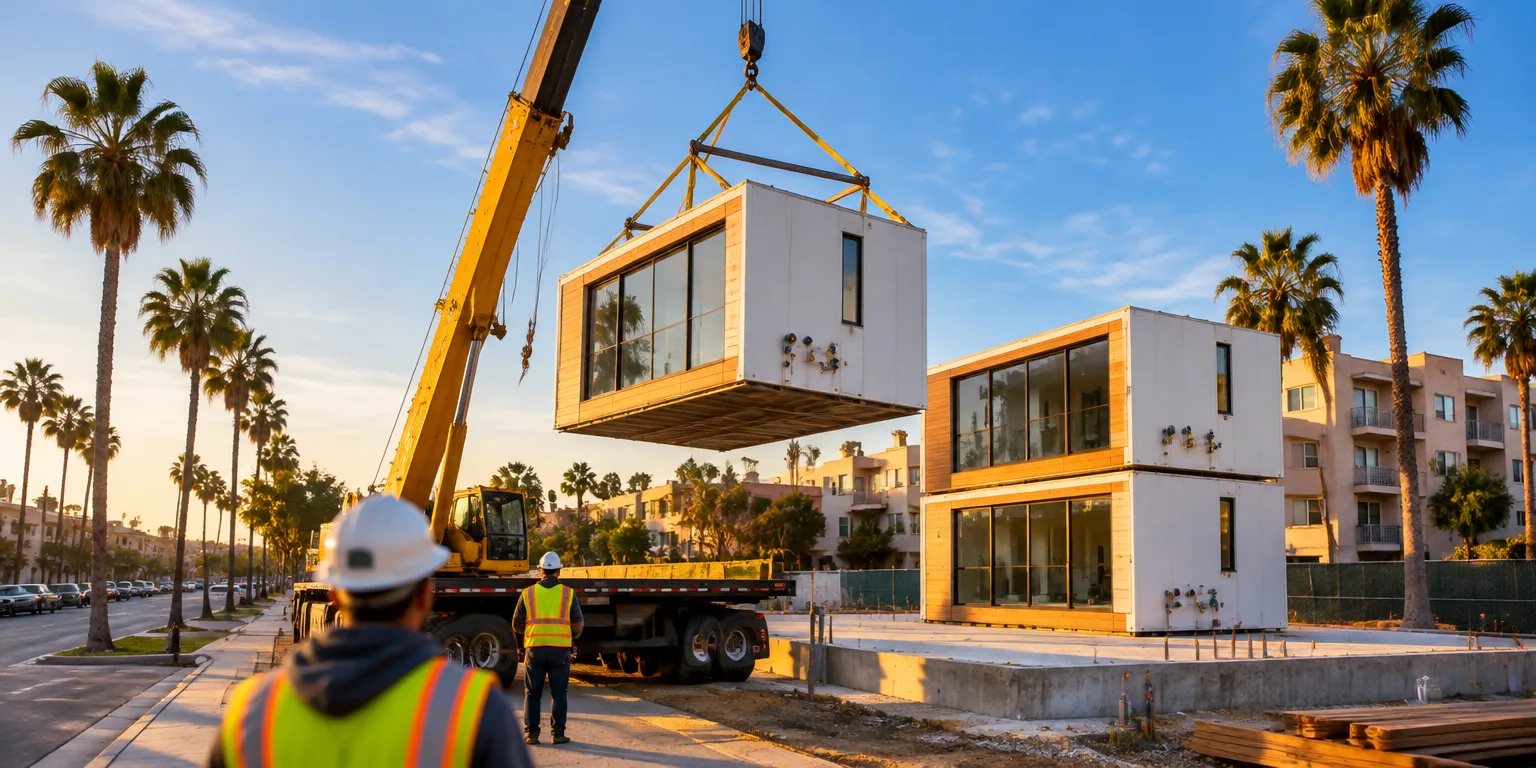
He says doing about 95% of finishing inside its plant and snapping utility connections together on site lowers labor costs.
 plantprefab.com · Plant Prefab Begins Construction on Cloud Apartments’ First 100% Affordable Housing Project in Los Angeles | Plant Prefab
When Curtis Wong, the founder and chief executive of Cloud Apartments, a company that designs and develops factory-made apartments and was launched in 2021, announced the start of construction on the company's first apartment project, he did not lead with rents or amenities. He led with the math.
"The fact that we are able to make extremely high-quality affordable housing in Los Angeles pencil out without subsidies is testament to the potential of the Cloud Apartments development platform," Wong said.
By pencil out, Wong means the project can cover its costs and make money without government aid, a striking claim in a city where affordable projects typically depend on public funds. Those cost and savings claims come from the company itself. The announcement provided no independent cost figures to check them against.
The project Wong points to is the company's first build, a 60-unit building on Manhattan Place in Los Angeles where every apartment is priced to be affordable. Plant Prefab, a building technology company led by founder and chief executive Steve Glenn, will build all 60 units in its new $40 million, 270,000-square-foot plant in Tejon Ranch, California, just south of Bakersfield, with about 95% of finishing done before anything leaves the plant. Wong argues that the savings come from changing where and how the building is made, with factory assembly lines replacing much of the skilled work that would otherwise happen on an expensive Los Angeles job site.
The rest of the savings, in Wong's telling, come from repetition. Cloud Apartments reuses the same ready-to-permit layouts for studios and one- and two-bedroom homes, so each project does not start from scratch in design, engineering, and approvals. The company says the units will still carry high-end finishes and smart-home technology meant to appeal to people who want a stylish, up-to-date home at an affordable price.
Once the factory-built units arrive on site, a patented system called CloudConnect snaps together the mechanical, electrical, and plumbing connections. The company says that system further lowers the need for expensive workers at the building site.
Wong describes this first project as a guide for how later ones would be built. Cloud Apartments says it has over 1,000 more apartments moving through approvals in Los Angeles and the San Francisco Bay Area, where that repeatable approach would face its next test.
Questions people ask
What is modular or factory-built housing?
Modular housing means large sections of a building, sometimes whole apartments, are built in a factory and then trucked to the site for assembly. Because the work happens indoors on assembly lines, developers say they can control quality, waste less material, and use less expensive on-site skilled labor.
What does it mean to have 1,000 units in entitlement?
Entitlement is the legal process of getting government permission to build, including zoning approvals and building permits. In California cities, it can take years, so a company with 1,000 units in entitlement has projects started in the pipeline but not yet approved for construction.
Why do most affordable housing projects need subsidies?
Most affordable housing in high-cost cities uses tax credits, vouchers, or other public funds to bridge the gap between what low- and moderate-income renters can pay and what it costs to build. If a developer can build cheaply enough to charge affordable rents and still profit, it could build faster and in more places without waiting for limited subsidies.