After a Campus Murder, Students Picked the Scary Movie Over the Romance
Students closest to the loss, those in the victim's own dorm, felt the pull most strongly.
 Hidden Brain · Murder Mystery
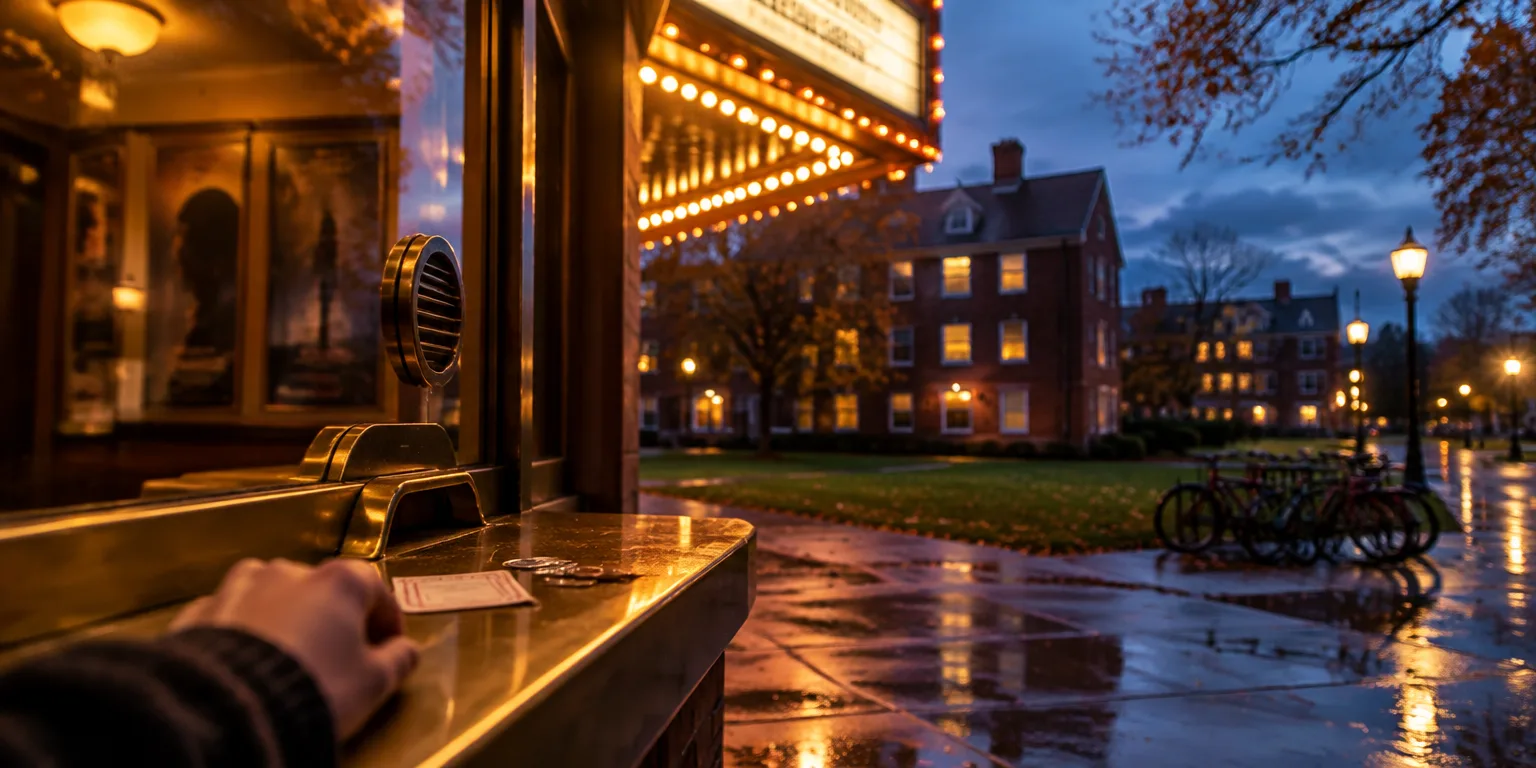
Psychologists at the University of Wisconsin offered students who took part in a study a reward: a choice between two movies playing in town.
One option was Truman Capote's In Cold Blood, a scary film about a real murder. The other was a romantic comedy, a lighter choice whose title the speakers could not recall. Both films were in theaters in town at the time.
The choice was offered after students were living with a killing nearby. In the early 1970s, a female undergraduate had been murdered on campus, and the psychologists tracked what kind of entertainment other students would pick afterward.
Shankar Vedantam put one theory this way: "we seek out dramatic stories about violence" and gore because "our own lives are boring and humdrum." Research suggests that scary events in real life are often followed by "a surge of interest in scary entertainment," and the Wisconsin study is one case of that pattern.
After the murder, students showed a stronger preference for the scary film over the romance when they selected their reward, with proximity shaping the choice: the nearer a student's housing was to the victim's dorm, the stronger the preference for the scary choice.
Colton Scrivener, a psychologist who studies why frightening stories appeal to people, compares it to a heat map. "The closer you got to this dorm, you know, the redder it got," he said. Students housed nearer the victim's dorm picked the Capote film at higher rates.
The researchers drilled down by housing to compare choices. Students in the victim's own dorm selected the Capote film at the highest rate. Students who lived in dorms farther from that building selected it less often.
Questions people ask
What is In Cold Blood about?
In Cold Blood began as a book by Truman Capote, published in 1966, about the 1959 murders of four members of the Clutter family in Kansas. Capote spent years reporting it, and the 1967 film follows the killers and the investigation in stark, documentary style.
Why offer a movie as a reward for a psychology study?
Researchers often use small rewards like movie tickets, cash, or course credit to thank volunteers and to study real choices. A choice between two films works because it feels ordinary to the student, yet it reveals a preference the student might not state directly.