After a Mission, Rangers Drop Their Rank to Argue, Then Put It Back On
The debrief is heated and equal, then discipline snaps back, because in combat an unfixed mistake can kill the next patrol.
 Not Dead Yet · William McRaven
When Rangers return from a mission, they gather in the briefing room. Retired Navy Admiral William McRaven, a former SEAL and special operations commander who oversaw the raid that killed Osama bin Laden and the hunt for Saddam Hussein, describes what happens next. Each time a Ranger stands to speak, he starts and ends with, “Sir, Rangers lead the way.”
The Rangers are an elite infantry unit, meaning highly trained foot soldiers. They are very disciplined, and some of these soldiers are 18 or 19 years old, serving alongside noncommissioned officers.
Before a mission, captains, majors, and first sergeants, the senior enlisted leaders of a company, meet. They plan the mission, talk through it with the group, and then go out. What happens after is different.
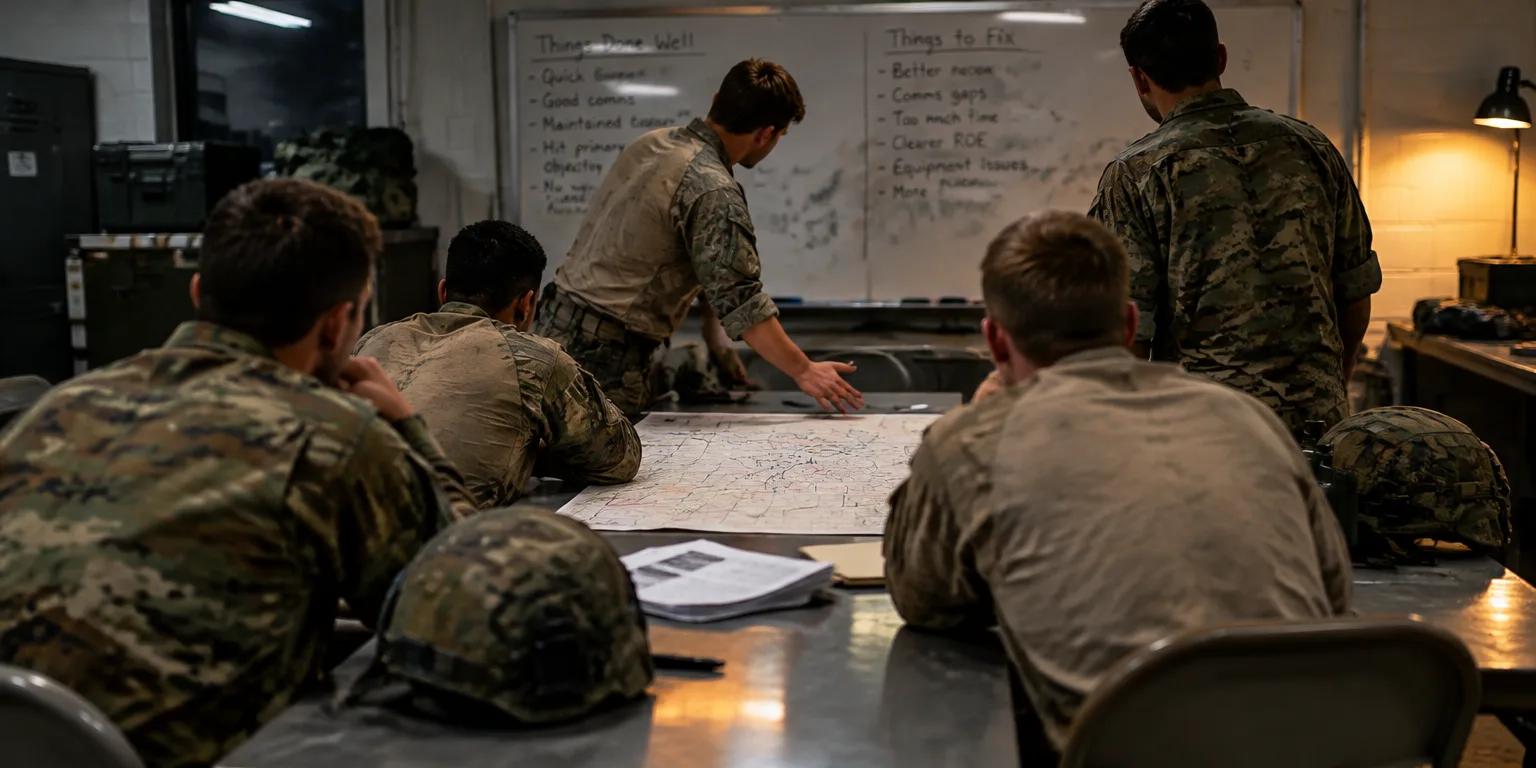
That difference is a ritual after every mission, whether it went well or went badly, to learn from failure. When the team returns, everyone metaphorically takes off the small pins on the collar that mark rank. The change happens in the mind, as the interviewer and McRaven agree, not on the uniform.
In that room, privates and corporals carry the same weight in the discussion as captains and majors. The review becomes heated and cathartic. McRaven quotes the exchange as: “Hey, why did you do this? Or what happened here? And we should have done this better.” The group lists what could have been done better, what went well, and what was badly handled.
When the briefing is over, the ritual ends. McRaven says they put rank back on, and discipline returns in his stock phrase for a clipped, formal reply: “Yes, sir. No, sir. Three bags full.”
The bluntness is the point, and he sets the military case against Elon Musk, who, in the interviewer’s description, treats a failed rocket catch as data. When special operators fail, lives are lost or at risk, along with the reputation of the unit and the country, so the pain is deep. But they cannot wallow in it, and anyone without thick skin who is not open to criticism is in the wrong organization.
The next time a private stands up, he opens and closes his brief with “Sir, Rangers lead the way.” For the time in between, the private was an equal, and the group fixes mistakes because otherwise someone else could die.
Questions people ask
Who are the Rangers?
The 75th Ranger Regiment is an elite infantry unit of the U.S. Army, known for raids, airfield seizures, and direct combat. Its members complete especially tough physical and tactical selection and training, and many join straight out of high school. They are highly skilled foot soldiers, but distinct from smaller counterterrorism units like Delta Force or SEAL Team 6.
What is a collar device?
They are the small metal insignia worn on the collar of a uniform to show rank, such as bars for officers or chevrons for enlisted troops. In this ritual the removal is metaphorical, not literal. Everyone agrees to act as if rank has been set aside for the discussion.
Do other military units do this kind of debrief?
Yes. The formal version is called an after-action review, and it is taught across the Army and other services. The special operations version described here is notable for how blunt and egalitarian it is, with junior enlisted troops expected to challenge officers. Other high-risk fields, including aviation and medicine, use similar structured debriefs.