After Months Without Power or Water, Hundreds Escape a Russian-Held Town
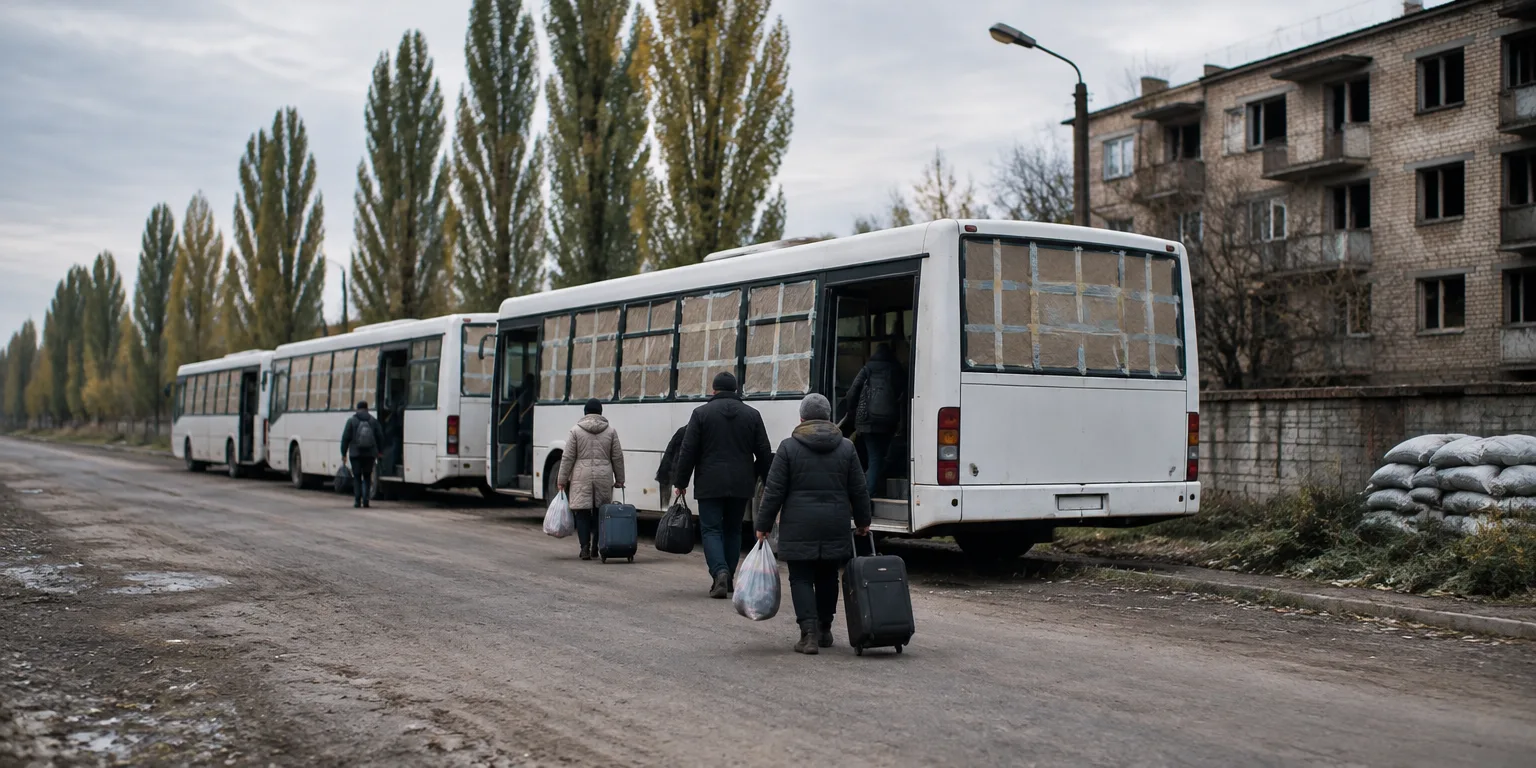
Buses carried residents out after years under occupation, but the only route to Ukraine ran through Russia and Belarus.
 Global News Podcast · US approves sale of 500 Patriot missiles to Ukraine
When the Ukrainian leading the rescue operation walked into Oleshky, residents hugged him. No Ukrainian official had entered Russian held ground since the full scale invasion began, and he tried to calm a crowd that had gone months with no electricity and no tap water.
He told them nothing would happen, that they were all travelling with him, and that he was checking everything personally.
For the people boarding the buses, the moment was the end of a long siege. Oleshky is a town in the southern Kherson region, held by Russia. Its residents have lived for years under occupation, with mines on their roads and drones in their skies, and more recently with no electricity or water and with food and medicine running low.
That is what made this week different. A local ceasefire was put in place so that hundreds of people could get out. Bus convoys had carried them out.
Mikhail Shumbasov, a man who had earlier escaped Oleshky himself, was nervously awaiting news of friends still inside. An unidentified speaker in the report said many had died in the city from violence, bombardment and lack of food, adding: "It had become impossible to live there. This is about survival, saving your own life."
Even the rescue carried fear. Some residents were reluctant to board because the only route to safety runs via Russia and Belarus to Ukraine.
The ceasefire was brokered by First Lady Melania Trump, Ukraine correspondent Dan Johnson reported, amid concern that Russia could use its cooperation to gain favor with Washington. The Kremlin has called the evacuation a one off, an isolated situation, and even if everyone gets out safely, it is not expected to bring a broader or more lasting truce.
Questions people ask
Where is Oleshky?
Oleshky sits in southern Ukraine's Kherson region, on the eastern bank of the Dnipro River, across from the city of Kherson. The river has served as a dangerous front line during the war. That geography has left towns like Oleshky isolated and hard to supply or evacuate.
Why did evacuees have to travel via Russia and Belarus?
Because Oleshky lies behind Russian lines and the nearby front is an active combat zone, there is no safe direct road into Ukrainian held territory. The agreed humanitarian corridor therefore goes outward through Russian controlled land and Belarus before reaching Ukraine. Residents feared the long detour, and the passage through Russia itself.
What happens to people after an evacuation like this?
Evacuees are typically registered, given medical checks, shelter, food, and help contacting relatives, then housed temporarily while officials sort out longer term places to live. Many need treatment for chronic illness, malnutrition, or trauma after months without basic services. Some later settle elsewhere in Ukraine, while others wait to learn whether they can ever return.