After Ruining 100 Pork Tenderloins, a Chef Learned to Watch for the Glisten
After overcooking pork for hours, Hillary Sterling spent a week staring at tenderloins until she could tell they were done by sight.
 Freakonomics Radio Network · Why Chef Hillary Sterling Trusts Her Senses Over Science | Better in Person
On a Labor Day Sunday night in New York, Hillary Sterling was getting crushed. It was her first night running the saute station, the job where a cook finishes dishes to order over high heat, at Mesa Grill, a big and busy restaurant, and the orders for pork tenderloin would not stop. She cooked them four and five at a time, and for hours she overcooked them, more than 100 in all.
Sterling, who is now the executive chef at Ci Siamo, which celebrates live fire Italian cooking in New York City, was trying to hold the station with just two burners. She had what cooks call a two-pan pickup. That meant she had to fire a scallop dish and its side dish at the same time as the pork and everything else.
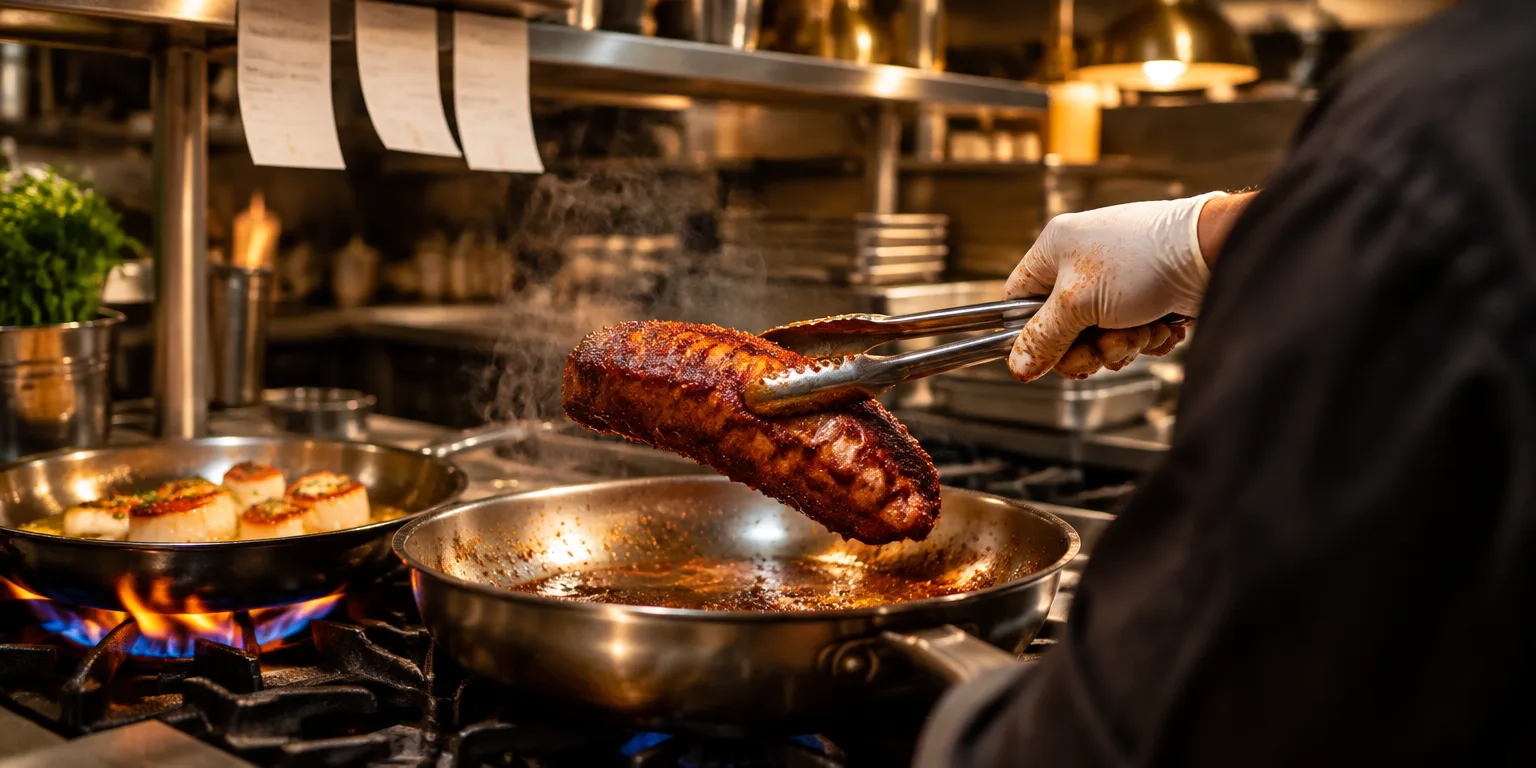
That bad night turned into a week of close watching. After hours of overcooking, she practiced until she could tell the pork was done when the meat glistened, with no thermometer to guide her.
That night she held herself together, called her dad from Union Square, and later cried in the walk-in refrigerator, which Sterling calls "always a good place to cry in restaurants." The next day she went back and apologized to her chef for overcooking the pork. Then the new schedule went up on the kitchen wall, and she saw she was on saute again the next Saturday night because someone was on vacation.
When she asked her chef if he was sure, he told her, "You have seven days to be one with the pork."
She took him literally. For days she seared pork tenderloins rubbed with ancho chili, which turned her hands red by the end of the shift, put them in the oven, and watched them change. She trimmed the ends into what cooks call a nub bucket, scraps saved for staff tacos at family meal. She stared at the little clock in the kitchen, pulled the pork at four minutes, then five, turning it over and over.
Then she saw it. At one point the meat glistened, and she knew it was ready, cooked to a juicy mid rare, with the center still light pink and juicy. She has said she could have used a thermometer, but her chef never asked, "Hey, where's your thermometer," and she says it never even crossed her mind. No one showed her how to cook the pork, so she learned by sight and touch. Sterling still remembers that silly phrase as the moment she "started to understand what cooking was."
Questions people ask
What does it mean to run the saute station?
The saute station is the part of a restaurant kitchen where a cook finishes many dishes to order in shallow pans over high heat. It is often one of the busiest and hardest jobs because one cook must time proteins, sauces, and sides at once, all while new orders keep arriving.
Is it safe to eat pork that is still pink inside?
Yes, when it is cooked properly. The U.S. Department of Agriculture says whole cuts of pork are safe at 145 degrees with a three minute rest, which can leave the center light pink and juicy. That juicy mid rare texture was what Sterling was trying to learn to produce.
Do professional chefs use meat thermometers?
Many do, especially in large kitchens where consistency matters and health rules require temperature checks. Thermometers are fast and reliable, but many chefs also teach cooks to use sight, sound, touch, and smell, because those senses work when there is no time to probe every piece of meat.