AI Can Solve Math Problems We Cannot Understand
Human mathematicians will keep their jobs, not as solvers but as the few who can make sense of the solutions.
 Noahpinion · The end of the age of heroes
After OpenAI said its new system, Astra, had cracked ten big unsolved puzzles in mathematics and computing theory, the writer Noah Smith argued the gloom among mathematicians missed the real bottleneck. The machines could hand over answers, he said, but answers are not understanding.
He put it this way, echoing a line circulating among scientists: humanity will be "rate limited on our ability to understand plausibly true 'solutions' generated by AI." Pressing a button to get a solution does not mean you understand it, and it does not tell you what problem to ask about next.
Smith argues that is why mathematicians will keep their value. Most frontier math, apart from some cryptography and occasional uses in physics, has little direct economic payoff. Society already employs mathematicians largely because human understanding seems worthwhile in itself, and, made richer by AI, it will keep paying that relatively small cost to keep people at work. He calls that continuing role "professional math-understanders."
That job will still be hard, and prestigious, because most people will still lack the background to follow it. Even if a teenager could one day call up a solution to the Riemann Hypothesis, a famous unsolved puzzle about prime numbers, Smith writes, the output will just be gobbledygook to them. AI will also help pose far harder problems. Some problems will be so hard that grasping the machine's solution will be as hard as solving the Jacobian Conjecture is today without a machine's help. That conjecture asks when a certain kind of mathematical transformation can always be reversed.
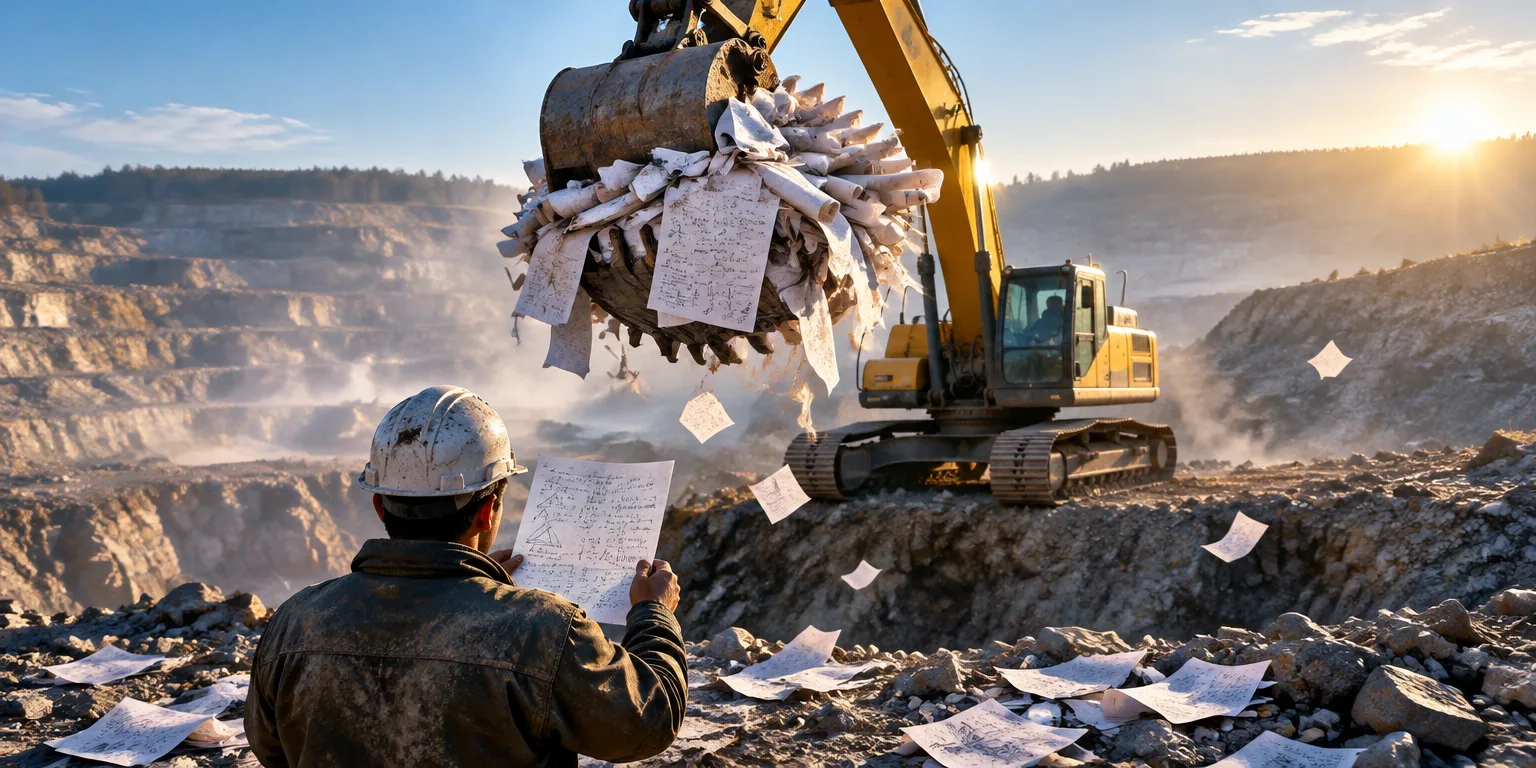
His comparison is to miners given hydraulic excavators and powered drills. Smith notes the amount of mathematics left to uncover is probably infinite, so operating the new machine, and making sense of what it digs up, will be work enough.
Questions people ask
How can a math proof be correct but incomprehensible?
Modern proofs can run to hundreds of pages and depend on many specialized fields at once, so no one person holds all the steps in mind easily. Computer-assisted proofs can be worse, with thousands or millions of logical cases checked by machine. Mathematicians then need extra work to simplify, verify, and connect the result to ideas people can use.
What is the Riemann Hypothesis?
It is a famous unsolved problem about the distribution of prime numbers, the numbers divisible only by one and themselves. Proposed in 1859, it predicts a precise pattern in how primes thin out. A correct proof would clarify much of number theory and carries a one million dollar prize.
What is the Jacobian Conjecture?
It is a longstanding problem about certain kinds of equations with many variables, first proposed in 1939. It asks when a particular type of mathematical transformation can always be reversed. Despite simple wording, it has resisted proof for more than 80 years and is known as a test of deep algebraic skill.