AI Did Not Build New Viruses Alone. It Drew Blueprints for 16 That Kill E. Coli
The viruses attack only bacteria, scientists did the lab work, and designing DNA on a computer remains far easier than manufacturing a virus.
 Lightwork · AI Creates New Viruses, Building AI for Healthcare & Moats in Healthcare IT | Lightwork
The alarming headlines said artificial intelligence had created new viruses from scratch. What actually happened was narrower and more technical: AI drafted genetic blueprints for 16 viruses that attack only E. coli bacteria, and trained scientists built them in a laboratory.
The viruses are called bacteriophages, a name that combines bacteria with a Greek word, phage, meaning to devour or eat. As Dr. Brenton Farnioli, a physician and partner on the health technology team at Lightspeed, said, these viruses are specialists that invade bacteria and destroy them. They are common in nature and in medicine, and they do not infect people.
The tool behind the work was Evo 2, built by researchers at Stanford and the Arc Institute, and described in the journal Science. It is not a chatbot style large language model. It is a genomic language model that treats DNA letters, A, G, C, and T, as a kind of language.
To design the new phages, the researchers used a model trained on a couple million bacteriophage genomes. The broader base model had learned from 9.3 trillion DNA letters drawn from many kinds of life, while this particular effort was focused only on phages. In this case, the targets were only E. coli bacteria. Bacteriophage genomes are relatively simple. A jump to human infection is not really feasible from this work, Farnioli said.
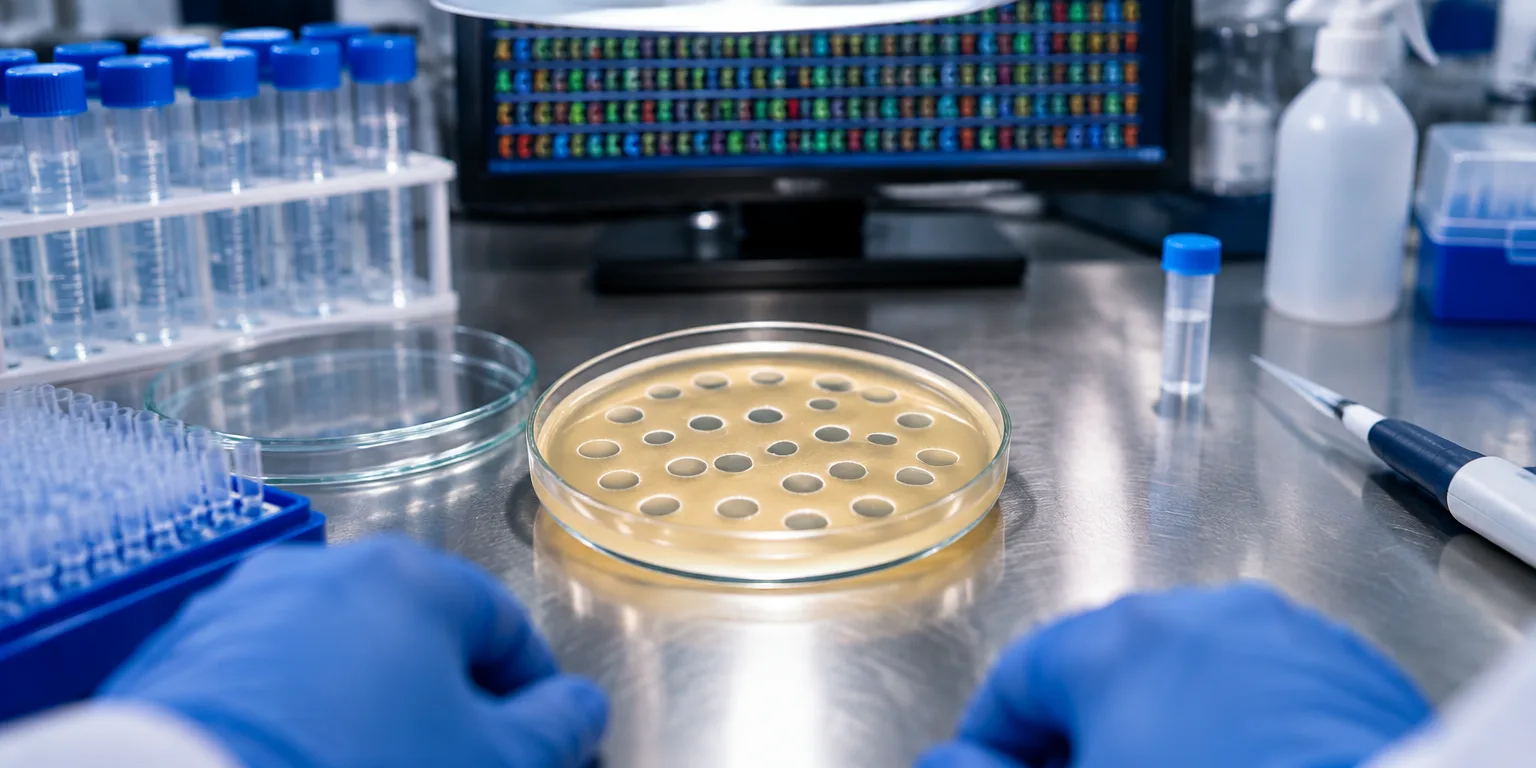
The AI did not manufacture anything. It produced a roadmap for a genome, and researchers then synthesized and tested the viruses in a wet lab, the kind of biology laboratory where liquids, cells, and DNA are handled by hand. Designing DNA on a computer is the easy, informational part. The hard bottleneck is production, which requires specialized labs and know-how, and only a handful of firms can do it at scale.
That split is where Farnioli said safety rules should focus. The nearer term promise is practical: more phage variants to fight bacteria as antibiotic resistance rises, plus uses in agriculture and in delivering gene therapies, where viruses are often the delivery vehicle. The longer term worry is not an immediate outbreak, but the capability jump as these genomic models keep improving.
Questions people ask
What is E. coli?
E. coli is a species of bacteria that lives in the intestines of people and animals. Most strains are harmless, but some can cause food poisoning, urinary infections, and other illness, which is why scientists often use it as a test target.
Are bacteriophages dangerous to people?
No. Bacteriophages do not infect people because they are built to attach to bacterial surfaces and inject their genetic material into bacteria. Scientists have studied them for a century, and doctors have used selected phages experimentally to treat bacterial infections.
Why would anyone want to design more bacteriophages?
They might help. Antibiotic resistance means many bacterial infections no longer respond to standard drugs, a growing global health problem. Phages kill bacteria by a different mechanism, so custom-designed phages could one day supplement antibiotics, though clinical use remains early and highly regulated.
Could someone build one of these viruses in a garage?
No. Even with an AI-designed genome sequence, a person would need DNA synthesis, bacterial cultures, purification equipment, and virology expertise to produce a working virus. That work requires a trained team and a properly equipped biology lab, not ordinary home equipment.