AI Is Not Waiting for Smarter Models. It Is Waiting for Power and Permission.
An AI investor says cheap, abundant intelligence depends on electricity, supply chains, and neighbors who say yes.
 Invest Like the Best with Patrick O'Shaughnessy · Sarah Guo - Funding the Frontier - [Invest Like the Best, EP.489]
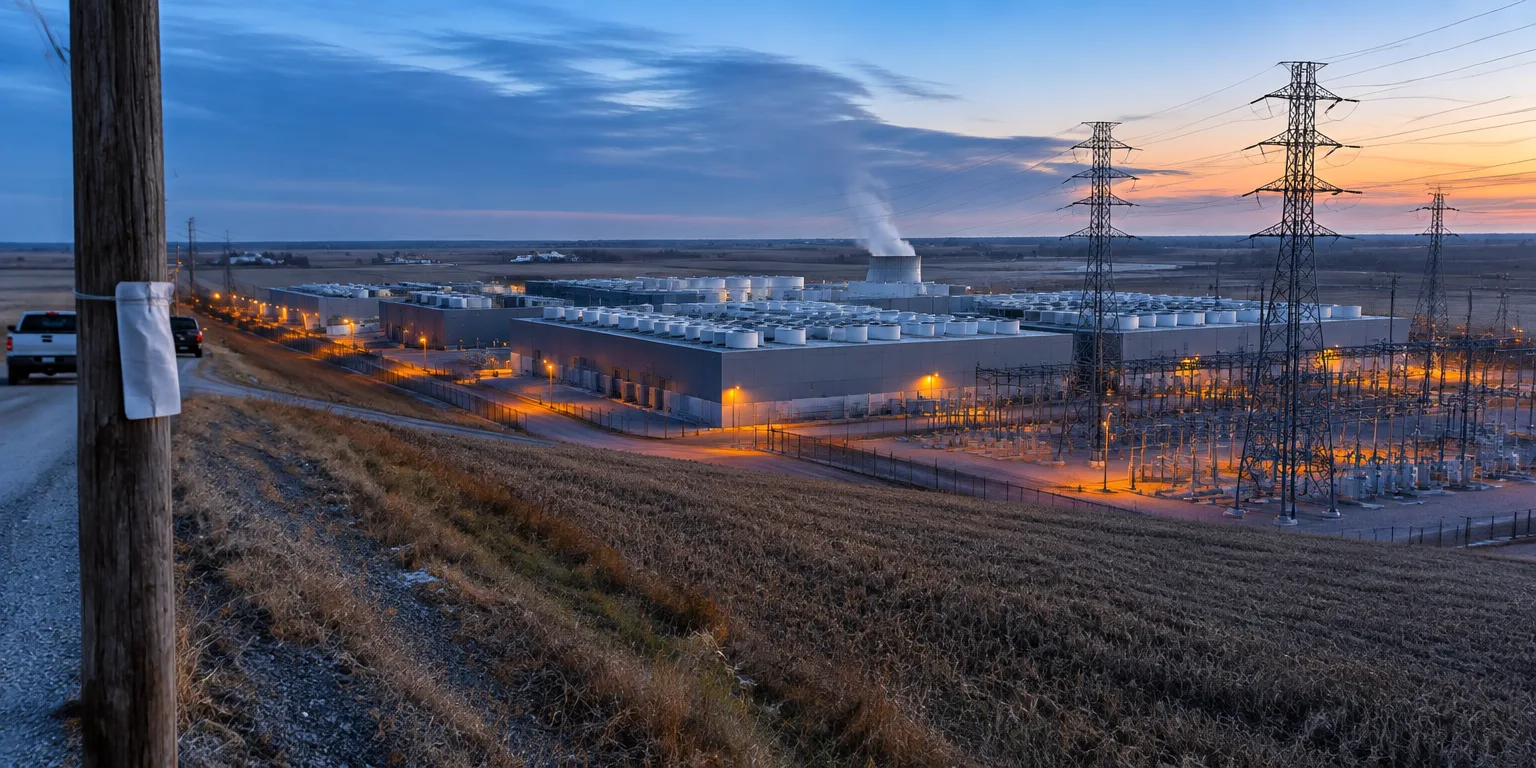
The most sobering thing Sarah Guo heard recently came from the infrastructure chief at one of the giant cloud companies. Guo, the founder of Conviction, an AI-focused venture firm, said he told her there was nothing that would move the needle for his company at sufficient scale before 2030.
Her point is that the limit is not better models, money, or entrepreneurial talent. It is electricity, buildings, equipment, and permission. Americans have built new technologies very quickly before, she argues, and the problem now is regulation and alignment with local communities, not AI alignment in the technical sense.
Start with power. To run AI at scale, data centers need vast amounts of steady electricity, including natural gas today and nuclear power as the reliable backbone. To bring the price of nuclear down, Guo says, builders need to erect enough small modular reactors, which are smaller factory-built plants, and AP-1000s, a standard large reactor design, for costs to fall along a learning curve. That first requires convincing the public that nuclear is safe.
The second limit is location. Guo put it this way: "if you want to build data centers in New York, you need to convince the people of New York they should want data centers there."
The next step is the chips and the data center itself, and it depends on a global supply chain. Cooling the processors, powering them, and using them for training and for everyday use all rely on parts, materials, and know-how from around the world. Guo described parts of that chain as "a very thin sieve" in places that are not stable or accessible to the United States and its allies. There is also a shortage of skilled labor and raw materials, none of which can scale as fast as software.
That is why she talks about compute independence, meaning more than one source for every critical input, even if everything is not made in America. Her firm has backed efforts around data center labor, nuclear energy, and alternative chip designs, and has looked closely at data center builders and solar and battery installers. She says it has not invested in those builders and installers yet, despite looking closely.
She argues the United States cannot rebuild manufacturing without automation, because grueling, low paid manual work is not work Americans want or should have to do. She describes one possibility in which people who are rationally afraid about jobs, and who dislike profits captured by a few technology firms, oppose the new energy and industrial projects that would keep the country competitive.
Questions people ask
What is a hyperscaler?
A hyperscaler is one of the handful of giant cloud companies, such as Amazon, Microsoft, and Google, that operate warehouse-sized data centers around the world. They buy chips, power, and networking gear at a scale no ordinary company can match, so their building plans set the pace for AI capacity.
What does compute independence actually mean?
Compute independence means having secure, diversified access to everything needed to train and run AI, from chips and power to cooling and skilled workers. It does not necessarily mean making everything in one country, but it means avoiding dependence on a single supplier or region that could be cut off.
Why is nuclear power so central to this argument?
Nuclear plants run day and night regardless of weather, which matters because data centers need constant power. Once many identical reactors are built, construction gets faster and cheaper, a pattern seen with other technologies, but the first units are expensive without steady orders and public support.