AI Lets Online Sellers Skip the Photo Shoot
Guided prompts create lifelike product images in seconds, so small shops can test more looks without samples or models.
 Ecommerce Coffee Break – The Ecom Marketing & Sales Podcast · How AI is Revolutionizing Print-on-Demand — David Hooker | How AI Changes Print-On-Demand, How AI Creates Photorealistic Mockups, What Traits Make Sellers Successful, How Printify’s Global Fulfillment Cuts Risk, Why Gen Z Demands Personalization (#484)
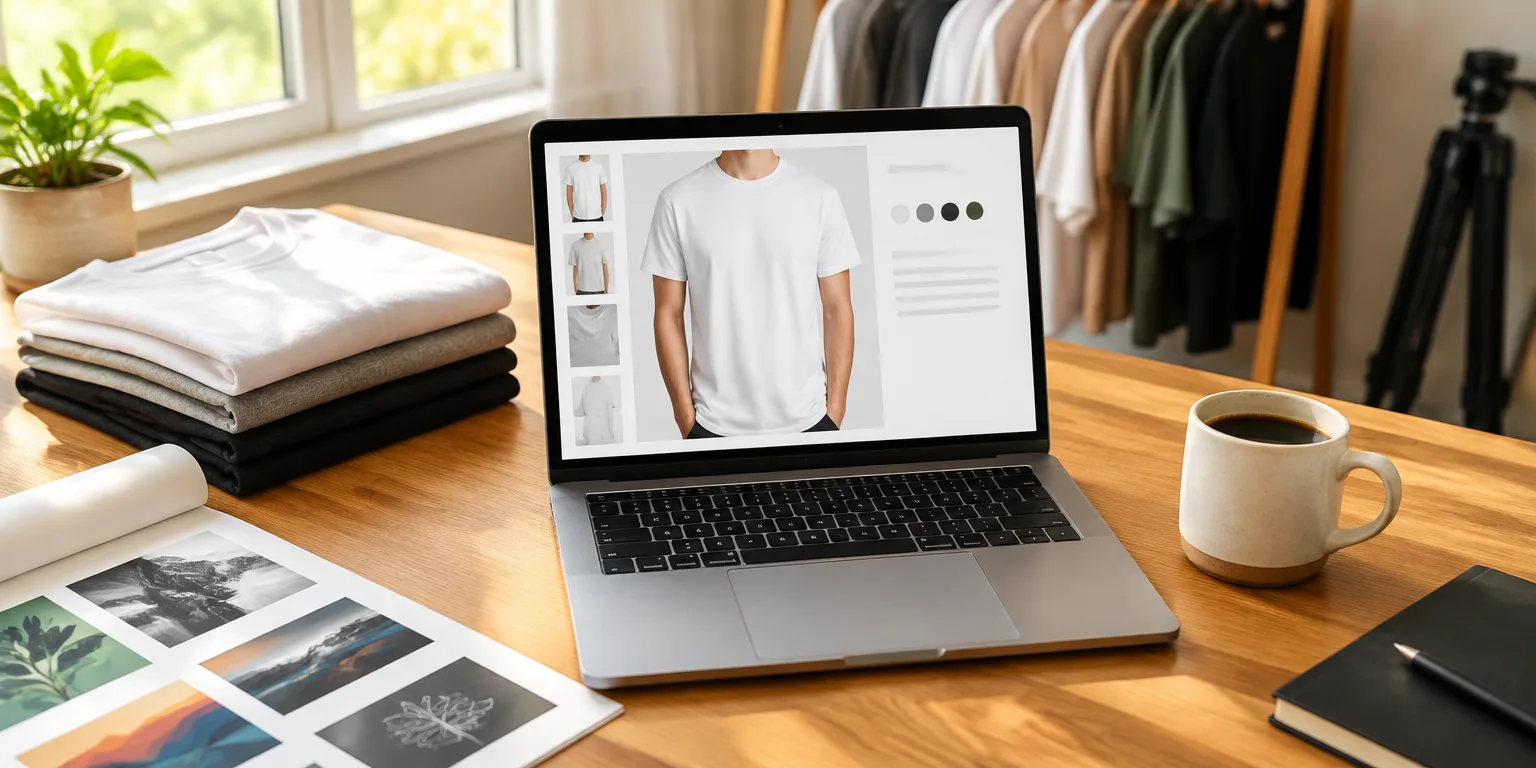
Shoppers rarely buy a T-shirt from a flat sketch. They want to see how it looks on a person, from the front and the back, and in the setting where it would be worn.
Getting that picture used to be a project in itself. A seller had to order a sample, wait for it to arrive, find someone to model it, and sort out lighting, a decent camera, and a workable setup.
David Hooker, a brand director at Printify, a company that connects online sellers with printing partners, says that process was time consuming and expensive. The shortcut was not much better.
Sellers could place their design on a ready made template, but there were only so many templates to go around. As a result, shoppers kept seeing the same models staring back at them across different stores.
As described in an interview in June 2026, Printify lets sellers create a photorealistic mockup that looks like it came from a professional photo shoot.
The system uses NanoBanana, the image capability inside Google's Gemini model known for highly realistic photos. Hooker says the era of obvious glitches, like extra fingers, is largely over.
Sellers do not write a complex prompt from scratch. They start with a guided skeleton prompt, adjust elements such as the setting or the look, and regenerate the image.
In seconds, each seller gets a distinctive image showing the product in place and tailored to a particular customer. That means a shop can test more ideas quickly, without samples, models, or cameras, while helping its listings stand out.
Questions people ask
What is print on demand?
Print on demand means nothing is printed until a shopper orders. The seller uploads a design, a printing partner makes that single shirt, poster, or mug, and ships it directly. The seller avoids buying inventory and storing boxes at home.
What is a mockup in online selling?
A mockup is a preview that shows what a finished product would look like. On a product page, it is usually a photo of a model wearing the shirt or a room scene containing the item. Shoppers use it to judge fit, scale, and style.