AI made a major advance in predicting how proteins fold
A quiet biology breakthrough shows what AI is already doing beyond the scary headlines.
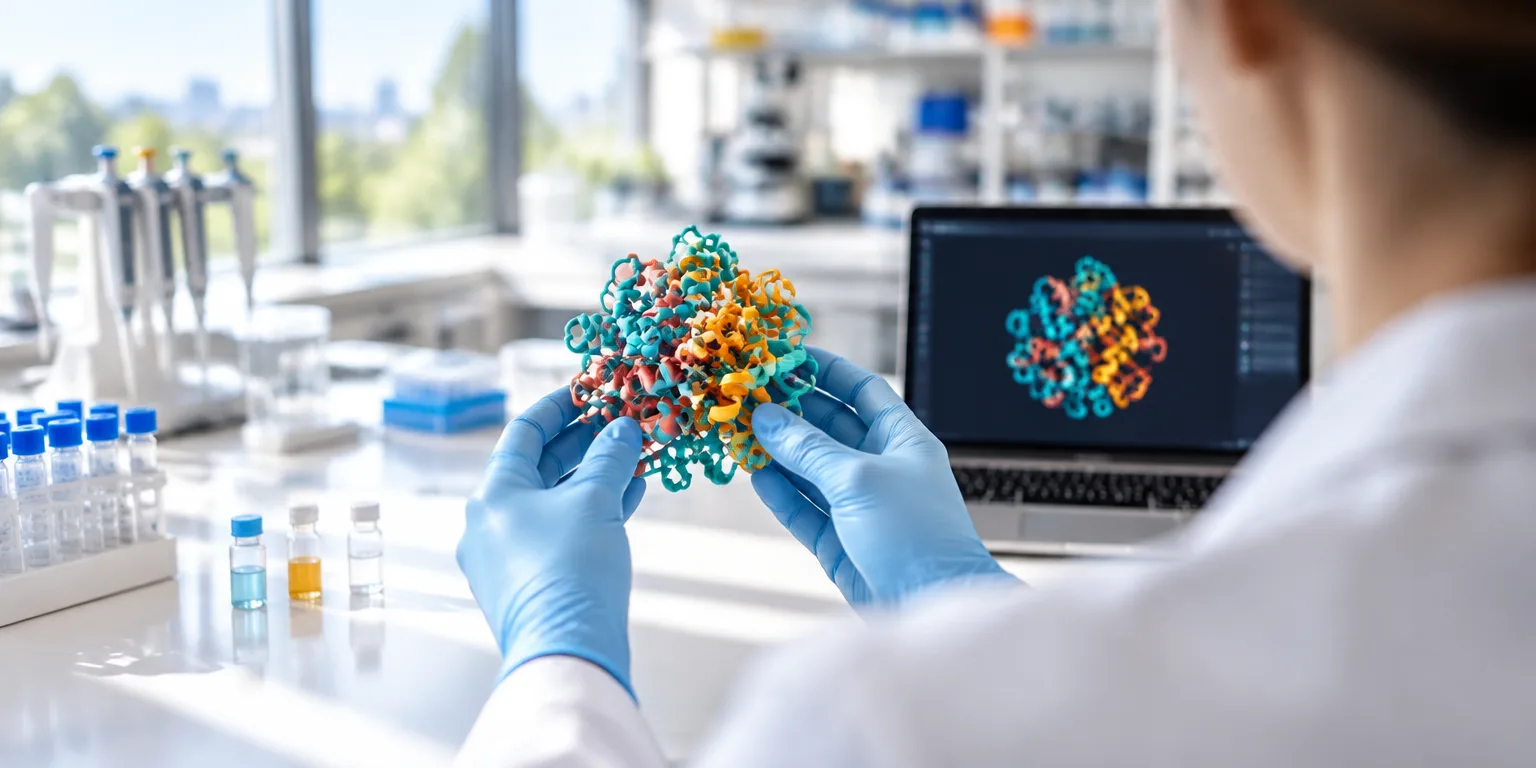
Artificial intelligence has made a major advance in predicting how proteins fold, the shape-shifting process that decides what a protein can do in a cell.
The system is called AlphaFold, built by Google DeepMind under Demis Hassabis, with related drug discovery work continuing at Isomorphic Labs. Claire "Zoey," a venture investor who posts short videos translating tech news for mainstream viewers, points to it as an optimistic, exciting step change.
People mostly see scary AI headlines, she says, not the progress. In her videos breaking down the technology, viewers respond, "Wait, this is actually really cool," or say "this is how AI should be used," and her answer is that this is how AI has already been used.
Benchmarks, standard test scores for AI models, mean nothing "to a person on the street," so the job is to describe breakthroughs in tangible ways people can feel.
Questions people ask
What does predicting how proteins fold mean?
Proteins are tiny machines that do most of the work in cells, and what they can do depends on the exact shape they fold into. Knowing that shape lets scientists understand disease and design drugs, but mapping one protein used to take months or years of lab work.
What is AlphaFold?
AlphaFold is an AI system developed by Google DeepMind, led by Demis Hassabis and his team, that predicts a protein's 3D shape from its building-block sequence. Its predictions, shared freely for more than 200 million proteins, are now used by researchers around the world.
What is Isomorphic Labs?
Isomorphic Labs is a company spun out of DeepMind to apply AlphaFold-style AI to drug discovery. It works with major pharmaceutical companies to design new medicines, and has raised large funding rounds to expand that effort.