AI's next leap is capped by how much power one data center site can get
Meta executive Alex Schultz says giant data centers will make AI smarter, but he estimates about 18 months for supply to catch up with demand.
 The Twenty Minute VC (20VC): Venture Capital | Startup Funding | The Pitch · 20Growth: Meta CMO Alex Schultz on How All Founders Have to Change Their Marketing Playbook in a World of AI | Is AI Plateauing, What it Means if China Wins the AI Race and Why Zuck is a Generational Leader
If Alex Schultz is right, the next jump in artificial intelligence will be built from concrete and copper.
Schultz, the chief marketing officer of Meta, says the industry is betting that a new wave of giant data centers will make AI noticeably more intelligent. In Louisiana, Meta is building one the size of Manhattan. Others include Stargate, the massive project associated with Sam Altman. The bet is on what AI researchers call scaling laws, the observed pattern that feeding much more computing power into training tends to produce a smarter model.
The problem is that data center construction cannot keep up with what company leaders want, and Schultz says the reason is physics.
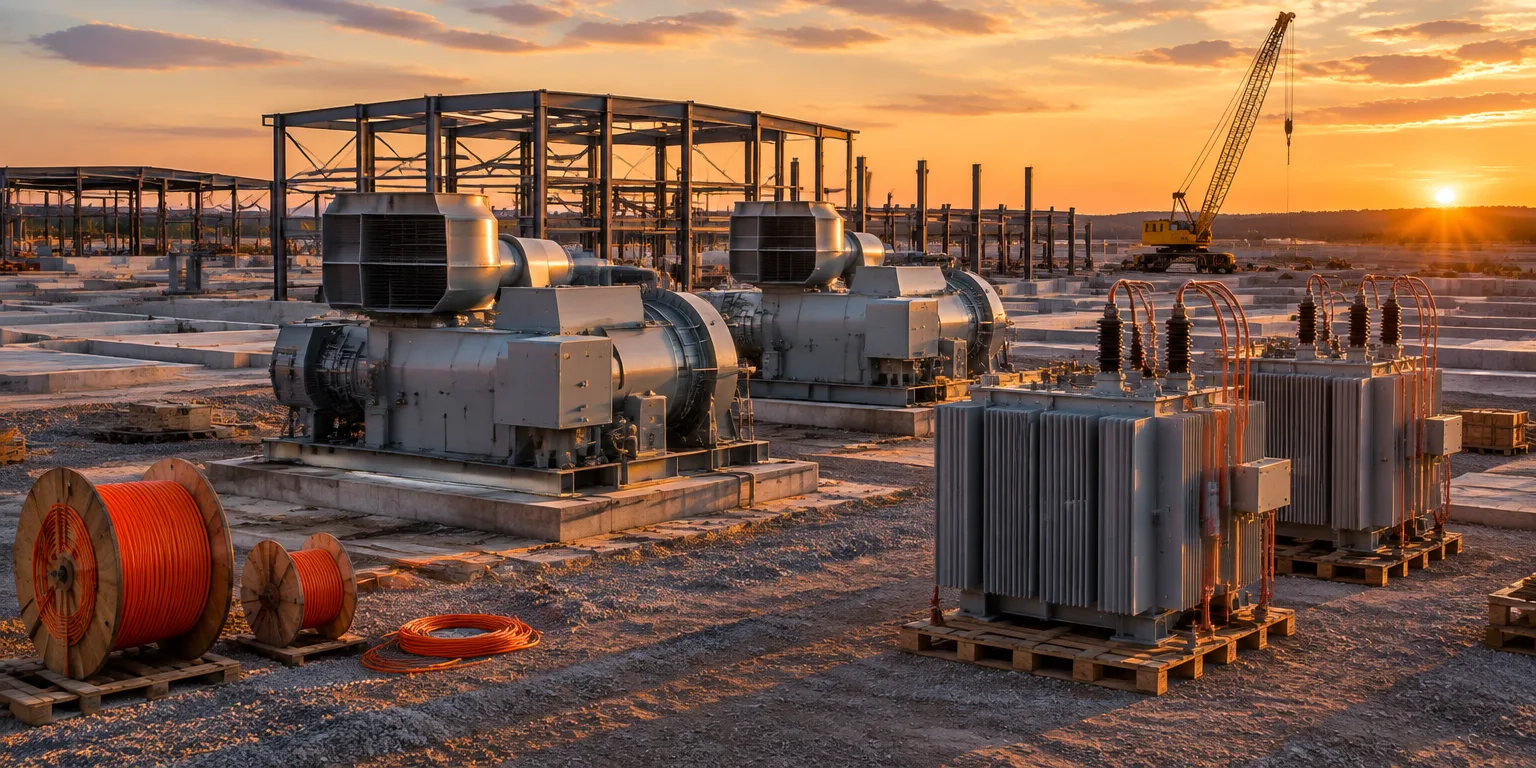
There is a global supply chain for building data centers, for the right steel, the wiring, the fiber-optic cable that carries data as light, and the available electricity, and it is now strained. Now everyone wants huge generators, wound with copper wire, at the same time, and only so many are normally ordered in a year. There are also shortages of fiber-optic cable and the switches that direct its traffic. Even the energy is missing, because you cannot suddenly create a gigawatt, enough electricity to power roughly a million American homes, in one spot.
That is why technology companies are buying their own gas turbines and why Microsoft moved to restart the Three Mile Island nuclear plant.
Schultz estimates about an 18-month lag before the system catches up with demand, and then the industry will hit the next bottleneck. It might be Taiwan Semiconductor Manufacturing Co. unable to make enough chips, or ASML unable to build enough of the extremely complex machines that make those chips.
Even if those parts arrive, there is a ceiling on any single site. Right now, Schultz says, a company can put about one gigawatt of AI computing in one place. The largest single source of power on Earth is the Three Gorges Dam in China, which he puts at roughly 12 to 22 gigawatts. Conceptually, you could grow a single site about tenfold by using the whole dam's output.
The only way past that limit is to stop training an AI model in one room and spread the work across several power sources. He believes Google was first to split training across two buildings in one data center area. The next step is sites about 100 kilometers apart, then about 1,000 kilometers apart. A company could, for example, place one data center near the Diablo Canyon nuclear plant in California and another next to Three Mile Island in Pennsylvania, and combine them into two gigawatts where conceptually no single American site could supply that much.
OpenAI, Anthropic, Meta, and Google are all betting that scaling laws will hold, Schultz says. If they are right, AI progress now depends on learning how to teach one model across a continent.
Questions people ask
How big is a gigawatt, really?
A gigawatt is one billion watts, enough to power roughly 750,000 to one million American homes at once. A modern AI data center can draw that much because it packs tens of thousands of power-hungry chips, plus cooling, networking, and backup, all running nonstop for months.
Why does AI training need so much power in one place?
Training is the months-long phase when a model learns from vast amounts of text, images, and video, adjusting billions of settings over and over. All the chips must constantly trade results with each other, so interruptions waste enormous time and money, which is why builders prize huge, steady supplies of power and very fast connections.
Will better chips solve the power problem?
Partly, but not entirely. More efficient chips can do more work for the same electricity, which Schultz calls a tailwind for AI. The catch is that labs tend to spend those savings on even larger training runs, so total power demand keeps rising.