AI Was Asked to Settle How Glasses Dry Fastest
A Google product manager said GPT-6 Astra modeled water and humid air to decide a dishwashing debate.
 The AI Daily Brief (Formerly The AI Breakdown): Artificial Intelligence News and Analysis · Why GPT-6 Astra Is So Significant and So Confounding
Barron Roth, a product manager at Google who works on artificial intelligence, was still in the kitchen with his fiancee when the dishwashing turned into a debate.
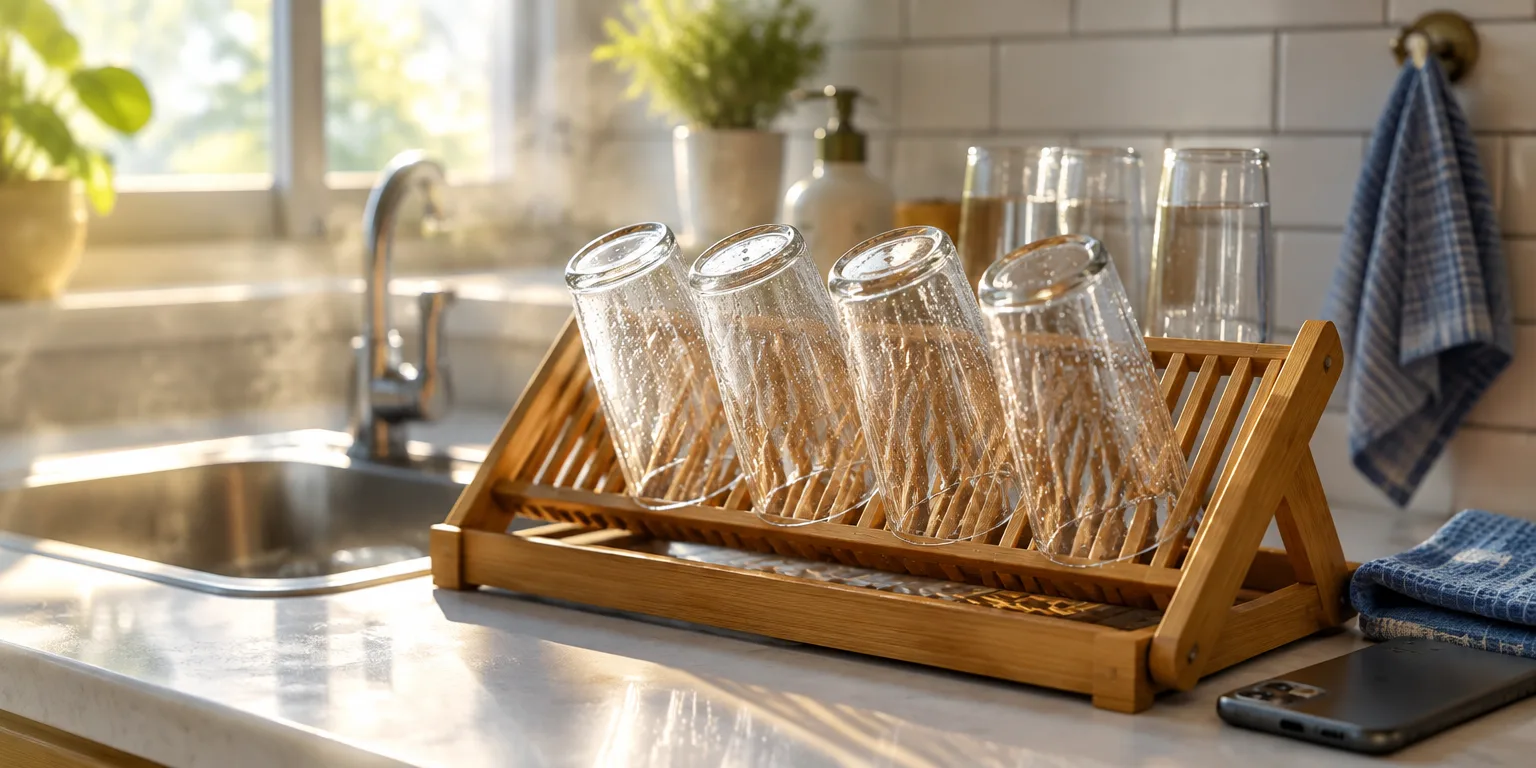
The question was whether drinking glasses dry faster standing right side up or turned upside down after washing.
Roth asked GPT-6 Astra, OpenAI's new artificial intelligence model, to settle it. Roth wrote, "Astra helped me win an argument I had with my fiance on whether glasses dry faster right side up or upside down after dishwashing by simulating the physics of the water molecules and nearby air humidity."
That small domestic test appeared alongside more elaborate experiments that other users were sharing. Ash Bytes wrote, "I used GPT 6 Astra to create a 3D website that pulls apart a Tesla Model X into 334 modeled pieces." Duncan Trussell reported that Astra rigged a three dimensional character and made it walk around in a scene built in Blender, the free software for making three dimensional graphics. Others were testing the model by building games.
Roth said the simulation decided the glass question in his favor. He did not say which orientation the model picked or how his fiancee took the verdict.
Michael Briggs, a user who responded online, wrote, "One small step for science, one giant leap towards sleeping on the couch."
Questions people ask
Which way do glasses actually dry faster?
This is general kitchen physics, not Roth's undisclosed result. Upside down at a slight angle generally dries faster because water can drain out instead of pooling, and damp air can escape instead of staying trapped inside. Upright glasses can hold a small pool at the bottom that must evaporate, which usually takes longer.
What did Roth say the AI actually simulated?
Roth described only two things: the physics of the water molecules and the nearby air humidity. In plain terms, that means how water sits and leaves the glass surface, and how much moisture the surrounding air can still absorb. He did not describe the settings, the length of the simulation, or the winning orientation.
Should a result like that be trusted?
It is best read as an illustration, not a lab measurement. The outcome can depend on room temperature, airflow, glass shape, and how the glass is racked, details Roth did not report. For a kitchen debate it is amusing, but an engineer would still want a timed test under controlled conditions.